

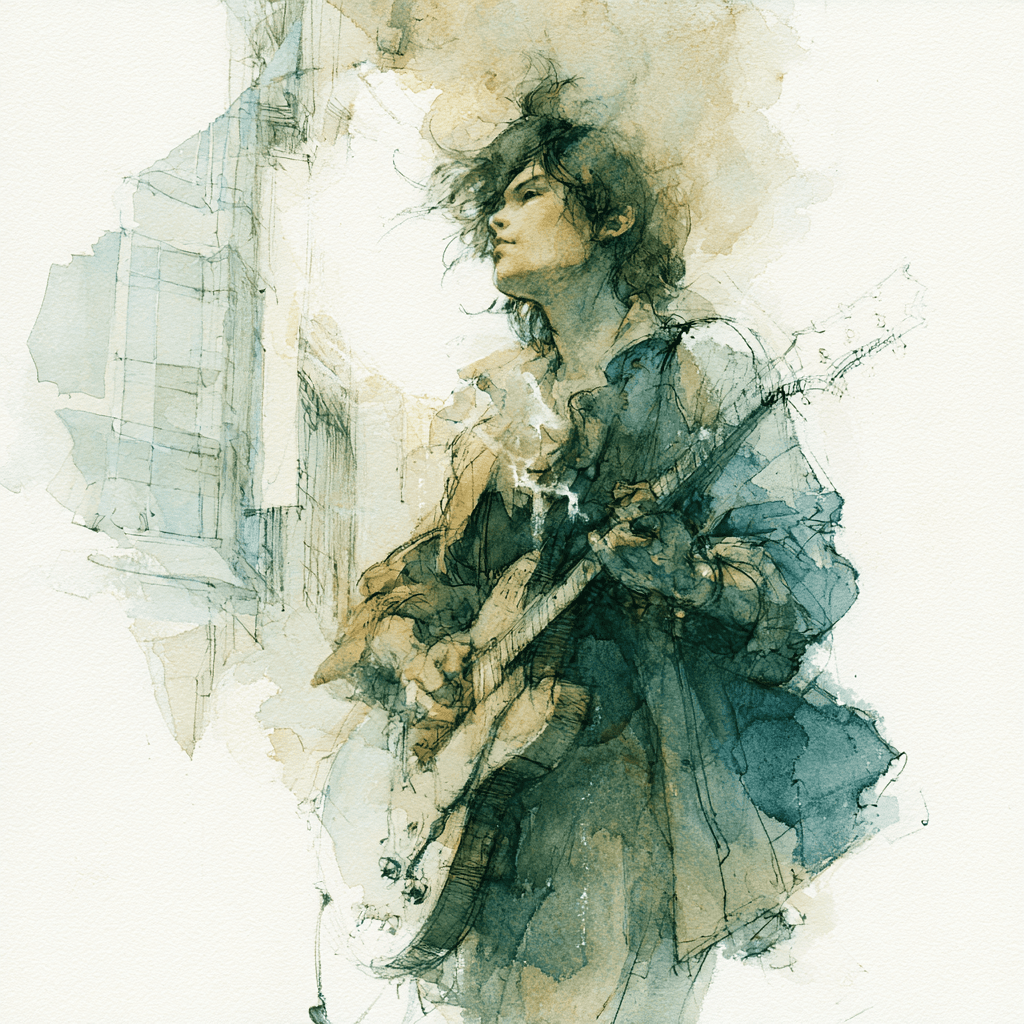
New Taiwanese Wave
From the lifting of martial law in 1987 onward, Taiwan's music industry entered a period of radical reopening. The New Taiwanese Song movement — led by Lin Chiang, whose 1990 debut 'Marching Forward' became an anthem of post-authoritarian exuberance, Chen Ming-chang, Chu Yueh-hsin, and later Wu Bai and Bobby Chen — brought Taiwanese-Hokkien back onto the main stage of popular music, no longer as a minor "local" idiom but as a vehicle for urban working-class feeling, political reflection, and rock'n'roll swagger. In parallel, the indigenous voices of Panai, Suming, and Matzka, and the Hakka songwriting of Lin Sheng-hsiang, staked out space for languages and communities long excluded from the mainstream.
The 1990s and 2000s marked a golden age for Mandopop under Rock Records, Magicstone, and the generation of Jay Chou, Ste…
The 1990s and 2000s marked a golden age for Mandopop under Rock Records, Magicstone, and the generation of Jay Chou, Stefanie Sun, and David Tao — artists who made Taipei the unrivaled center of Chinese-language popular music worldwide. Simultaneously, an indie ecosystem took root: venues like The Wall and Revolver hosted a flourishing underground scene, while festivals such as Spring Scream in Kenting and the Megaport Festival in Kaohsiung became annual pilgrimages for independent music fans. Today, younger artists such as Enno Cheng, 9m88, Sunset Rollercoaster, and No Party for Cao Dong navigate a multilingual ecosystem — Taiwanese-Hokkien, Mandarin, Hakka, indigenous languages, English — negotiating what it means to make music from Taiwan in a globalized streaming era where genre boundaries dissolve and audiences span the Pacific.
Isle of Time