


Three Years of the Pandemic
On December 31, 2019, the Centers for Disease Control sent an email to the World Health Organization mentioning cases of pneumonia of unknown cause in Wuhan and asking whether there was human-to-human transmission. The email would later be quoted endlessly. On the day itself nobody in Taiwan noticed. Three weeks after that, on January 20, the Central Epidemic Command Center was stood up, with Health Minister Chen Shih-chung as its commander.
For the first half-year the approach was to treat the border as the main line and masks as a strategic material. Exports were banned on January 24; a rationing system began on February 6, a limited number per National Health Insurance card at pharmacies. Machine-tool manufacturers were brought in to build emergency production lines — sixty of them in a little over a month, taking daily output from 1.8 million masks to twenty million. The Special Act for Prevention, Relief and Revitalization was promulgated on February 25, and its special budget eventually grew to 840 billion NT dollars. From March 19, non-citizens were in principle not permitted to enter.
Taiwan had almost no domestic transmission in 2020. The economy grew 3.11 percent, outpacing China for the first time in thirty years; restaurants were full in the second half of the year, music festivals went ahead, and foreign coverage kept asking what Taiwan had done right. The cost was entered in a different ledger. Arrivals quarantined at home for fourteen days with their phones tracked by an electronic fence, and leaving the room brought a call within minutes. Several hundred thousand people stranded abroad waited more than a year for a seat home.
After May 11, 2021, the advantage of the previous year disappeared in three weeks. Teahouses in Wanhua, the Novotel by t…
After May 11, 2021, the advantage of the previous year disappeared in three weeks. Teahouses in Wanhua, the Novotel by the airport, and a fight over cutting pilots' quarantine to three days all ran together; on May 19 the whole island went to alert level three and schools closed until the summer. Shortages of rapid tests, of vaccines and of beds arrived in the same week. Where vaccines came from became a political question: Japan donated 1.24 million doses on June 4, the United States 2.5 million on June 20, TSMC, the Yonglin Foundation and Tzu Chi stepped in to buy fifteen million doses of BNT, and Medigen received emergency use authorization on July 19 on the basis of immunobridging. That wave killed more than eight hundred people.
In April 2022 the command center changed its language, calling the new approach the "new Taiwanese model" — living with the virus. Omicron produced eighty thousand cases a day, and cumulative deaths passed fourteen thousand that year, more than ten times the 2021 figure, with a public reaction far calmer than the year before. Quarantine-free entry began on October 13. On May 1, 2023, the command center was dissolved, and the two o'clock press conference stopped after nearly three years.
What remains is not easy to file. The contact-tracing text-message data was destroyed amid argument over it, and the legal basis for the electronic fence rested to the end on a single special act. Masks stayed on into 2023 and came off gradually; some people are still wearing them. And the phrase most often spoken over those three years was "corrected backlog" — a term invented to explain a number, which turned into a joke.
In the first weeks of rationing the line outside a pharmacy reached the corner by seven in the morning. One health insurance card bought three masks every seven days, later raised to nine. Pharmacists processed several hundred card swipes and registrations a day, and a great many people spoke to the pharmacist in their own neighborhood for the first time standing in that line. Some gave their allocation to the family member working shifts; some counted the sheets out to the end of the month. Rationing made one thing concrete: when demand exceeds supply the state has to decide the order, and everybody can see what that order looks like. Taiwan chose equal shares plus a named record, and paid for it in queuing and in being logged. Other countries chose price, and the people with money got theirs first. Both methods were running simultaneously around the world in the spring of 2020, and neither was comfortable.
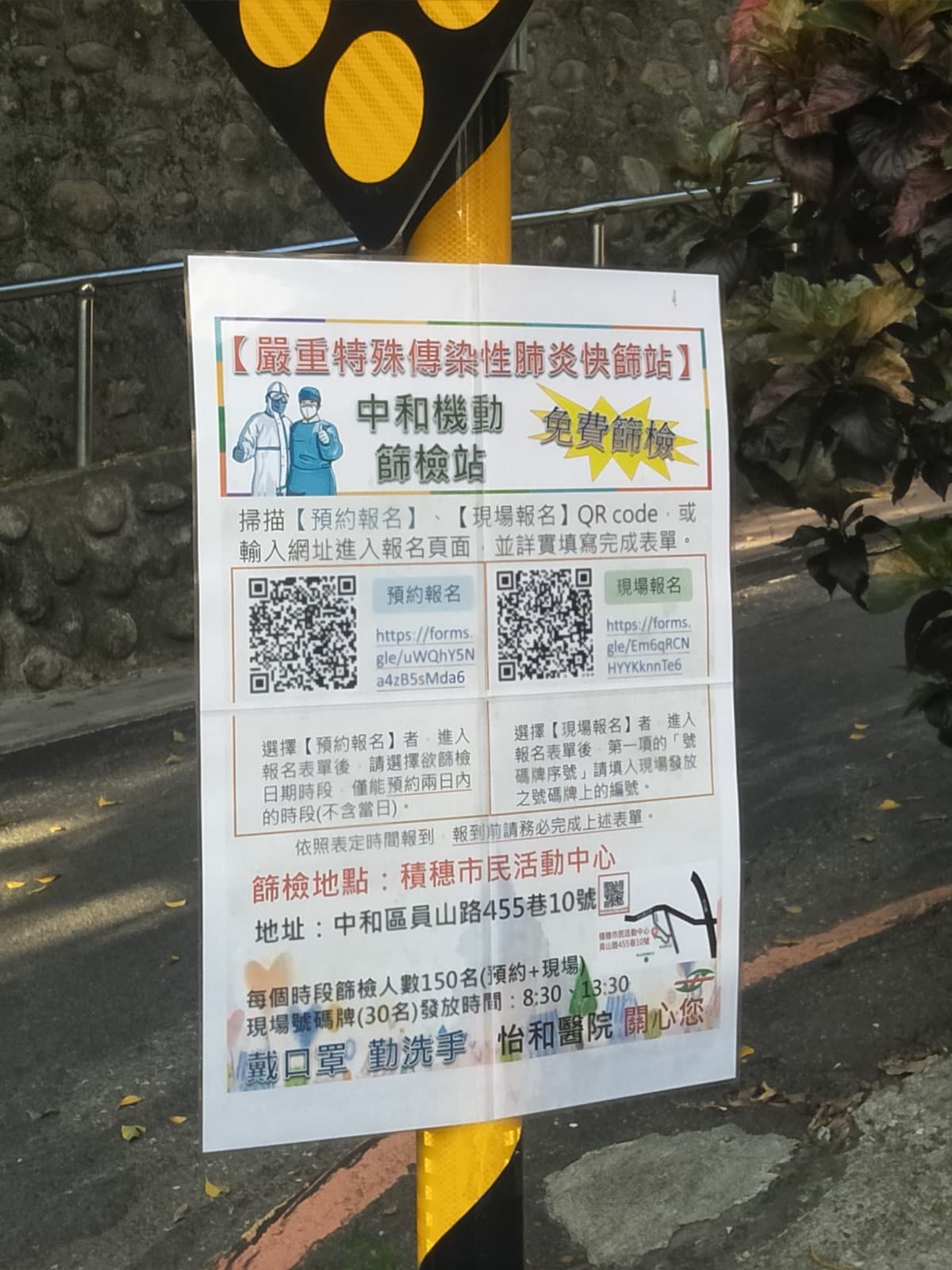
A sign at a rapid-testing station in New Taipei, May 2021. Local transmission spread out of Wanhua over those weeks, the country went to level-three alert, and the streets emptied for the first time.
Tsuna Lu (Adsa562) / CC BY-SA 4.0 via Wikimedia Commons
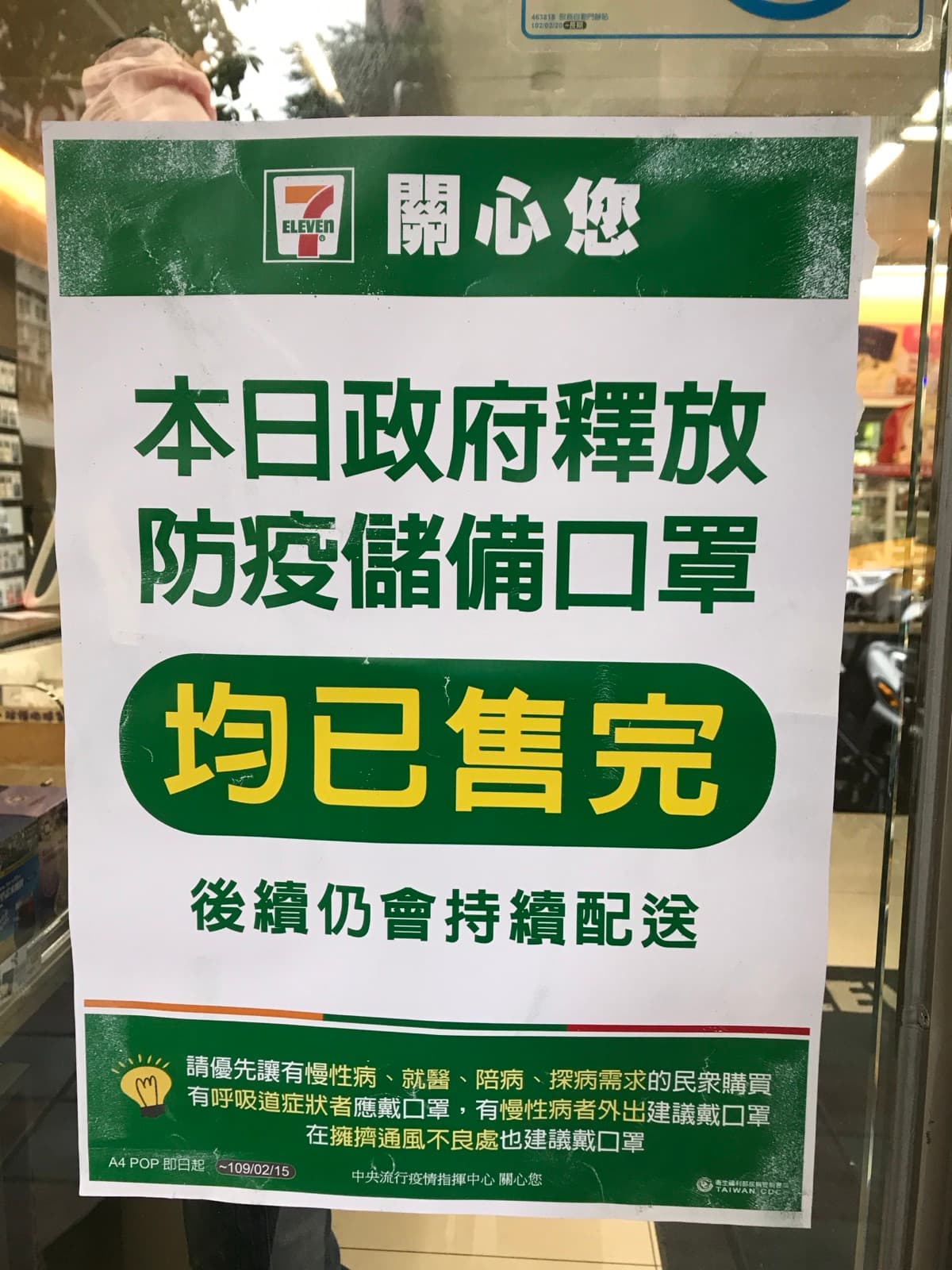
A convenience store's notice that surgical masks had sold out, February 2020. The government then requisitioned production lines and rationed masks against health-insurance cards, turning a scramble into an allocation.
Xuanshisheng / CC0 via Wikimedia Commons
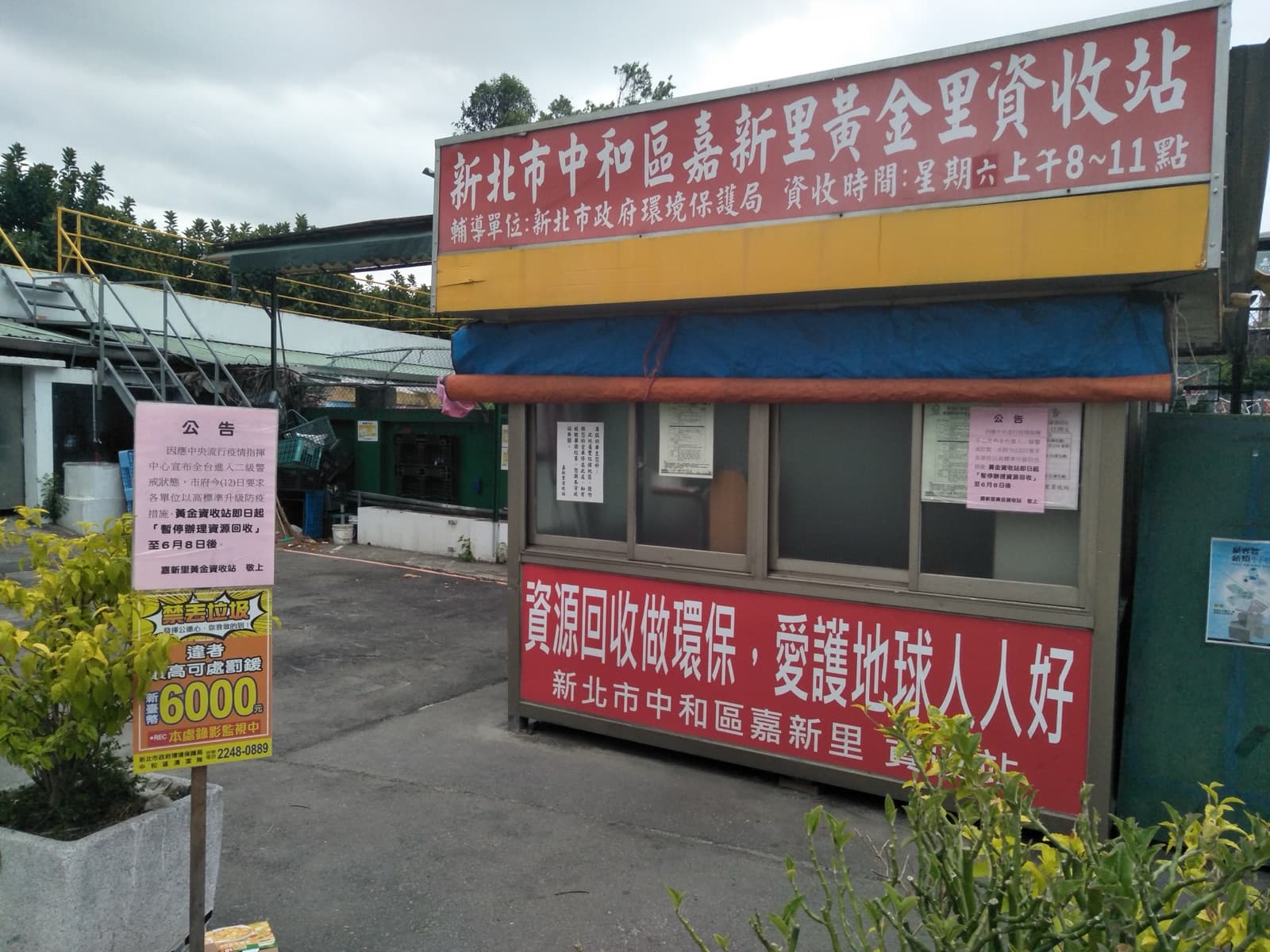
A recycling station closed, with the notice posted on it. Three years of the pandemic left more than case numbers: it left paper everywhere — notices, signs, routing instructions — redrawing daily life square by square.
Tsuna Lu (Adsa562) / CC BY-SA 4.0 via Wikimedia Commons
Isle of Time