

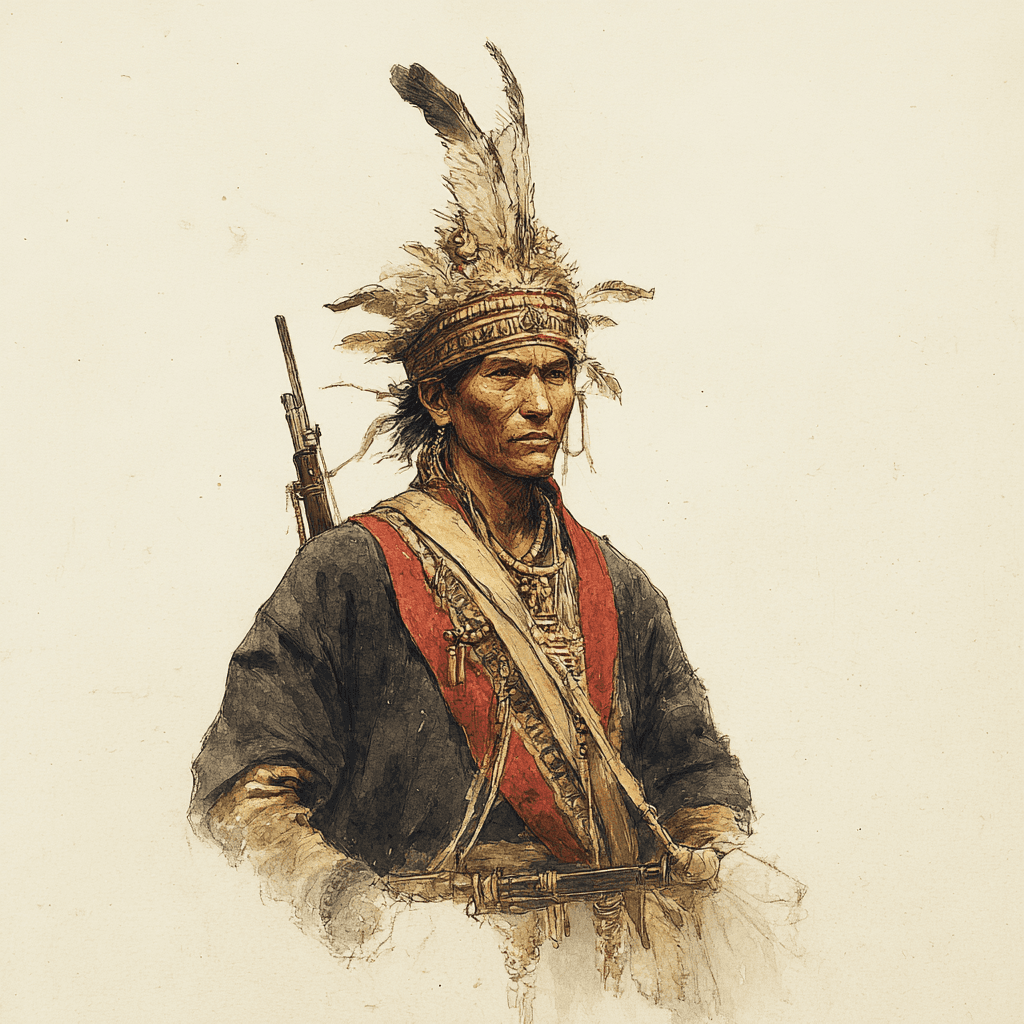
Arokus
Chief of Mudan Village, Paiwan
Qing Dynasty
?–1874
Arokus was the paramount chief of Mudan village (牡丹社), one of the most powerful Paiwan settlements in the mountainous Hengchun Peninsula of southern Taiwan, who led his people through escalating contact with the outside world before dying in battle against a Japanese expeditionary force in 1874. The Mudan people under Arokus occupied a strategically important interior position on the peninsula, and their territory neighbored coastlines where foreign ships frequently wrecked, placing them in recurring contact — sometimes violent — with shipwreck survivors from across the region. In November and December 1871, fifty-four crew members of a Ryukyuan vessel from Miyako Island were shipwrecked on the peninsula's southern shore; fifty of them were killed by Paiwan men, an event that set in motion the first modern Japanese overseas military expedition. Arokus, as chief of Mudan — the leading village among several implicated in the killings — bore the primary political responsibility for the incident in the eyes of Japanese planners, who used it to challenge the Qing court on the ambiguous status of the island's indigenous territories. When Japan launched its 1874 Taiwan Expedition under General Saigō Tsugumichi, landing several thousand troops on the Hengchun Peninsula in May of that year, Arokus organized the Mudan resistance and led his warriors in a series of engagements against Japanese forces. In the battle at Shimen (石門) in May 1874, Arokus was killed while commanding the defense of a narrow gorge, becoming the most prominent indigenous casualty of the campaign; his death broke the organized Paiwan resistance and allowed Japanese forces to advance toward the mountain villages. The engagement at Shimen became a defining moment in Japanese colonial historiography, portrayed as a military victory that demonstrated Japan's capacity to project force beyond its home islands. The diplomatic settlement that followed — in which China paid Japan an indemnity of five hundred thousand taels and implicitly acknowledged Japan's claim over the Ryukyus — transformed the geopolitics of the region and opened the door to Japan's formal annexation of Taiwan twenty years later. Arokus himself left no written record; his actions and death are reconstructed from Japanese military reports, Qing diplomatic correspondence, and oral tradition preserved by his Paiwan descendants. In the postwar era, his story underwent significant reinterpretation in Taiwan, shifting from a Japanese colonial narrative of conquest to a recognized act of indigenous resistance against imperial aggression. A monument to the fallen Paiwan warriors stands today at Shimen, near the site where Arokus died, and the Mudan Incident is now taught as the event that catalyzed the geopolitical transformation leading to Taiwan's colonial era. Arokus is generally regarded as a symbol of Paiwan resistance — a chief who faced the first armed incursion by a modern military power onto Taiwanese soil and chose to fight rather than submit, at the cost of his own life.
Organized Paiwan resistance against the Japanese 1874 Taiwan Expedition following the Mudan Incident
Died at the Battle of Shimen (1874), triggering the diplomatic settlement that reshaped East Asian geopolitics
Chief of Mudan Village, Paiwan
Arokus
Era
Qing Dynasty
Lifespan
?–1874
Arokus was the paramount chief of Mudan village (牡丹社), one of the most powerful Paiwan settlements in the mountainous Hengchun Peninsula of southern Taiwan, who led his people through escalating contact with the outside world before dying in battle against a Japanese expeditionary force in 1874. The Mudan people under Arokus occupied a strategically important interior position on the peninsula, and their territory neighbored coastlines where foreign ships frequently wrecked, placing them in recurring contact — sometimes violent — with shipwreck survivors from across the region. In November and December 1871, fifty-four crew members of a Ryukyuan vessel from Miyako Island were shipwrecked on the peninsula's southern shore; fifty of them were killed by Paiwan men, an event that set in motion the first modern Japanese overseas military expedition. Arokus, as chief of Mudan — the leading village among several implicated in the killings — bore the primary political responsibility for the incident in the eyes of Japanese planners, who used it to challenge the Qing court on the ambiguous status of the island's indigenous territories. When Japan launched its 1874 Taiwan Expedition under General Saigō Tsugumichi, landing several thousand troops on the Hengchun Peninsula in May of that year, Arokus organized the Mudan resistance and led his warriors in a series of engagements against Japanese forces. In the battle at Shimen (石門) in May 1874, Arokus was killed while commanding the defense of a narrow gorge, becoming the most prominent indigenous casualty of the campaign; his death broke the organized Paiwan resistance and allowed Japanese forces to advance toward the mountain villages. The engagement at Shimen became a defining moment in Japanese colonial historiography, portrayed as a military victory that demonstrated Japan's capacity to project force beyond its home islands. The diplomatic settlement that followed — in which China paid Japan an indemnity of five hundred thousand taels and implicitly acknowledged Japan's claim over the Ryukyus — transformed the geopolitics of the region and opened the door to Japan's formal annexation of Taiwan twenty years later. Arokus himself left no written record; his actions and death are reconstructed from Japanese military reports, Qing diplomatic correspondence, and oral tradition preserved by his Paiwan descendants. In the postwar era, his story underwent significant reinterpretation in Taiwan, shifting from a Japanese colonial narrative of conquest to a recognized act of indigenous resistance against imperial aggression. A monument to the fallen Paiwan warriors stands today at Shimen, near the site where Arokus died, and the Mudan Incident is now taught as the event that catalyzed the geopolitical transformation leading to Taiwan's colonial era. Arokus is generally regarded as a symbol of Paiwan resistance — a chief who faced the first armed incursion by a modern military power onto Taiwanese soil and chose to fight rather than submit, at the cost of his own life.
Organized Paiwan resistance against the Japanese 1874 Taiwan Expedition following the Mudan Incident
Died at the Battle of Shimen (1874), triggering the diplomatic settlement that reshaped East Asian geopolitics