

Chronicle
Across the centuries
From 1624 to today — 8 eras of Taiwan's history in 165 volumes, read in order or entered anywhere.
1624–1662
The Age of Exploration
Dutch and Spanish Colonial Taiwan: Maritime Trade, Missionaries, and Indigenous Encounters
38 years · 17 volumes
Open the archive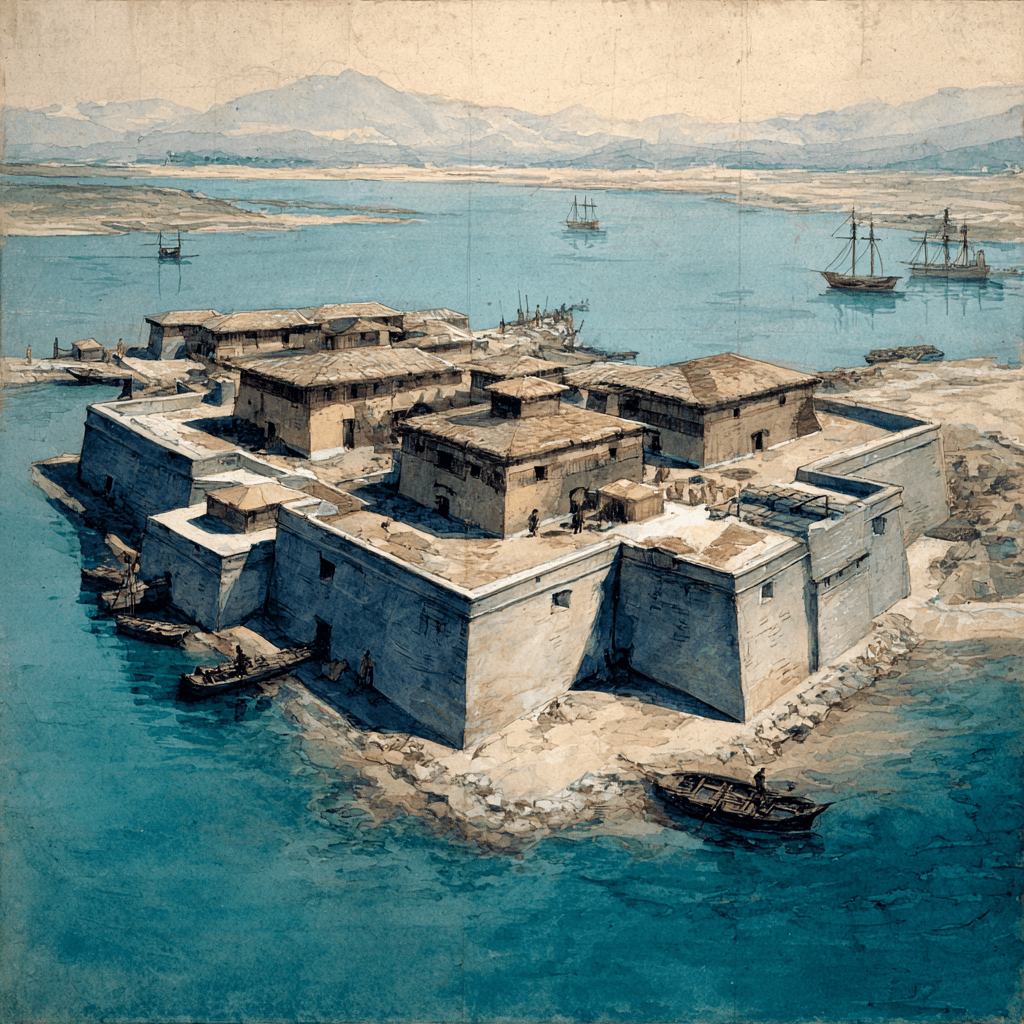
Vol. 1 · Start here
Two Years in Penghu
On 11 July 1622 the fleet of Cornelis Reijersen, commander for the Dutch East India Company, sailed into Penghu. What the Company had wanted was Macau. Macau held, so they settled for a base from which the Ming could be pressed into opening trade. That Penghu lay inside the Ming domain was something they knew.

Vol. 2
The Dutch Arrival

Vol. 3
Fort Zeelandia

Vol. 4
Spanish Northern Taiwan

Vol. 5
The Hamada Yahee Incident

Vol. 6
Indigenous Encounters

Vol. 7
The Madou She War

Vol. 8
The Cave on Lamey

Vol. 9
The Gold of Pimaba

Vol. 10
The Staff With the Silver Head

Vol. 11
The Sinckan Script

Vol. 12
The Banishment of the Inibs

Vol. 13
The Deer That Built an Empire

Vol. 14
The Last Bastion of San Salvador

Vol. 15
The Guo Huaiyi Rebellion

Vol. 16
A Map That Changed a Dynasty

Vol. 17
The Siege of Fort Zeelandia
1662–1683
The Kingdom of Tungning
Koxinga and the Zheng Dynasty: The First Han Chinese Government on Taiwan
21 years · 15 volumes
Open the archive
Vol. 1 · Start here
Koxinga's Kingdom
In May 1661, following the successful landing of Zheng Koxinga’s twenty-five thousand elite troops at the Luermen channels, this emerald island—governed by the Dutch for thirty-eight years—witnessed the dawn of its very first Han Chinese regime. At this historical crossroads, though Fort Zeelandia remained locked in a fierce defense under the Dutch Governor, Frederick Coyett, the Prince of Yanping could not wait to commence his grand nation-building project upon the coastal plains. He decreed that the captured Fort Provintia in Chikan be transformed into the "Chengtian Prefecture," serving as the supreme imperial capital of the Ming Dynasty’s overseas orthodoxy, while establishing Tianxing and Wannian counties to the north and south. In a grand proclamation, Koxinga formally christened the island "Dongdu" (The Eastern Capital of the Ming). This was never meant to be a mere temporary refuge; it was a sovereign kingdom carved out of the wilderness by a desperate warlord whose mainland dreams had fractured, a final, sacred sanctuary for a fallen empire.

Vol. 2
A King Imprisoned by Wrath

Vol. 3
The Eastern Conquest

Vol. 4
Zheng Jing's Reforms

Vol. 5
The Architect of Tungning

Vol. 6
The Dutch Came Back

Vol. 7
Han Settlement

Vol. 8
Vanishing Plain Warriors

Vol. 9
The Anping Secret Pact

Vol. 10
The Last Imperial Dream

Vol. 11
The Tears of Lady Dong

Vol. 12
The Twilight of the Boy King

Vol. 13
The Ultimate Duel

Vol. 14
Prince Ningjing's Martyrdom

Vol. 15
The Fall of Tungning
1683–1895
Taiwan Under the Qing Empire
Taiwan Under the Qing Empire: Migration, Rebellion, and Modernization
212 years · 31 volumes
Open the archive
Vol. 1 · Start here
Qing Incorporation
In 1683, Qing admiral Shi Lang defeated the remnants of the Zheng dynasty at the Battle of Penghu, bringing Taiwan under Qing sovereignty for the first time. The annexation was far from inevitable — a fierce debate erupted at the imperial court over whether to retain or abandon this distant island. Minister Shi Lang argued that Taiwan's strategic position made it essential for coastal defense, while others viewed it as a lawless frontier not worth the administrative burden. Emperor Kangxi ultimately sided with retention, incorporating Taiwan as a prefecture of Fujian Province.

Vol. 2
Crossing the Black Ditch

Vol. 3
Dispatches from the Frontier Sea

Vol. 4
The Birth of Hsinchu

Vol. 5
The Babao Canal

Vol. 6
The Liugong Canal

Vol. 7
The Duck Lord's Revolt

Vol. 8
Seven Camps on the East Bank

Vol. 9
The Dajiaxi Uprising

Vol. 10
The Land Brokers

Vol. 11
Rebellions and Unrest

Vol. 12
How Chiayi Got Its Name

Vol. 13
Wu Sha Opens the Kavalan Plain

Vol. 14
The Opening of Kavalan

Vol. 15
King of the Black Flag

Vol. 16
The Caogong Canal

Vol. 17
Dazhongye and the Shrines

Vol. 18
The Golden Ports

Vol. 19
The Literati of Hsinchu

Vol. 20
The Subgroup Feuds

Vol. 21
Opening of Treaty Ports

Vol. 22
Observers at the Edge of Empire

Vol. 23
The Medical Mission in Southern Taiwan

Vol. 24
The Rover Incident

Vol. 25
The Aboriginal Frontier

Vol. 26
Sovereignty of the Mountains

Vol. 27
Opening the Mountains

Vol. 28
The Sino-French War in Taiwan

Vol. 29
Taiwan as a Province

Vol. 30
The Last Generation of Gentry

Vol. 31
First Steam Locomotive
1895–1945
The Japanese Colonial Era
Japanese Colonial Taiwan: Resistance, Modernization, and Wartime Mobilization
50 years · 26 volumes
Open the archive
Vol. 1 · Start here
The Treaty of Shimonoseki
On April 17, 1895, the Treaty of Shimonoseki ended the First Sino-Japanese War and ceded Taiwan and the Penghu Islands to Japan in perpetuity. The decision was made without any consultation of Taiwan's inhabitants — their fate was sealed in a conference room in the Japanese port city of Shimonoseki, where Qing envoy Li Hongzhang and Japanese Prime Minister Itō Hirobumi negotiated the terms of China's surrender. For the Qing court, Taiwan was a disposable bargaining chip; for the two million people living on the island, it was a catastrophe.

Vol. 2
The Yiwei War

Vol. 3
The Yunlin Massacre

Vol. 4
Armed Resistance

Vol. 5
The Opium War

Vol. 6
Modern Infrastructure

Vol. 7
The Greatest Thief

Vol. 8
The Miaoli Trials

Vol. 9
The Taroko War

Vol. 10
Sun Moon Lake Hydropower

Vol. 11
The Chianan Canal Miracle

Vol. 12
Taiwan Parliament Petition

Vol. 13
Awakening the Taiwanese Soul

Vol. 14
The Chih-ching Incident

Vol. 15
The New Literature Movement

Vol. 16
The Erhlin Incident

Vol. 17
The Taiwanese People's Party

Vol. 18
The Taiten Exhibition

Vol. 19
Seediq Bale

Vol. 20
The Koshien Dream

Vol. 21
The Guandaoshan Earthquake

Vol. 22
Kōminka Movement

Vol. 23
Wartime Mobilization

Vol. 24
Beneath Jinguashi

Vol. 25
The Takasago Volunteers

Vol. 26
Orphan of Asia
1945–1949
The Early Postwar Years
Taiwan Under the Regime Transition: Postwar, Takeover, and Order Reconstruction
4 years · 17 volumes
Open the archive
Vol. 1 · Start here
From Cairo to Taipei
In November 1943, the leaders of China, the United States, and Great Britain reached a consensus at the Cairo Conference, declaring that "all territories Japan has stolen from the Chinese, such as Manchuria, Formosa, and the Pescadores, shall be restored to the Republic of China." Although not a formal treaty, this declaration became the political foundation for post-war territorial rearrangement in East Asia.

Vol. 2
Surrender and Takeover

Vol. 3
The Shibuya Incident

Vol. 4
Homecoming of the Overseas

Vol. 5
De-Japanization

Vol. 6
The Parliamentary System

Vol. 7
The Constitutional Convention

Vol. 8
The Early Economic Crisis

Vol. 9
The February 28 Incident

Vol. 10
March at the Port of Keelung

Vol. 11
The 27 Brigade

Vol. 12
The Battle of Wuniulan

Vol. 13
The Penghu Incident of 13 July

Vol. 14
The Dilemma of Native Elites

Vol. 15
Chiang Kai-shek's Diary

Vol. 16
Voices from Elite Diaries

Vol. 17
The American Perspective
1950–1979
Authoritarian Era
Taiwan Under Martial Law: White Terror, Cold War, and Economic Takeoff
29 years · 19 volumes
Open the archive
Vol. 1 · Start here
Party-State Governance
During the martial law era, Taiwan's party-state-military trinity permeated every corner of society. The KMT controlled economic lifelines through party-owned enterprises such as Central Investment Holding, Central Trading and Development, the Broadcasting Corporation of China, and Central Motion Picture — conglomerates whose revenues funded party operations, patronage networks, and cadre training, and whose existence blurred every line between public policy and party interest. It monitored social dynamics through overlapping intelligence agencies that reported back to Chiang Ching-kuo in the 1950s and 1960s, and instilled party-state ideology through a centralized education system in which every classroom displayed the Generalissimo's portrait, every textbook framed Taiwan as a province of China, and every schoolchild recited the KMT-authored "National Anthem" before morning assembly.

Vol. 2
Forty Years Behind the Bamboo Fence

Vol. 3
The White Terror

Vol. 4
Disillusioned Intellectuals

Vol. 5
Cold War Frontline

Vol. 6
The Luku Incident

Vol. 7
Purge of Indigenous Elites

Vol. 8
Military Power Purge

Vol. 9
The 823 Artillery Battle

Vol. 10
Thirty-Six Years Under the Lampshade

Vol. 11
Cross-Ethnic Alliance

Vol. 12
A Declaration of Independence

Vol. 13
Red Leaf and the Baseball Fever

Vol. 14
Nine Years of Compulsory Education

Vol. 15
The Taiyuan Incident

Vol. 16
Losing the Seat: The UN and the Diplomatic Dominoes

Vol. 17
The Zhongli Incident

Vol. 18
The Economic Miracle

Vol. 19
Cultural Control
1980–1999
Democratic Transition
Taiwan at the End of Martial Law: The Dangwai Movement, Street Protest, and Direct Presidential Elections
19 years · 19 volumes
Open the archive
Vol. 1 · Start here
The Dangwai Movement
Under one-party authoritarian rule, a group of courageous Taiwanese chose to seek political participation outside the KMT system. "Dangwai" (literally "outside the party") — originally a neutral administrative term describing non-KMT candidates permitted to contest limited local offices — gradually evolved into a sweeping democratic movement that coordinated lawyers, professors, journalists, shopkeepers, and former political prisoners into something approaching a shadow opposition without the legal right to call itself one.

Vol. 2
The Kaohsiung Incident

Vol. 3
The Lin Family Massacre

Vol. 4
The Chen Wen-cheng Incident

Vol. 5
A Hundred Thousand Drums on Orchid Island

Vol. 6
The Henry Liu Murder and the Tenth Credit Collapse

Vol. 7
Birth of the Opposition

Vol. 8
Lifting Martial Law

Vol. 9
A Hundred Flowers Bloom

Vol. 10
The Plant Yilan Did Not Keep

Vol. 11
The February 28 Redress Movement

Vol. 12
A Hundred Percent Freedom

Vol. 13
The Succession and the February Crisis

Vol. 14
Lilies in the Square

Vol. 15
The End of Mobilization and the Remaking of Parliament

Vol. 16
The Ground Made at Mailiao

Vol. 17
The Independent Taiwan Association Case and the End of Sedition

Vol. 18
The People Choose

Vol. 19
The 921 Earthquake
2000–Present
Modern Taiwan
Democratic Deepening, Transitional Justice, and Taiwanese Identity
26 years · 21 volumes
Open the archive
Vol. 1 · Start here
The First Party Turnover
By the late 1990s, Taiwan's political landscape stood at an unprecedented crossroads. More than half a century of uninterrupted Kuomintang rule had weathered the lifting of martial law in 1987, the full re-election of the legislature, and the first direct presidential election in 1996. Yet the island's democratic transition remained incomplete so long as no opposition party had ever assumed the highest office. Internal fissures within the KMT, disillusionment with "black gold" politics, and the maturing organizational strength of the Democratic Progressive Party converged to set the stage for a pivotal contest.

Vol. 2
The SARS Storm

Vol. 3
The Shooting on the Nineteenth of March

Vol. 4
Taipei 101

Vol. 5
The Red Shirts and the Trial

Vol. 6
One Island, One Day

Vol. 7
A Letter from the Cape

Vol. 8
Morakot and the Village of Xiaolin

Vol. 9
The White Shirts and Hung Chung-chiu

Vol. 10
Beyond Beauty: Taiwan From Above

Vol. 11
Sunflowers in the Chamber

Vol. 12
Treasures Beneath the Skies

Vol. 13
The First Woman President, and an Apology

Vol. 14
Love Without Distinction

Vol. 15
The Boat Was Home

Vol. 16
Three Years of the Pandemic

Vol. 17
The Silicon Shield

Vol. 18
Cross-Strait Dynamics

Vol. 19
Transitional Justice

Vol. 20
The Voices of the Land

Vol. 21
Taiwanese Identity — Who Am I?