

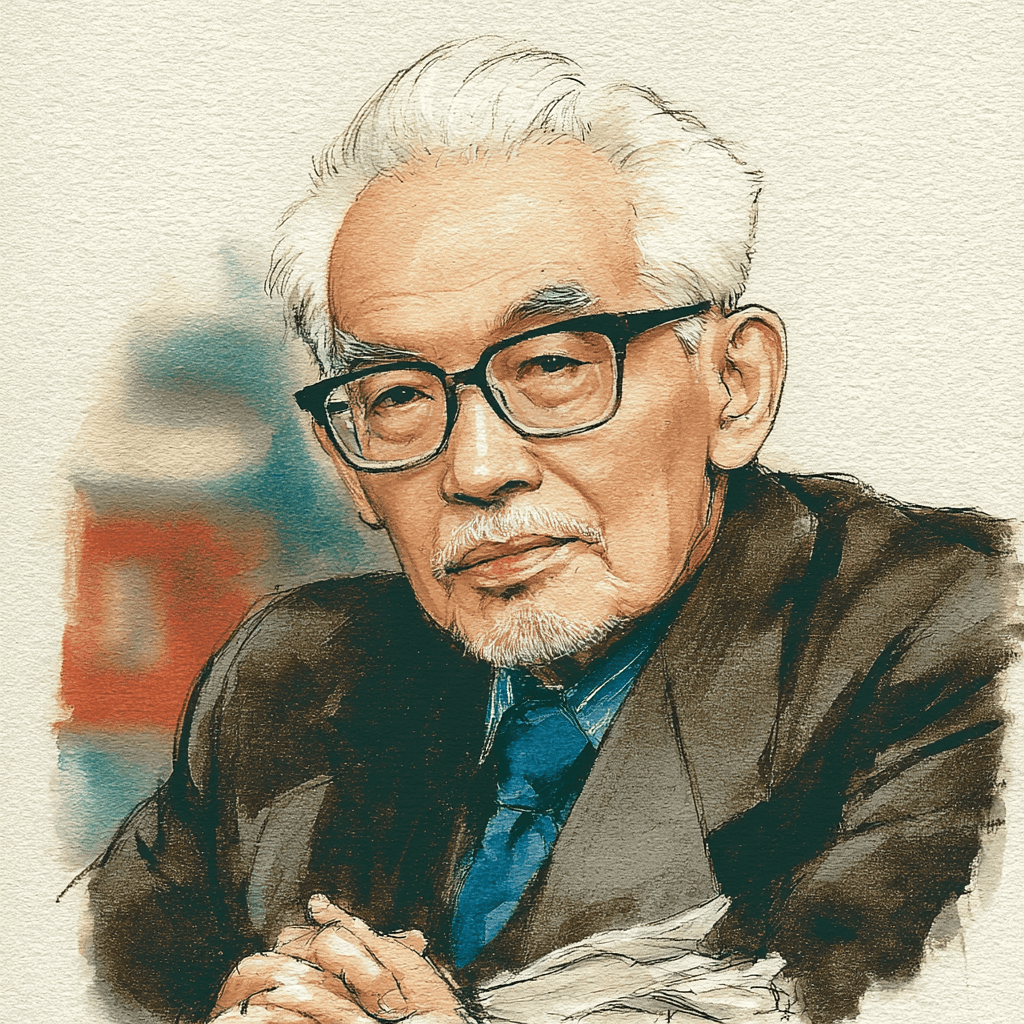
Bo Yang
Writer & Political Prisoner
Democratic Transition
1920–2008
Bo Yang, born Kuo Yi-tung in 1920 in Henan, was one of the most influential and controversial writers and cultural critics of post-war Taiwan. He came to Taiwan with the government after the Chinese Civil War, working in teaching and journalism and becoming known for essays, fiction, and historical writing. His essays, sharp and satirical, boldly criticized current affairs and social ills and were widely popular. In 1968, for serializing a translation of the American "Popeye" comic that the authorities read as an allusion insulting the head of state, he was arrested on charges such as "insulting the president" — the so-called "Popeye Incident." He was consequently imprisoned on Green Island and elsewhere for nine years, a famous case of literary persecution during the White Terror. In prison he immersed himself in writing, beginning "Bo Yang's Edition of the Comprehensive Mirror," a retelling of Chinese history in accessible vernacular, turning his years behind bars into a long writing project. After his release he continued to write, publishing "The Ugly Chinaman" in 1985, a pointed critique of what he called "soy-paste vat culture" that sparked wide and heated debate across the Chinese-speaking world. In his later years he devoted himself to human-rights causes, attentive to wrongful imprisonment and freedom of speech and taking part in international human-rights work. He died in Taiwan in 2008, and part of his ashes were, by his wish, interred on Green Island. Bo Yang is seen as a representative writer who resisted authoritarianism and critiqued cultural malaise through words, his imprisonment and cultural criticism an important case for understanding the course of Taiwan's freedom of speech.
Imprisoned over the "Popeye Incident" (1968)
Wrote "The Ugly Chinaman," a cultural critique
Writer & Political Prisoner
Bo Yang
Era
Democratic Transition
Lifespan
1920–2008
Bo Yang, born Kuo Yi-tung in 1920 in Henan, was one of the most influential and controversial writers and cultural critics of post-war Taiwan. He came to Taiwan with the government after the Chinese Civil War, working in teaching and journalism and becoming known for essays, fiction, and historical writing. His essays, sharp and satirical, boldly criticized current affairs and social ills and were widely popular. In 1968, for serializing a translation of the American "Popeye" comic that the authorities read as an allusion insulting the head of state, he was arrested on charges such as "insulting the president" — the so-called "Popeye Incident." He was consequently imprisoned on Green Island and elsewhere for nine years, a famous case of literary persecution during the White Terror. In prison he immersed himself in writing, beginning "Bo Yang's Edition of the Comprehensive Mirror," a retelling of Chinese history in accessible vernacular, turning his years behind bars into a long writing project. After his release he continued to write, publishing "The Ugly Chinaman" in 1985, a pointed critique of what he called "soy-paste vat culture" that sparked wide and heated debate across the Chinese-speaking world. In his later years he devoted himself to human-rights causes, attentive to wrongful imprisonment and freedom of speech and taking part in international human-rights work. He died in Taiwan in 2008, and part of his ashes were, by his wish, interred on Green Island. Bo Yang is seen as a representative writer who resisted authoritarianism and critiqued cultural malaise through words, his imprisonment and cultural criticism an important case for understanding the course of Taiwan's freedom of speech.
Imprisoned over the "Popeye Incident" (1968)
Wrote "The Ugly Chinaman," a cultural critique