

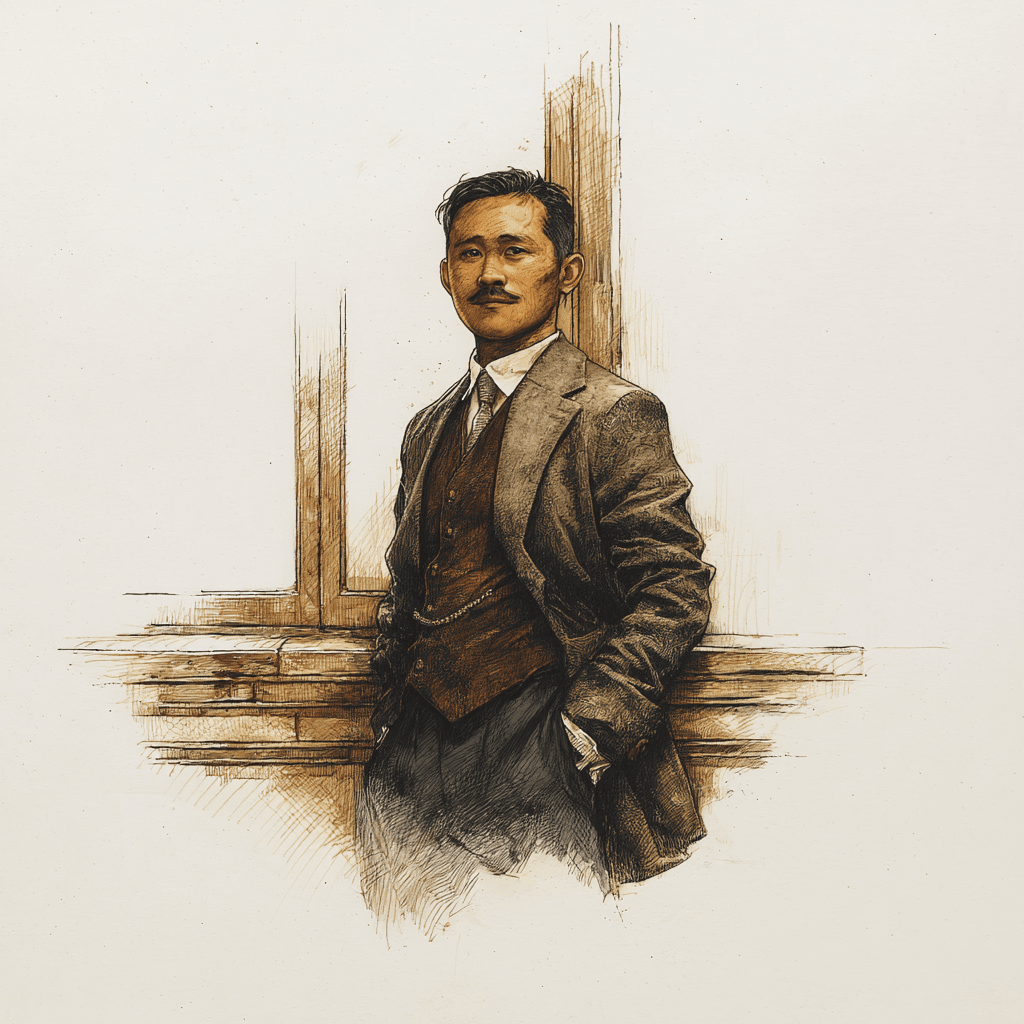
Tsai Pei-huo
Managing Director of the Cultural Association
Japanese Rule
1889–1983
Tsai Pei-huo (1889–1983) was born in Beigang in present-day Yunlin and became one of the core figures of cultural enlightenment and the modern Taiwanese national movement. After graduating from the Government-General's National Language School he studied at the Tokyo Higher Normal School in Japan, where he was deeply influenced by the climate of Taishō democracy and by Christian thought. In 1920 he joined fellow Taiwanese students in Tokyo to organize the Shin Min Hui society and launch the journal Taiwan Youth, becoming an early architect of the national movement. Returning to Taiwan in 1921 he joined Lin Hsien-tang in founding the Taiwanese Cultural Association and served as its managing director, running the day-to-day administration and propaganda work. From the same year he took part in the Petition Movement for the Establishment of a Taiwanese Parliament and was imprisoned in 1923 during the so-called Public Order Police Law Incident as one of the principal defendants. He was a long-time advocate of Pe̍h-ōe-jī, the church romanization of Taiwanese, arguing for mass literacy through a phonetic script, and compiled teaching materials and dictionaries to support it. He also composed nationalist songs such as the Taiwan Self-Government Song and 'Our Taiwan,' weaving the consciousness of the national movement into popular culture. After the 1927 split of the Cultural Association he remained with Lin Hsien-tang on the moderate right and helped to found the Taiwanese People's Party, sustaining a gradualist constitutional path. From the 1930s, as colonial repression intensified, his public activism receded, and during the Pacific War he undertook personal liaison and interpretation duties on the Chinese mainland. After 1945 he joined the Kuomintang and served as a minister without portfolio in the Executive Yuan, while continuing his church and social-reform work. He died in Taipei in 1983 at the age of 94, making him the longest-lived of the leading figures of the colonial-era national movement. He is widely credited with being the propaganda and organizational core of Taiwan's cultural enlightenment movement and a foundational figure of the Pe̍h-ōe-jī movement.
1921 Co-founded the Taiwanese Cultural Association, served as managing director
1923 Imprisoned in the Public Order Police Law Incident
Managing Director of the Cultural Association
Tsai Pei-huo
Era
Japanese Rule
Lifespan
1889–1983
Tsai Pei-huo (1889–1983) was born in Beigang in present-day Yunlin and became one of the core figures of cultural enlightenment and the modern Taiwanese national movement. After graduating from the Government-General's National Language School he studied at the Tokyo Higher Normal School in Japan, where he was deeply influenced by the climate of Taishō democracy and by Christian thought. In 1920 he joined fellow Taiwanese students in Tokyo to organize the Shin Min Hui society and launch the journal Taiwan Youth, becoming an early architect of the national movement. Returning to Taiwan in 1921 he joined Lin Hsien-tang in founding the Taiwanese Cultural Association and served as its managing director, running the day-to-day administration and propaganda work. From the same year he took part in the Petition Movement for the Establishment of a Taiwanese Parliament and was imprisoned in 1923 during the so-called Public Order Police Law Incident as one of the principal defendants. He was a long-time advocate of Pe̍h-ōe-jī, the church romanization of Taiwanese, arguing for mass literacy through a phonetic script, and compiled teaching materials and dictionaries to support it. He also composed nationalist songs such as the Taiwan Self-Government Song and 'Our Taiwan,' weaving the consciousness of the national movement into popular culture. After the 1927 split of the Cultural Association he remained with Lin Hsien-tang on the moderate right and helped to found the Taiwanese People's Party, sustaining a gradualist constitutional path. From the 1930s, as colonial repression intensified, his public activism receded, and during the Pacific War he undertook personal liaison and interpretation duties on the Chinese mainland. After 1945 he joined the Kuomintang and served as a minister without portfolio in the Executive Yuan, while continuing his church and social-reform work. He died in Taipei in 1983 at the age of 94, making him the longest-lived of the leading figures of the colonial-era national movement. He is widely credited with being the propaganda and organizational core of Taiwan's cultural enlightenment movement and a foundational figure of the Pe̍h-ōe-jī movement.
1921 Co-founded the Taiwanese Cultural Association, served as managing director
1923 Imprisoned in the Public Order Police Law Incident