

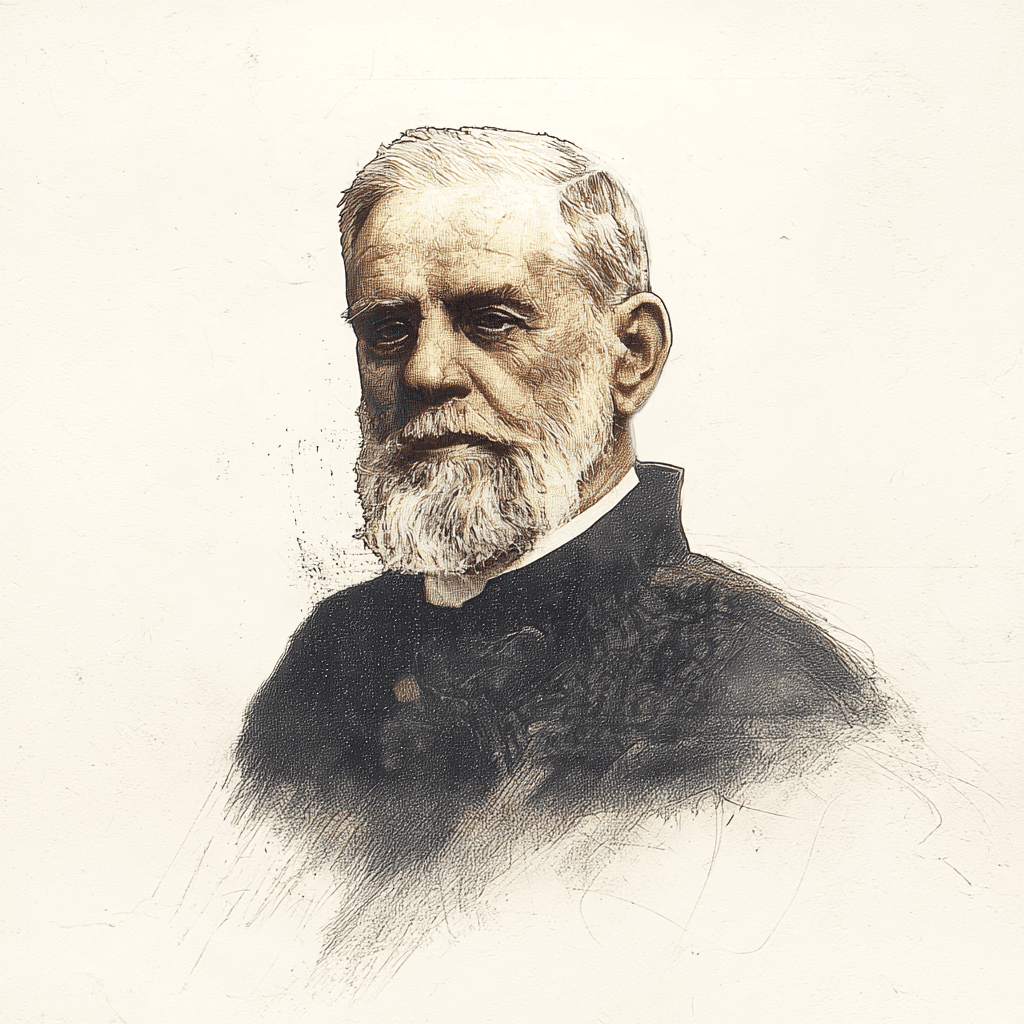
William Campbell
Presbyterian Missionary and Pioneer of Blind Education
Qing Dynasty
1841–1921
William Campbell, born in 1841 in Glasgow, Scotland, arrived in southern Taiwan in 1871 as a missionary of the English Presbyterian Church and spent fifty years building educational, medical, and charitable institutions that fundamentally transformed southern Taiwanese society, most notably through his founding of Taiwan's first school for the blind in 1891. He was assigned to Tainan — the principal city of the island and the base of the southern Presbyterian mission established by his predecessor Hugh Ritchie — and immediately began the intensive study of Hokkien that would make him one of the most fluent foreign speakers of the language in the nineteenth century and equip him for a lifetime of preaching, translation, and literary work in the vernacular. In collaboration with Thomas Barclay, who arrived in 1875 and became his closest partner in the southern mission, Campbell helped establish the foundational institutions of what would become a major strand of Taiwanese Protestantism: congregations, schools, a medical clinic, and a printing press that produced religious and educational literature in romanized Hokkien (Peh-oe-ji). His most celebrated achievement was the establishment in 1891 of a school for blind students in Tainan, the first institution of its kind in Taiwan, which he founded after encountering the desperate situation of blind children in the city who had no access to education or employment and were condemned to begging; the school used embossed text and tactile learning methods adapted from Western models that Campbell had researched specifically for this purpose. Campbell was a prolific scholar and writer in addition to his pastoral work: he compiled the authoritative Dictionary of the Amoy Vernacular (1913), a bilingual reference work covering Hokkien vocabulary that remained a standard resource for missionaries and language learners for decades. He also wrote Sketches from Formosa (1915) and Missionary Success in the Island of Formosa (1889), which together constitute the most comprehensive English-language account of southern Taiwanese society, indigenous culture, and the progress of the Presbyterian mission in the late Qing period. Campbell documented the indigenous Siraya people of the Tainan plains — among whom earlier Dutch missionaries had worked two centuries before — in meticulous ethnographic detail, preserving records of their language and customs that later became invaluable to historians and indigenous rights advocates. He continued his work without interruption through the transition from Qing to Japanese rule in 1895, adapting the mission's activities to the new colonial framework while maintaining the school, the hospital, and the congregation networks that had been built over three decades. Campbell retired to Scotland in 1917 after forty-six years in Taiwan, and died in Edinburgh in 1921, having outlived nearly all of the colleagues with whom he had built the southern mission. His school for the blind continued to operate throughout the Japanese colonial period and still exists today as the Tainan Municipal Tainan Special Education School, one of the oldest continuously operating educational institutions in Taiwan. William Campbell is widely regarded as the founding figure of inclusive education in Taiwan and one of the most significant contributors to southern Taiwanese cultural and religious development in the nineteenth century.
Founded Taiwan's first school for blind students in Tainan (1891), introducing embossed-text education to the island
Compiled the Dictionary of the Amoy Vernacular (1913), the authoritative Hokkien bilingual reference work used by missionaries and scholars for decades
Presbyterian Missionary and Pioneer of Blind Education
William Campbell
Era
Qing Dynasty
Lifespan
1841–1921
William Campbell, born in 1841 in Glasgow, Scotland, arrived in southern Taiwan in 1871 as a missionary of the English Presbyterian Church and spent fifty years building educational, medical, and charitable institutions that fundamentally transformed southern Taiwanese society, most notably through his founding of Taiwan's first school for the blind in 1891. He was assigned to Tainan — the principal city of the island and the base of the southern Presbyterian mission established by his predecessor Hugh Ritchie — and immediately began the intensive study of Hokkien that would make him one of the most fluent foreign speakers of the language in the nineteenth century and equip him for a lifetime of preaching, translation, and literary work in the vernacular. In collaboration with Thomas Barclay, who arrived in 1875 and became his closest partner in the southern mission, Campbell helped establish the foundational institutions of what would become a major strand of Taiwanese Protestantism: congregations, schools, a medical clinic, and a printing press that produced religious and educational literature in romanized Hokkien (Peh-oe-ji). His most celebrated achievement was the establishment in 1891 of a school for blind students in Tainan, the first institution of its kind in Taiwan, which he founded after encountering the desperate situation of blind children in the city who had no access to education or employment and were condemned to begging; the school used embossed text and tactile learning methods adapted from Western models that Campbell had researched specifically for this purpose. Campbell was a prolific scholar and writer in addition to his pastoral work: he compiled the authoritative Dictionary of the Amoy Vernacular (1913), a bilingual reference work covering Hokkien vocabulary that remained a standard resource for missionaries and language learners for decades. He also wrote Sketches from Formosa (1915) and Missionary Success in the Island of Formosa (1889), which together constitute the most comprehensive English-language account of southern Taiwanese society, indigenous culture, and the progress of the Presbyterian mission in the late Qing period. Campbell documented the indigenous Siraya people of the Tainan plains — among whom earlier Dutch missionaries had worked two centuries before — in meticulous ethnographic detail, preserving records of their language and customs that later became invaluable to historians and indigenous rights advocates. He continued his work without interruption through the transition from Qing to Japanese rule in 1895, adapting the mission's activities to the new colonial framework while maintaining the school, the hospital, and the congregation networks that had been built over three decades. Campbell retired to Scotland in 1917 after forty-six years in Taiwan, and died in Edinburgh in 1921, having outlived nearly all of the colleagues with whom he had built the southern mission. His school for the blind continued to operate throughout the Japanese colonial period and still exists today as the Tainan Municipal Tainan Special Education School, one of the oldest continuously operating educational institutions in Taiwan. William Campbell is widely regarded as the founding figure of inclusive education in Taiwan and one of the most significant contributors to southern Taiwanese cultural and religious development in the nineteenth century.
Founded Taiwan's first school for blind students in Tainan (1891), introducing embossed-text education to the island
Compiled the Dictionary of the Amoy Vernacular (1913), the authoritative Hokkien bilingual reference work used by missionaries and scholars for decades