

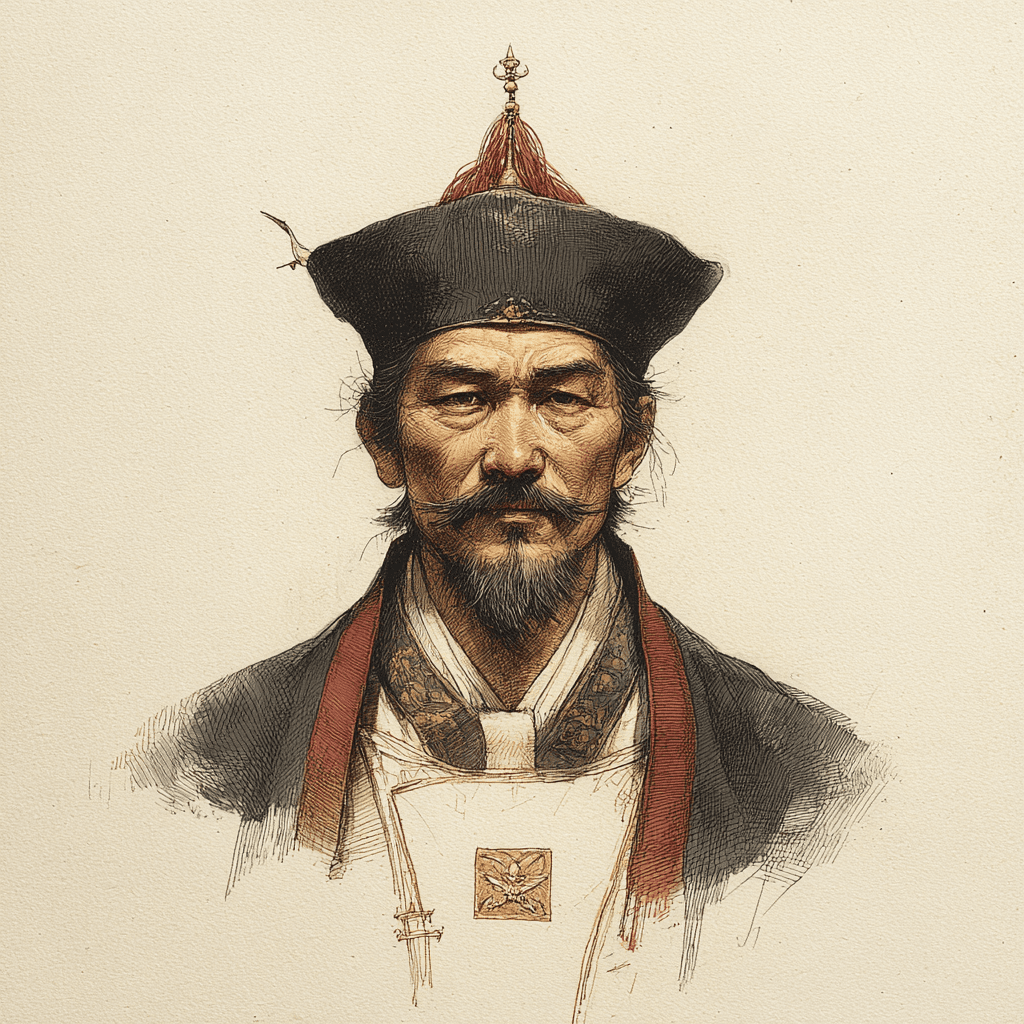
Cao Jin
Qing County Magistrate, Builder of Cao Gong Canal
Imperial Frontier
1787–1849
Cao Jin, courtesy name Huaipu, was a Qing dynasty official from Huaiqing in Henan who earned his metropolitan degree during the Daoguang reign and came to be remembered as one of the most consequential administrators in southern Taiwan's history. Appointed magistrate of Fengshan County in 1838, he quickly diagnosed the root cause of the district's chronic agricultural instability: inadequate irrigation left farmland at the mercy of seasonal extremes. Over four years he mobilised local communities to construct a major canal network — the Cao Gong Canal system — stretching more than forty kilometres and irrigating thousands of jia of farmland across the Kaohsiung plain. The project transformed erratic, flood-prone lowlands into reliable agricultural land, triggering a surge in settlement and grain output across southern Taiwan. Beyond water management, Cao renovated the county seat's walls, pacified banditry, and promoted classical education, earning a reputation as a model official. Grateful residents enshrined him as Lord Cao, a title and temple that persist to this day; the canal bearing his name remains partially operational into the modern era. He returned to Taiwan in 1847 as Tamsui Sub-prefect, extending his agricultural development work northward. Cao Jin's hydraulic legacy stands as one of the most durable contributions any Qing administrator left on the island's landscape.
From 1838 to 1842, mobilised Fengshan communities to construct the Cao Gong Canal system — over forty kilometres of waterways irrigating thousands of jia of farmland across the Kaohsiung plain.
Venerated as Lord Cao by grateful residents; his canal remains partially operational today, and temples in his honour stand as testament to nearly two centuries of agricultural legacy.
Qing County Magistrate, Builder of Cao Gong Canal
Cao Jin
Era
Imperial Frontier
Lifespan
1787–1849
Cao Jin, courtesy name Huaipu, was a Qing dynasty official from Huaiqing in Henan who earned his metropolitan degree during the Daoguang reign and came to be remembered as one of the most consequential administrators in southern Taiwan's history. Appointed magistrate of Fengshan County in 1838, he quickly diagnosed the root cause of the district's chronic agricultural instability: inadequate irrigation left farmland at the mercy of seasonal extremes. Over four years he mobilised local communities to construct a major canal network — the Cao Gong Canal system — stretching more than forty kilometres and irrigating thousands of jia of farmland across the Kaohsiung plain. The project transformed erratic, flood-prone lowlands into reliable agricultural land, triggering a surge in settlement and grain output across southern Taiwan. Beyond water management, Cao renovated the county seat's walls, pacified banditry, and promoted classical education, earning a reputation as a model official. Grateful residents enshrined him as Lord Cao, a title and temple that persist to this day; the canal bearing his name remains partially operational into the modern era. He returned to Taiwan in 1847 as Tamsui Sub-prefect, extending his agricultural development work northward. Cao Jin's hydraulic legacy stands as one of the most durable contributions any Qing administrator left on the island's landscape.
From 1838 to 1842, mobilised Fengshan communities to construct the Cao Gong Canal system — over forty kilometres of waterways irrigating thousands of jia of farmland across the Kaohsiung plain.
Venerated as Lord Cao by grateful residents; his canal remains partially operational today, and temples in his honour stand as testament to nearly two centuries of agricultural legacy.