

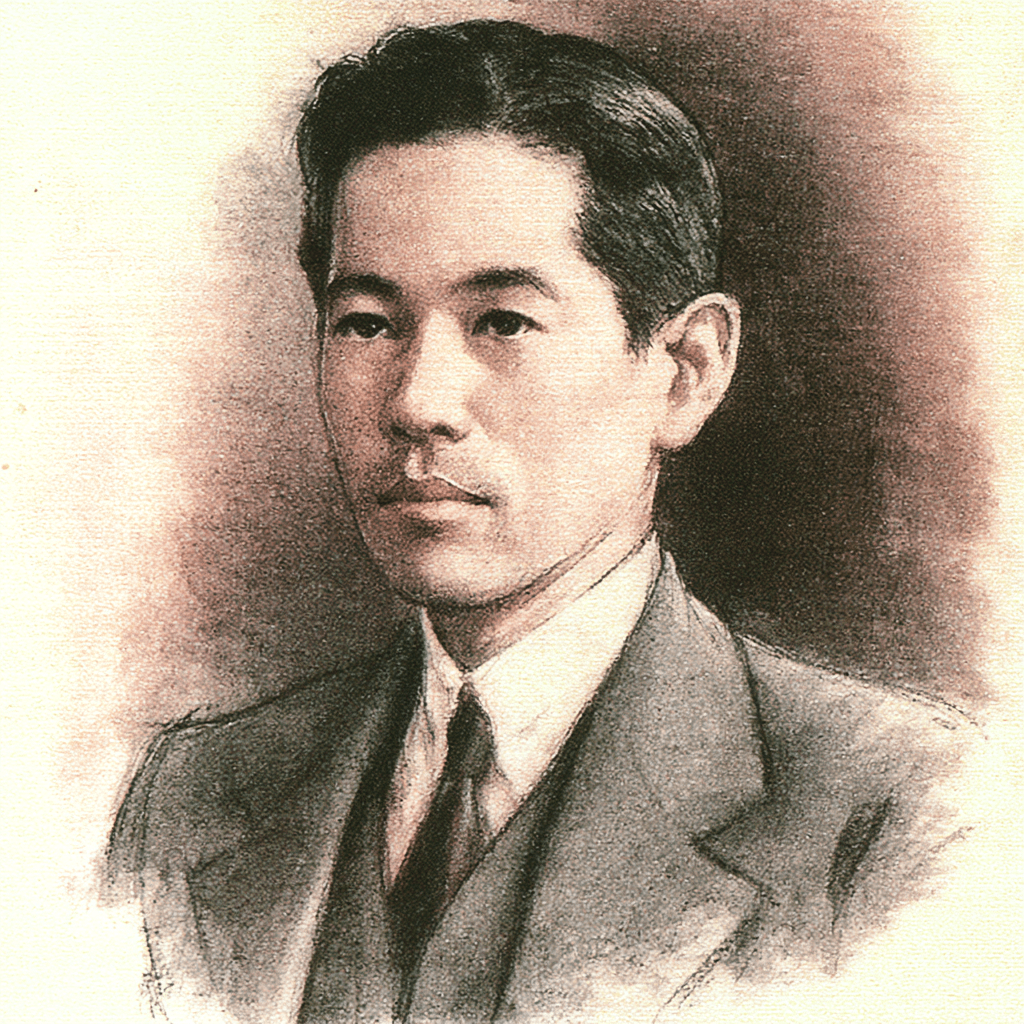
Chen Hsin
Financier & Economist
Post-War Taiwan
1893–1947
Chen Hsin, born in 1893 in Dajia, Taichung, was among the most prominent financiers and economists of the late-colonial and early post-war eras. He studied at Keio University in Japan and then pursued economics at Columbia University in the United States, earning a master's degree — one of the few Taiwanese of his time with full modern training in economics. Returning home, he devoted himself to finance, founding the Tai Tong Trust Company in 1926, one of the few Taiwanese-led financial institutions under Japanese rule. He argued that the Taiwanese should command their own capital and financial lifelines and raise their people's standing through economic power, and he actively joined social movements such as the Taiwan Cultural Association. Throughout the colonial period he worked, under the constraints of the colonial financial system, to win space for Taiwanese economic autonomy. After World War II he held hopes for the new order and organized the Ta Kung Enterprise Company, seeking to pool Taiwanese capital and take part in post-war reconstruction. Yet his social prestige and economic influence made him an object of the authorities' wariness. After the February 28 Incident broke out in 1947, security agents took him away in March under the pretext of negotiation; he was never seen again and is generally believed to have been killed. His death is a representative case of the purge of Taiwan's economic elite during the incident. Chen devoted his life to Taiwanese financial autonomy and economic modernization and is remembered as a pioneer of native Taiwanese finance, his tragic end symbolizing the grave setback to post-war Taiwanese private capital.
Arrested and killed during the February 28 Incident (1947)
Founded the Tai Tong Trust to advance Taiwanese financial autonomy
Financier & Economist
Chen Hsin
Era
Post-War Taiwan
Lifespan
1893–1947
Chen Hsin, born in 1893 in Dajia, Taichung, was among the most prominent financiers and economists of the late-colonial and early post-war eras. He studied at Keio University in Japan and then pursued economics at Columbia University in the United States, earning a master's degree — one of the few Taiwanese of his time with full modern training in economics. Returning home, he devoted himself to finance, founding the Tai Tong Trust Company in 1926, one of the few Taiwanese-led financial institutions under Japanese rule. He argued that the Taiwanese should command their own capital and financial lifelines and raise their people's standing through economic power, and he actively joined social movements such as the Taiwan Cultural Association. Throughout the colonial period he worked, under the constraints of the colonial financial system, to win space for Taiwanese economic autonomy. After World War II he held hopes for the new order and organized the Ta Kung Enterprise Company, seeking to pool Taiwanese capital and take part in post-war reconstruction. Yet his social prestige and economic influence made him an object of the authorities' wariness. After the February 28 Incident broke out in 1947, security agents took him away in March under the pretext of negotiation; he was never seen again and is generally believed to have been killed. His death is a representative case of the purge of Taiwan's economic elite during the incident. Chen devoted his life to Taiwanese financial autonomy and economic modernization and is remembered as a pioneer of native Taiwanese finance, his tragic end symbolizing the grave setback to post-war Taiwanese private capital.
Arrested and killed during the February 28 Incident (1947)
Founded the Tai Tong Trust to advance Taiwanese financial autonomy