

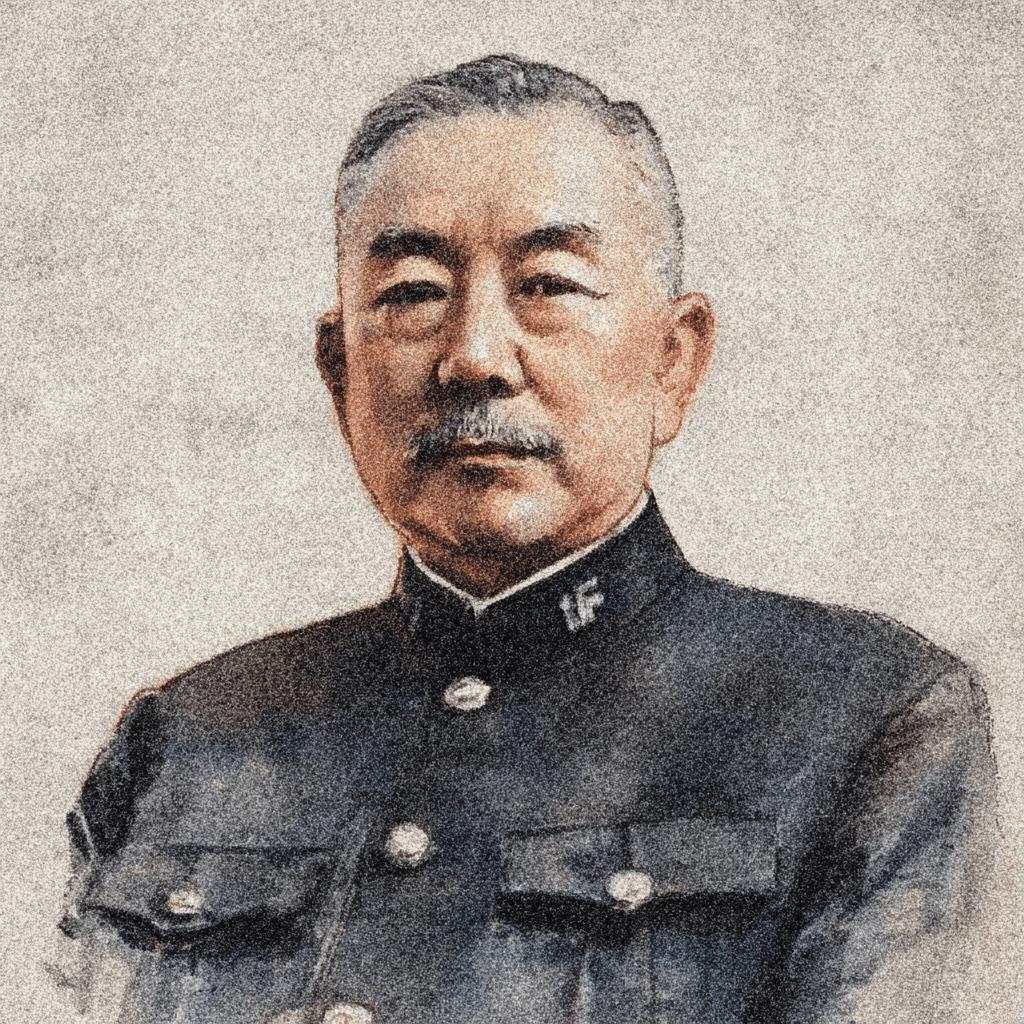
Chen Yi
Chief Executive of Taiwan Province
Post-War Taiwan
1883–1950
Chen Yi, born in 1883 in Shaoxing, Zhejiang, was a Nationalist military officer and provincial administrator whose 1945–1947 governorship of Taiwan precipitated the February 28 Incident, the most violent event in modern Taiwanese history. He received early military training in Japan and entered the Beiyang army before joining Sun Yat-sen's Tongmenghui and shifting allegiance to the Nationalist movement. He served as Governor of Fujian Province from 1934 to 1941, where his administration of opium monopolies, currency reform, and wartime mobilization developed the harsh, monopolistic governance style he would later replicate on Taiwan. He headed the wartime Taiwan Investigation Committee from 1944, the body charged with planning the takeover of the colony from Japan, and was appointed Chief Executive of the Taiwan Provincial Administrative Office. On 25 October 1945 he accepted the formal Japanese surrender at the Taipei City Hall, an act marked by elaborate ceremony and high local expectations after fifty years of colonial rule. His administration imposed sweeping monopolies on tobacco, salt, alcohol, and camphor; permitted rampant corruption among mainlander officials; and engineered the hyperinflation that quickly destroyed the savings of the island's population. The new regime systematically excluded Taiwanese — including former colonial civil servants and professionals — from senior positions, replacing them with mainlander appointees whose conduct islanders frequently described as colonial behavior in a new uniform. On 27 February 1947 the beating of a Taipei cigarette seller by Monopoly Bureau officers ignited mass protests across the island, which Chen Yi initially negotiated with before secretly requesting military reinforcements from the mainland. From 8 March 1947 the arriving 21st Division and Garrison Command troops conducted a systematic crackdown that killed several thousand Taiwanese — including a deliberately targeted elite of professionals, intellectuals, and former local officials. He was removed from the Taiwan post in May 1947 in response to the scandal but was protected by Chiang Kai-shek and reassigned as Governor of Zhejiang Province in 1948. He attempted to defect to the Chinese Communist Party in early 1949, was discovered, arrested, and brought to Taiwan, where he was tried by court-martial. He was executed by firing squad in Taipei in June 1950 for treason, and remains one of the most reviled figures in Taiwanese historical memory, the official face of the post-war crackdown whose memory has been continually relitigated through the transitional-justice processes of the post-1987 era.
Appointed Chief Executive of Taiwan (1945), overseeing the takeover from Japan
His administration's failures led to the February 28 Incident (1947)
Chief Executive of Taiwan Province
Chen Yi
Era
Post-War Taiwan
Lifespan
1883–1950
Chen Yi, born in 1883 in Shaoxing, Zhejiang, was a Nationalist military officer and provincial administrator whose 1945–1947 governorship of Taiwan precipitated the February 28 Incident, the most violent event in modern Taiwanese history. He received early military training in Japan and entered the Beiyang army before joining Sun Yat-sen's Tongmenghui and shifting allegiance to the Nationalist movement. He served as Governor of Fujian Province from 1934 to 1941, where his administration of opium monopolies, currency reform, and wartime mobilization developed the harsh, monopolistic governance style he would later replicate on Taiwan. He headed the wartime Taiwan Investigation Committee from 1944, the body charged with planning the takeover of the colony from Japan, and was appointed Chief Executive of the Taiwan Provincial Administrative Office. On 25 October 1945 he accepted the formal Japanese surrender at the Taipei City Hall, an act marked by elaborate ceremony and high local expectations after fifty years of colonial rule. His administration imposed sweeping monopolies on tobacco, salt, alcohol, and camphor; permitted rampant corruption among mainlander officials; and engineered the hyperinflation that quickly destroyed the savings of the island's population. The new regime systematically excluded Taiwanese — including former colonial civil servants and professionals — from senior positions, replacing them with mainlander appointees whose conduct islanders frequently described as colonial behavior in a new uniform. On 27 February 1947 the beating of a Taipei cigarette seller by Monopoly Bureau officers ignited mass protests across the island, which Chen Yi initially negotiated with before secretly requesting military reinforcements from the mainland. From 8 March 1947 the arriving 21st Division and Garrison Command troops conducted a systematic crackdown that killed several thousand Taiwanese — including a deliberately targeted elite of professionals, intellectuals, and former local officials. He was removed from the Taiwan post in May 1947 in response to the scandal but was protected by Chiang Kai-shek and reassigned as Governor of Zhejiang Province in 1948. He attempted to defect to the Chinese Communist Party in early 1949, was discovered, arrested, and brought to Taiwan, where he was tried by court-martial. He was executed by firing squad in Taipei in June 1950 for treason, and remains one of the most reviled figures in Taiwanese historical memory, the official face of the post-war crackdown whose memory has been continually relitigated through the transitional-justice processes of the post-1987 era.
Appointed Chief Executive of Taiwan (1945), overseeing the takeover from Japan
His administration's failures led to the February 28 Incident (1947)