

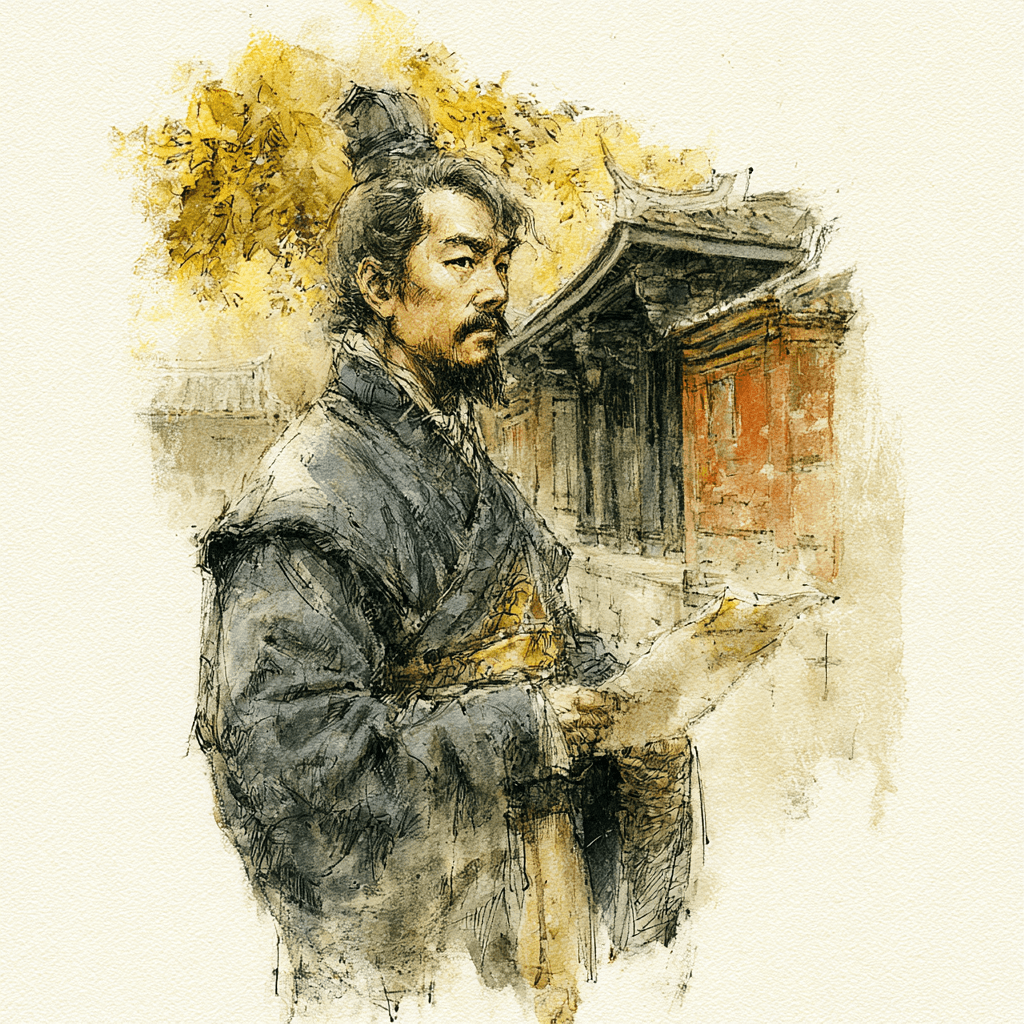
Chen Yonghua
Chief Administrator of Tungning
Tungning Kingdom
1634–1680
Chen Yong-hua, born in 1634 in Tong'an, Fujian, was the principal civilian architect of the Kingdom of Tungning and the most influential statesman of seventeenth-century Han Chinese Taiwan. His father Chen Ding was a Ming loyalist official who took his own life rather than serve the Qing after the fall of Fuzhou, an act that shaped the younger Chen's lifelong commitment to the Ming cause. Recommended to Koxinga as a young man, he impressed the warlord with his comprehensive policy proposals and was retained at the inner court as a trusted strategist. After the conquest of Taiwan he served Zheng Jing as Counsellor and Supervising Officer (諮議參軍), holding effective executive responsibility for the civilian government. He oversaw the systematic conversion of Han military colonies into permanent farms, introduced sugarcane cultivation and refined salt monopolies, and laid out the administrative grid of Chengtian Prefecture. In 1665 he founded the Tainan Confucian Temple, Taiwan's first such institution, and instituted civil examinations on the mainland model, opening pathways to scholarly status for islander Chinese for the first time. He expanded ceramic, sugar, and shipbuilding industries and cultivated trade routes to Japan and the Spanish Philippines, generating revenues that sustained the Zheng war effort. While Zheng Jing conducted the long mainland expedition from 1673 to 1680, Chen acted as effective regent in Taiwan alongside the young heir Zheng Kezang, whose education he also supervised. He married his daughter to Zheng Kezang, a union meant to bind the Tungning succession to civilian Confucian governance. Late tradition associates him with the founding of the secret Tiandihui (Heaven and Earth Society) brotherhoods, though the historical evidence for this connection is weak and contested. He died in 1680, shortly before Zheng Jing's defeated return from the mainland, sparing him the catastrophe of the palace coup that destroyed his family the following year. Chen is popularly known as Taiwan's Zhuge Liang for his role in turning a precarious military regime into a state with credible civilian institutions, an achievement that long outlasted the dynasty he served.
Founded Taiwan's first Confucian Temple and civil examination system
Chief Administrator of Tungning
Chen Yonghua
Era
Tungning Kingdom
Lifespan
1634–1680
Chen Yong-hua, born in 1634 in Tong'an, Fujian, was the principal civilian architect of the Kingdom of Tungning and the most influential statesman of seventeenth-century Han Chinese Taiwan. His father Chen Ding was a Ming loyalist official who took his own life rather than serve the Qing after the fall of Fuzhou, an act that shaped the younger Chen's lifelong commitment to the Ming cause. Recommended to Koxinga as a young man, he impressed the warlord with his comprehensive policy proposals and was retained at the inner court as a trusted strategist. After the conquest of Taiwan he served Zheng Jing as Counsellor and Supervising Officer (諮議參軍), holding effective executive responsibility for the civilian government. He oversaw the systematic conversion of Han military colonies into permanent farms, introduced sugarcane cultivation and refined salt monopolies, and laid out the administrative grid of Chengtian Prefecture. In 1665 he founded the Tainan Confucian Temple, Taiwan's first such institution, and instituted civil examinations on the mainland model, opening pathways to scholarly status for islander Chinese for the first time. He expanded ceramic, sugar, and shipbuilding industries and cultivated trade routes to Japan and the Spanish Philippines, generating revenues that sustained the Zheng war effort. While Zheng Jing conducted the long mainland expedition from 1673 to 1680, Chen acted as effective regent in Taiwan alongside the young heir Zheng Kezang, whose education he also supervised. He married his daughter to Zheng Kezang, a union meant to bind the Tungning succession to civilian Confucian governance. Late tradition associates him with the founding of the secret Tiandihui (Heaven and Earth Society) brotherhoods, though the historical evidence for this connection is weak and contested. He died in 1680, shortly before Zheng Jing's defeated return from the mainland, sparing him the catastrophe of the palace coup that destroyed his family the following year. Chen is popularly known as Taiwan's Zhuge Liang for his role in turning a precarious military regime into a state with credible civilian institutions, an achievement that long outlasted the dynasty he served.
Founded Taiwan's first Confucian Temple and civil examination system