

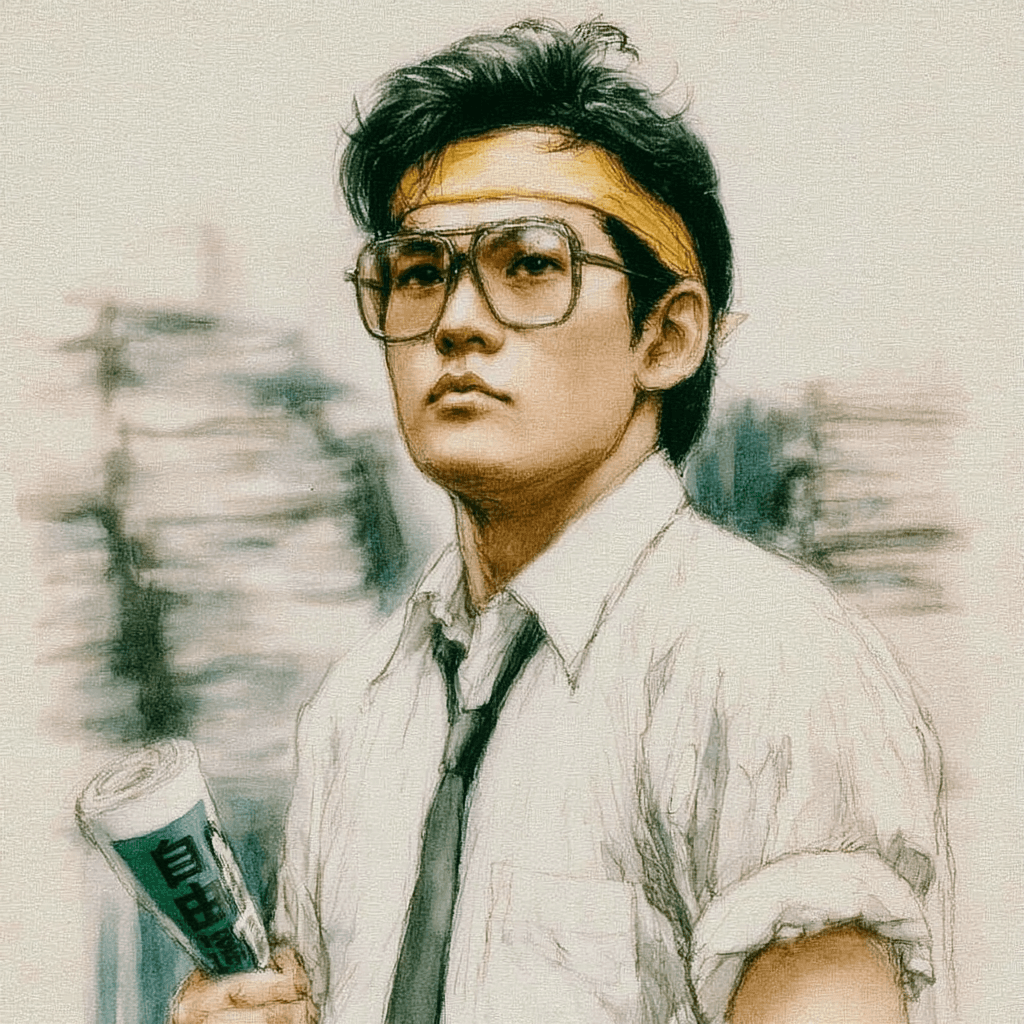
Cheng Nan-jung
Freedom of Speech Martyr
Democratic Transition
1947–1989
Cheng Nan-jung, born in 1947 in Yilan and raised in Taipei, was a publisher and activist who gave his life for the principle of "one hundred percent freedom of expression." Deeply steeped in liberal thought, he founded Freedom Era Weekly in 1984 and waged a relentless struggle against the regime's machinery of censorship: each time a publication was banned he revived another under one of the dozens of licenses he had applied for in advance. In late 1988 he published a Draft Constitution for a Republic of Taiwan, an act the authorities charged as sedition. Refusing to recognize the jurisdiction of a regime he deemed illegitimate, he declared, "The Kuomintang cannot arrest me; they can only seize my corpse," and locked himself in his editor's room for seventy-one days. On April 7, 1989, as police forced their way in, he set himself ablaze, fulfilling his vow in the flames. His self-immolation — followed by that of Chan Yi-hua at his funeral — seared the conscience of society and spurred the movement that led to the 1992 amendment of Article 100 of the Criminal Code, ending the criminalization of pure speech and thought. His scorched office is preserved today as the Cheng Nan-jung Memorial Museum, and April 7 was later designated Taiwan's Freedom of Speech Day.
Founded Freedom Era Weekly in 1984, fighting for "one hundred percent freedom of expression"
Self-immolated on April 7, 1989, resisting arrest for sedition; April 7 is now Freedom of Speech Day
Freedom of Speech Martyr
Cheng Nan-jung
Era
Democratic Transition
Lifespan
1947–1989
Cheng Nan-jung, born in 1947 in Yilan and raised in Taipei, was a publisher and activist who gave his life for the principle of "one hundred percent freedom of expression." Deeply steeped in liberal thought, he founded Freedom Era Weekly in 1984 and waged a relentless struggle against the regime's machinery of censorship: each time a publication was banned he revived another under one of the dozens of licenses he had applied for in advance. In late 1988 he published a Draft Constitution for a Republic of Taiwan, an act the authorities charged as sedition. Refusing to recognize the jurisdiction of a regime he deemed illegitimate, he declared, "The Kuomintang cannot arrest me; they can only seize my corpse," and locked himself in his editor's room for seventy-one days. On April 7, 1989, as police forced their way in, he set himself ablaze, fulfilling his vow in the flames. His self-immolation — followed by that of Chan Yi-hua at his funeral — seared the conscience of society and spurred the movement that led to the 1992 amendment of Article 100 of the Criminal Code, ending the criminalization of pure speech and thought. His scorched office is preserved today as the Cheng Nan-jung Memorial Museum, and April 7 was later designated Taiwan's Freedom of Speech Day.
Founded Freedom Era Weekly in 1984, fighting for "one hundred percent freedom of expression"
Self-immolated on April 7, 1989, resisting arrest for sedition; April 7 is now Freedom of Speech Day