

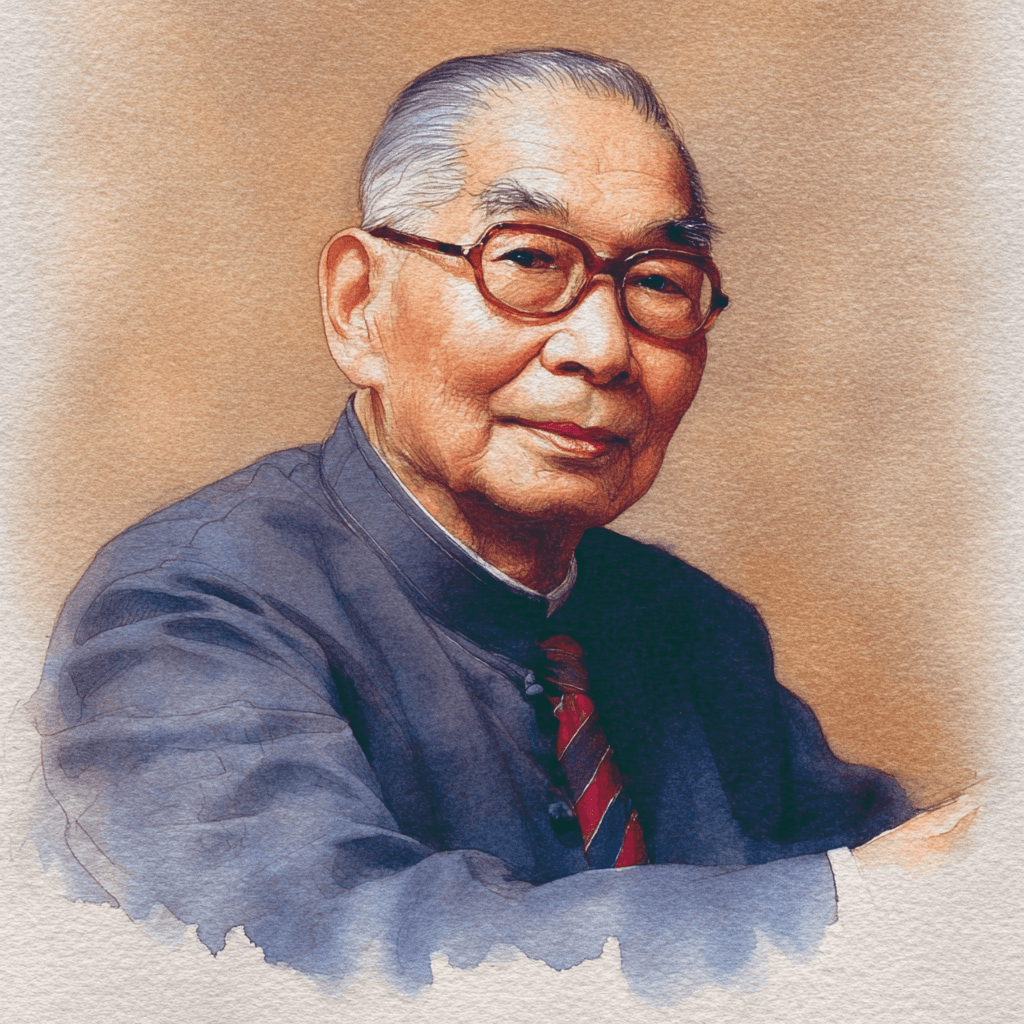
Chiang Ching-kuo
President of the Republic of China
Authoritarian Era / Democratic Transition
1910–1988
Chiang Ching-kuo, born in 1910 in Xikou, Zhejiang, as the eldest son of Chiang Kai-shek, served as Premier and then as President of the Republic of China and is the figure most directly responsible for the political liberalization of Taiwan in the 1980s. He spent his formative years in the Soviet Union, where he had been sent in 1925 at the age of fifteen for ideological education and where he subsequently married a Belarusian woman, Faina Vakhreva, before returning to China in 1937 after twelve years in Soviet exile. After 1949 he followed his father to Taiwan and built his political base by running the security and intelligence apparatus, including the Investigation Bureau and the General Political Warfare Department of the armed forces. As Defense Minister from 1965 and Vice Premier from 1969 he gained operational control of the major government ministries, and from 1972 he served as Premier under his father's continuing presidency. He launched the Ten Major Construction Projects from 1974, a state-directed infrastructure and heavy-industry program that built the freeway, electrified the railway, expanded ports, and added the petrochemical and steel base of the island's export economy. Following his father's death in 1975 and the end of an interim presidency under Yen Chia-kan, he assumed the presidency in 1978 and was reelected for a second six-year term in 1984. He systematically recruited native Taiwanese elites into senior positions, including Lin Yang-kang, Hsieh Tung-min, and Lee Teng-hui, breaking with the previous reliance on the mainlander faction of the KMT. Externally, his presidency coincided with the most painful diplomatic period in ROC history, including derecognition by the United States in 1979 and the simultaneous shift of most other governments to recognition of Beijing. Domestically, the Kaohsiung Incident of December 1979 and the Lin family massacre of 1980 marked the high tide of state violence against the tangwai movement, all under his security apparatus. From 1986 onward he authorized a remarkable about-face: tolerating the founding of the Democratic Progressive Party in September 1986, lifting martial law on Taiwan in July 1987, legalizing newspapers and opposition parties, and opening cross-strait family visits later that year. He died in office in January 1988 of complications from diabetes at the age of 77, with the succession passing to his vice president Lee Teng-hui. Chiang's late-life turn from security strongman to architect of managed liberalization remains the most consequential and contested aspect of his legacy, framing all subsequent debate about whether Taiwan's democracy was bestowed from above or wrested from below.
Lifted martial law (1987), ending 38 years of emergency rule
Legalized opposition parties and opened cross-strait family visits
President of the Republic of China
Chiang Ching-kuo
Era
Authoritarian Era / Democratic Transition
Lifespan
1910–1988
Chiang Ching-kuo, born in 1910 in Xikou, Zhejiang, as the eldest son of Chiang Kai-shek, served as Premier and then as President of the Republic of China and is the figure most directly responsible for the political liberalization of Taiwan in the 1980s. He spent his formative years in the Soviet Union, where he had been sent in 1925 at the age of fifteen for ideological education and where he subsequently married a Belarusian woman, Faina Vakhreva, before returning to China in 1937 after twelve years in Soviet exile. After 1949 he followed his father to Taiwan and built his political base by running the security and intelligence apparatus, including the Investigation Bureau and the General Political Warfare Department of the armed forces. As Defense Minister from 1965 and Vice Premier from 1969 he gained operational control of the major government ministries, and from 1972 he served as Premier under his father's continuing presidency. He launched the Ten Major Construction Projects from 1974, a state-directed infrastructure and heavy-industry program that built the freeway, electrified the railway, expanded ports, and added the petrochemical and steel base of the island's export economy. Following his father's death in 1975 and the end of an interim presidency under Yen Chia-kan, he assumed the presidency in 1978 and was reelected for a second six-year term in 1984. He systematically recruited native Taiwanese elites into senior positions, including Lin Yang-kang, Hsieh Tung-min, and Lee Teng-hui, breaking with the previous reliance on the mainlander faction of the KMT. Externally, his presidency coincided with the most painful diplomatic period in ROC history, including derecognition by the United States in 1979 and the simultaneous shift of most other governments to recognition of Beijing. Domestically, the Kaohsiung Incident of December 1979 and the Lin family massacre of 1980 marked the high tide of state violence against the tangwai movement, all under his security apparatus. From 1986 onward he authorized a remarkable about-face: tolerating the founding of the Democratic Progressive Party in September 1986, lifting martial law on Taiwan in July 1987, legalizing newspapers and opposition parties, and opening cross-strait family visits later that year. He died in office in January 1988 of complications from diabetes at the age of 77, with the succession passing to his vice president Lee Teng-hui. Chiang's late-life turn from security strongman to architect of managed liberalization remains the most consequential and contested aspect of his legacy, framing all subsequent debate about whether Taiwan's democracy was bestowed from above or wrested from below.
Lifted martial law (1987), ending 38 years of emergency rule
Legalized opposition parties and opened cross-strait family visits