

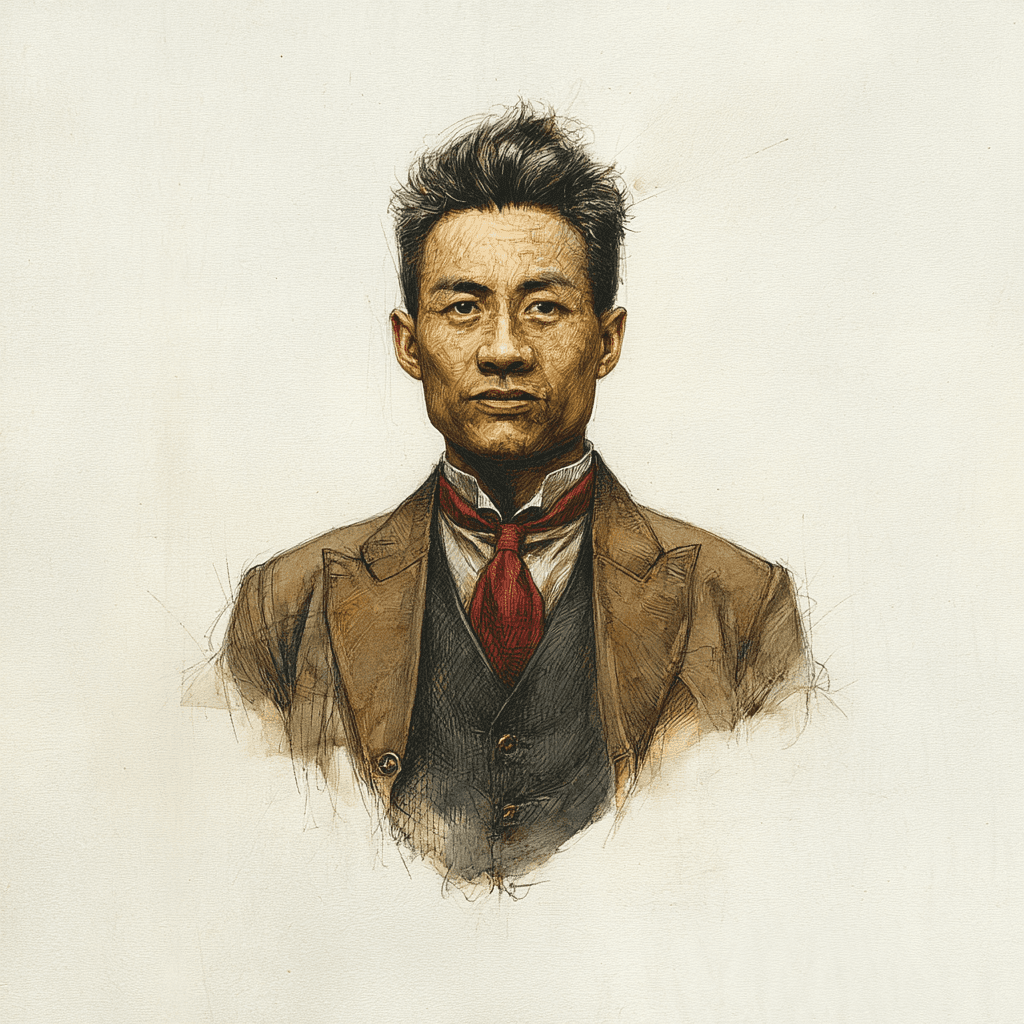
Chiang Wei-shui
Physician & Anti-Colonial Activist
Japanese Colonial Period
1890–1931
Chiang Wei-shui, born in 1890 in Yilan to a fortune-teller's family, became the foremost civilian leader of the non-violent anti-colonial movement in Taiwan during the Japanese era. He entered the Taiwan Sōtokufu Medical School in Taipei, the colony's most prestigious institution open to islanders, graduating in 1915 and establishing the Dai-an Hospital in the bustling Daitōtei district of Taipei. Drawing on his medical training, in 1921 he published a satirical Clinical Diagnosis of the Patient Taiwan, diagnosing the island as suffering from ignorance of world culture and prescribing education as cure. That same year he co-founded the Taiwan Cultural Association with Lin Hsien-tang and others, sending lecture troupes, founding reading clubs, and screening educational films across the island to awaken islanders' cultural and political consciousness. He was a driving force behind the Taiwanese Home Rule Petition Movement, petitioning the Imperial Diet annually for a colonial parliament representing Taiwan residents. In 1923 he was arrested in the so-called Chih-an Police Law Incident, a wide crackdown on petitioners that became a watershed moment galvanizing Taiwanese political activism. As internal tensions split the Cultural Association along left–right lines in 1927, he led a moderate wing to found the Taiwan People's Party, the first modern political party organized by Taiwanese. Through the party he agitated for universal suffrage, labor protections, the abolition of forced labor, and the dismantling of opium-licensing schemes, and helped organize the Taiwan Workers' Alliance. He publicly denounced the colonial government's handling of the Wushe Incident in 1930 and the renewed issuance of opium permits, drawing repeated arrests and police harassment. The Taiwan People's Party was forcibly dissolved by the colonial authorities in February 1931, and within months his health, eroded by years of activism and detention, gave way to typhoid fever. He died in August 1931 in Taipei at the age of 40, with tens of thousands attending the funeral procession in what became the largest civic gathering in colonial Taiwan. Chiang is widely revered as a founding father of Taiwan's democratic and civic tradition, his integration of medical practice, journalism, and party politics seen as a model of public-spirited activism.
Founded the Taiwan Cultural Association (1921) and Taiwan People's Party (1927)
Physician & Anti-Colonial Activist
Chiang Wei-shui
Era
Japanese Colonial Period
Lifespan
1890–1931
Chiang Wei-shui, born in 1890 in Yilan to a fortune-teller's family, became the foremost civilian leader of the non-violent anti-colonial movement in Taiwan during the Japanese era. He entered the Taiwan Sōtokufu Medical School in Taipei, the colony's most prestigious institution open to islanders, graduating in 1915 and establishing the Dai-an Hospital in the bustling Daitōtei district of Taipei. Drawing on his medical training, in 1921 he published a satirical Clinical Diagnosis of the Patient Taiwan, diagnosing the island as suffering from ignorance of world culture and prescribing education as cure. That same year he co-founded the Taiwan Cultural Association with Lin Hsien-tang and others, sending lecture troupes, founding reading clubs, and screening educational films across the island to awaken islanders' cultural and political consciousness. He was a driving force behind the Taiwanese Home Rule Petition Movement, petitioning the Imperial Diet annually for a colonial parliament representing Taiwan residents. In 1923 he was arrested in the so-called Chih-an Police Law Incident, a wide crackdown on petitioners that became a watershed moment galvanizing Taiwanese political activism. As internal tensions split the Cultural Association along left–right lines in 1927, he led a moderate wing to found the Taiwan People's Party, the first modern political party organized by Taiwanese. Through the party he agitated for universal suffrage, labor protections, the abolition of forced labor, and the dismantling of opium-licensing schemes, and helped organize the Taiwan Workers' Alliance. He publicly denounced the colonial government's handling of the Wushe Incident in 1930 and the renewed issuance of opium permits, drawing repeated arrests and police harassment. The Taiwan People's Party was forcibly dissolved by the colonial authorities in February 1931, and within months his health, eroded by years of activism and detention, gave way to typhoid fever. He died in August 1931 in Taipei at the age of 40, with tens of thousands attending the funeral procession in what became the largest civic gathering in colonial Taiwan. Chiang is widely revered as a founding father of Taiwan's democratic and civic tradition, his integration of medical practice, journalism, and party politics seen as a model of public-spirited activism.
Founded the Taiwan Cultural Association (1921) and Taiwan People's Party (1927)