

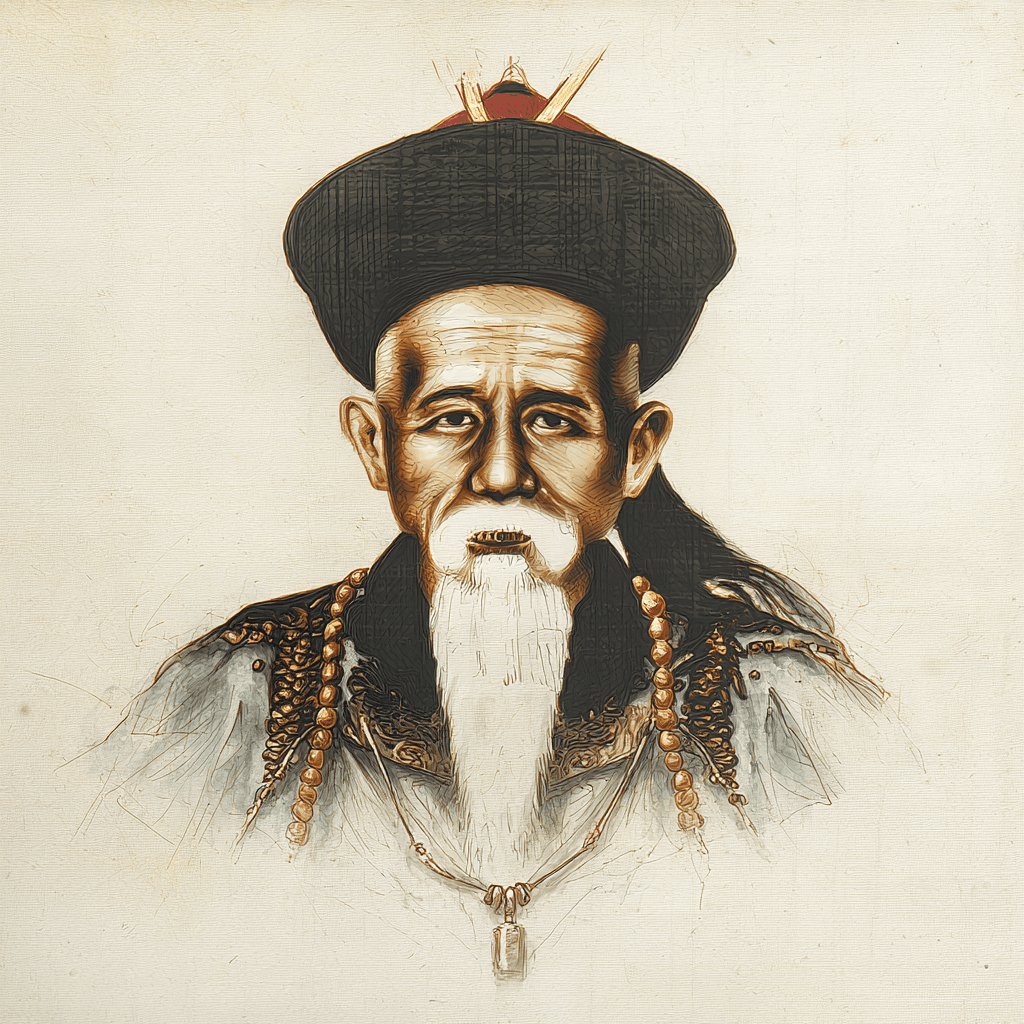
Ding Richang
Fujian Governor and Modernization Advocate for Taiwan
Qing Dynasty
1823–1882
Ding Richang, born in 1823 in Fengshun County, Guangdong, was a leading official of the Qing Self-Strengthening Movement, a close associate of Li Hongzhang, and as Fujian Governor-General in the mid-1870s the most vigorous advocate for modernizing Taiwan in the decade before Liu Mingchuan formalized the island's transformation as its first governor. He rose through provincial administration in Jiangsu, where his management of the Shanghai arsenal and collaboration with Li Hongzhang in military reform established his reputation as one of China's foremost technocratic modernizers, committed to introducing Western industrial and military technology within the framework of Confucian governance. Appointed Fujian Governor-General in 1875 with responsibility over Taiwan, Ding immediately recognized the island's strategic importance in the context of Japan's 1874 Taiwan Expedition and the growing Western presence in East Asian waters, and he submitted a series of ambitious reform memorials to the emperor outlining a comprehensive program for Taiwan's military and economic modernization. Among his most important initiatives were proposals to lay submarine telegraph cables connecting Taiwan to the mainland and to other treaty ports, to develop the island's coal deposits at Jilong (Keelung) using foreign mining expertise, to construct new military fortifications along the coast, and to extend administrative presence into the indigenous highlands that remained outside Qing control. Several of these proposals were adopted in modified form, and Ding's tenure saw the first serious Qing investment in Taiwan's infrastructure since the Shen Baozhen mission of 1874, including the establishment of a coal mining operation at Keelung and preliminary work on coastal defenses. He also pushed for the reform of Taiwan's civil administration, arguing that the corrupt and understaffed county system was incapable of managing the island's complex multiethnic society, and that Taiwan deserved elevation to full provincial status rather than remaining a dependent prefecture of Fujian — a recommendation that was eventually implemented in 1885, a decade after he made it. Ding was a prodigious writer as well as an official, and he compiled an influential anthology of governance texts and published works on military technology, mathematics, and classical scholarship that were widely read among the reform-minded official class of the late Qing. His progressive program in Taiwan was cut short by illness: he was forced to leave his post in 1878 after chronic health problems that had troubled him throughout his career became incapacitating, and he spent his final years in retirement in Guangdong, dying in 1882. His successor as the driving force of Taiwan reform, Liu Mingchuan, implemented many of the specific proposals that Ding had first articulated, making Ding in retrospect the intellectual architect of the transformation Liu Mingchuan is credited with executing. Ding Richang is widely regarded as the most important Qing official for Taiwan between the Shen Baozhen mission and the Liu Mingchuan governorship — the man who first articulated a vision of Taiwan as a modern strategic province and laid the groundwork for the reforms that would define the island's final decade under Qing rule.
Submitted comprehensive reform memorials to modernize Taiwan's military, coal mining, telegraph infrastructure, and administration (1875–78)
First advocated elevating Taiwan to full provincial status, a recommendation eventually implemented by Liu Mingchuan in 1885
Fujian Governor and Modernization Advocate for Taiwan
Ding Richang
Era
Qing Dynasty
Lifespan
1823–1882
Ding Richang, born in 1823 in Fengshun County, Guangdong, was a leading official of the Qing Self-Strengthening Movement, a close associate of Li Hongzhang, and as Fujian Governor-General in the mid-1870s the most vigorous advocate for modernizing Taiwan in the decade before Liu Mingchuan formalized the island's transformation as its first governor. He rose through provincial administration in Jiangsu, where his management of the Shanghai arsenal and collaboration with Li Hongzhang in military reform established his reputation as one of China's foremost technocratic modernizers, committed to introducing Western industrial and military technology within the framework of Confucian governance. Appointed Fujian Governor-General in 1875 with responsibility over Taiwan, Ding immediately recognized the island's strategic importance in the context of Japan's 1874 Taiwan Expedition and the growing Western presence in East Asian waters, and he submitted a series of ambitious reform memorials to the emperor outlining a comprehensive program for Taiwan's military and economic modernization. Among his most important initiatives were proposals to lay submarine telegraph cables connecting Taiwan to the mainland and to other treaty ports, to develop the island's coal deposits at Jilong (Keelung) using foreign mining expertise, to construct new military fortifications along the coast, and to extend administrative presence into the indigenous highlands that remained outside Qing control. Several of these proposals were adopted in modified form, and Ding's tenure saw the first serious Qing investment in Taiwan's infrastructure since the Shen Baozhen mission of 1874, including the establishment of a coal mining operation at Keelung and preliminary work on coastal defenses. He also pushed for the reform of Taiwan's civil administration, arguing that the corrupt and understaffed county system was incapable of managing the island's complex multiethnic society, and that Taiwan deserved elevation to full provincial status rather than remaining a dependent prefecture of Fujian — a recommendation that was eventually implemented in 1885, a decade after he made it. Ding was a prodigious writer as well as an official, and he compiled an influential anthology of governance texts and published works on military technology, mathematics, and classical scholarship that were widely read among the reform-minded official class of the late Qing. His progressive program in Taiwan was cut short by illness: he was forced to leave his post in 1878 after chronic health problems that had troubled him throughout his career became incapacitating, and he spent his final years in retirement in Guangdong, dying in 1882. His successor as the driving force of Taiwan reform, Liu Mingchuan, implemented many of the specific proposals that Ding had first articulated, making Ding in retrospect the intellectual architect of the transformation Liu Mingchuan is credited with executing. Ding Richang is widely regarded as the most important Qing official for Taiwan between the Shen Baozhen mission and the Liu Mingchuan governorship — the man who first articulated a vision of Taiwan as a modern strategic province and laid the groundwork for the reforms that would define the island's final decade under Qing rule.
Submitted comprehensive reform memorials to modernize Taiwan's military, coal mining, telegraph infrastructure, and administration (1875–78)
First advocated elevating Taiwan to full provincial status, a recommendation eventually implemented by Liu Mingchuan in 1885