

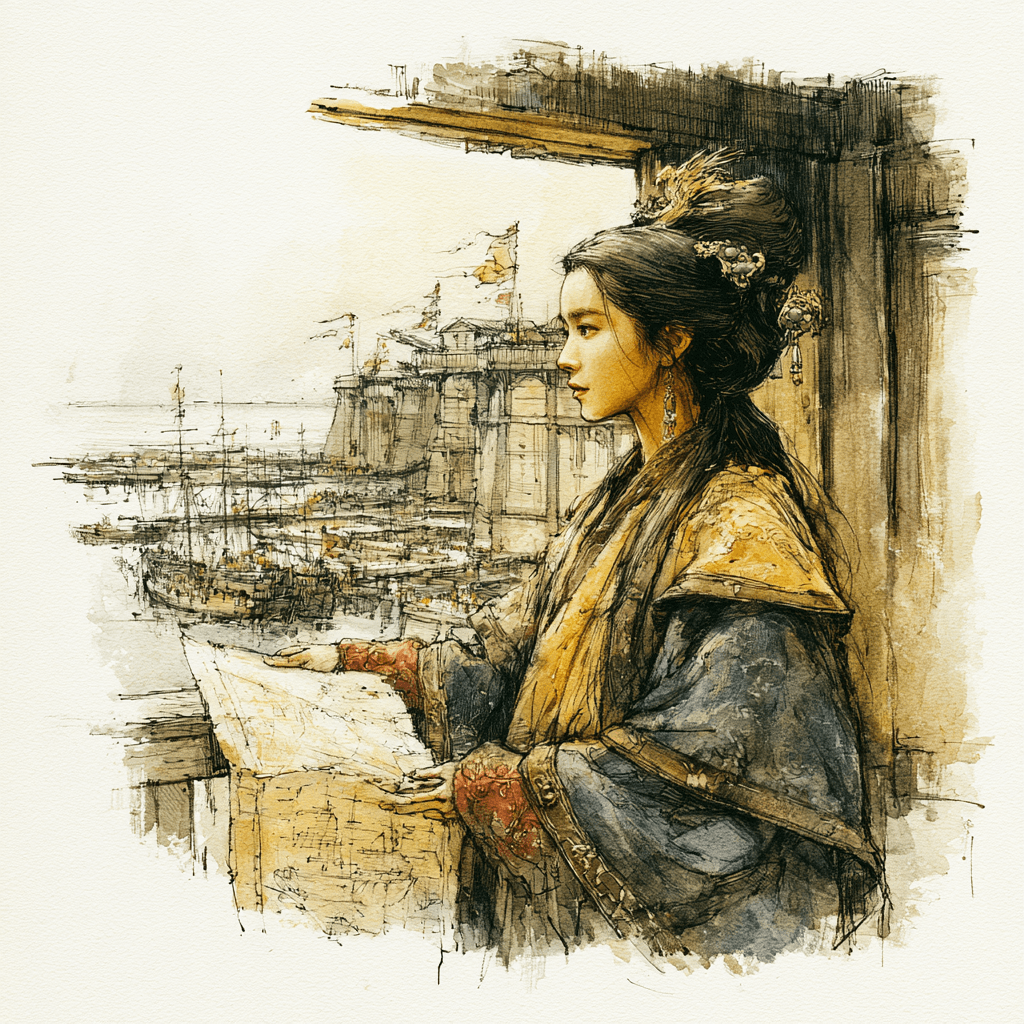
Lady Dong
Principal Consort of Koxinga
Tungning Kingdom
?–1681
Lady Dong was the principal consort of Koxinga, born to a prominent merchant family from Hui'an in Fujian, though her personal name is not preserved in the historical record. She married Koxinga in the 1640s and bore him a son, Zheng Jing, who would later succeed his father as ruler of the Tungning Kingdom. After the defection of Koxinga's father Zheng Zhilong to the Qing in 1646 and the death of Koxinga's mother of the Tagawa family, she accompanied the Zheng household through the long campaigns along the Fujian coast at the most precarious phase of the Ming loyalist resistance. When Koxinga crossed to Taiwan in 1661 she remained in the rear base at Xiamen, sustaining the political and logistical operations of the Zheng network alongside her daughter-in-law and grandchildren. In early 1662 Koxinga, enraged by reports from Xiamen that the heir apparent Zheng Jing had fathered a child by his younger brother's wet nurse Zhao Niang, issued an order from Fort Zeelandia for the execution of Lady Dong, Zheng Jing, the wet nurse, and the newborn infant. The Xiamen commanders collectively refused to obey, executing only the wet nurse and shielding Lady Dong and Zheng Jing, an act of insubordination that arguably saved the Zheng regime from self-destruction at its founding. After Koxinga's death in June 1662 and Zheng Jing's victory over his uncle Zheng Xi in the subsequent succession war, she crossed to Taiwan as Queen Dowager and became the senior authority of the Tungning inner court. Over the next two decades she mediated quietly behind the scenes among the leading commanders and clan members, playing a stabilizing role during Zheng Jing's prolonged westward campaign in support of the Revolt of the Three Feudatories. After Zheng Jing's death in 1681 she initially sought to install her eldest grandson Zheng Kezang, the heir designated by Zheng Jing and widely regarded as a competent prince. The minister Feng Xifan and allied courtiers persuaded her with the rumor that Kezang was not of Zheng blood but a child Zheng Jing had received from a Li merchant in Xiamen, and the exhausted dowager acquiesced to a deposition order under which Kezang was strangled in the palace by Feng's faction in what is known as the Coup of Eastern Ning. The murder of her favored grandson left her in inconsolable remorse, and she died of grief in the inner court of the Anping Palace only months later. Lady Dong is generally remembered as the dynastic pillar who bridged three generations of the Zheng family in Taiwan, and as the most direct witness to the internal collapse that drove the Tungning Kingdom to its end.
Acquiesced to the deposition of her grandson Zheng Kezang in the Coup of Eastern Ning (1681)
Principal Consort of Koxinga
Lady Dong
Era
Tungning Kingdom
Lifespan
?–1681
Lady Dong was the principal consort of Koxinga, born to a prominent merchant family from Hui'an in Fujian, though her personal name is not preserved in the historical record. She married Koxinga in the 1640s and bore him a son, Zheng Jing, who would later succeed his father as ruler of the Tungning Kingdom. After the defection of Koxinga's father Zheng Zhilong to the Qing in 1646 and the death of Koxinga's mother of the Tagawa family, she accompanied the Zheng household through the long campaigns along the Fujian coast at the most precarious phase of the Ming loyalist resistance. When Koxinga crossed to Taiwan in 1661 she remained in the rear base at Xiamen, sustaining the political and logistical operations of the Zheng network alongside her daughter-in-law and grandchildren. In early 1662 Koxinga, enraged by reports from Xiamen that the heir apparent Zheng Jing had fathered a child by his younger brother's wet nurse Zhao Niang, issued an order from Fort Zeelandia for the execution of Lady Dong, Zheng Jing, the wet nurse, and the newborn infant. The Xiamen commanders collectively refused to obey, executing only the wet nurse and shielding Lady Dong and Zheng Jing, an act of insubordination that arguably saved the Zheng regime from self-destruction at its founding. After Koxinga's death in June 1662 and Zheng Jing's victory over his uncle Zheng Xi in the subsequent succession war, she crossed to Taiwan as Queen Dowager and became the senior authority of the Tungning inner court. Over the next two decades she mediated quietly behind the scenes among the leading commanders and clan members, playing a stabilizing role during Zheng Jing's prolonged westward campaign in support of the Revolt of the Three Feudatories. After Zheng Jing's death in 1681 she initially sought to install her eldest grandson Zheng Kezang, the heir designated by Zheng Jing and widely regarded as a competent prince. The minister Feng Xifan and allied courtiers persuaded her with the rumor that Kezang was not of Zheng blood but a child Zheng Jing had received from a Li merchant in Xiamen, and the exhausted dowager acquiesced to a deposition order under which Kezang was strangled in the palace by Feng's faction in what is known as the Coup of Eastern Ning. The murder of her favored grandson left her in inconsolable remorse, and she died of grief in the inner court of the Anping Palace only months later. Lady Dong is generally remembered as the dynastic pillar who bridged three generations of the Zheng family in Taiwan, and as the most direct witness to the internal collapse that drove the Tungning Kingdom to its end.
Acquiesced to the deposition of her grandson Zheng Kezang in the Coup of Eastern Ning (1681)