

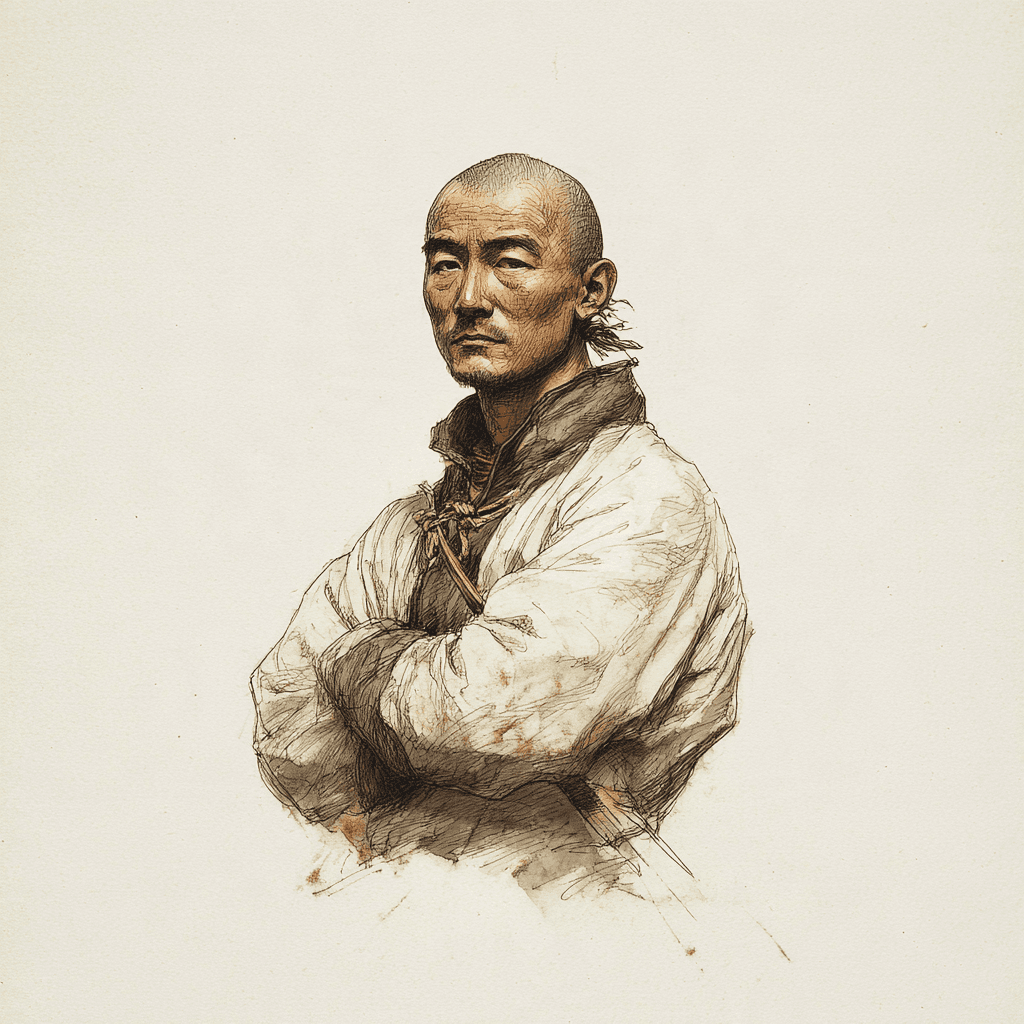
Du Junying
Leader of the 1721 Uprising
Qing Dynasty
1667–1721
Du Junying was born in 1667, his family originally from Haiyang county in Chaozhou prefecture, Guangdong. He crossed to Taiwan in 1707, rented land to farm along the Lower Tamsui River, and also collected rents from tenants for Shi Ren, the agent at Binglanglin, in present-day Yiting village, Neipu, Pingtung.
In 1720 Huang Lian, the interpreter for the Kalinga villages, reported him to the authorities for felling timber without permission, and he went into hiding at Binglanglin. The following year a Hokkien man, Ke Mei, urged him to rise on the grounds that the authorities were harassing people by commuting the grain levy to cash, and offered to gather men for him. He raised his banner in the hills in the third month of 1721 with some sixty men around him, four Cantonese-registered, three Hokkien and the rest local to Taiwan prefecture, and the following soon grew to tens of thousands. Zhu Yigui rose in the fourth month, the two forces broke the government troops at Chishan, and on the first of the fifth month they attacked the prefectural city together.
Once the city fell, the spoils and the titles had to be settled. He proposed making his own son Du Huisan king; the Hokkien commanders, who were the majority, put up Zhu Yigui, a fellow Hokkien. Zhu moved against him in the name of military discipline, he was beaten below the Chihkan tower and led his men north to the Huwei River and Maoergan. He was taken in the end and beheaded in Beijing.
His ethnic identity is still argued over. He was registered as Cantonese from Chaozhou and Hakka labourers followed him, but whether he was himself Hakka the sources do not settle. There is a cenotaph to him at Neipu in Pingtung where the incense has never gone out, and in the same year, across the same river, the men the court wrote down as righteous people were Cantonese-registered too.
Raised his banner first in the third month of 1721 and joined Zhu Yigui in taking the prefectural city
Broke with the Hokkien faction over who should be king, was defeated, fled north, and was captured and beheaded in Beijing
Du Junying
Leader of the 1721 Uprising
Era
Qing Dynasty
Lifespan
1667–1721
Du Junying was born in 1667, his family originally from Haiyang county in Chaozhou prefecture, Guangdong. He crossed to Taiwan in 1707, rented land to farm along the Lower Tamsui River, and also collected rents from tenants for Shi Ren, the agent at Binglanglin, in present-day Yiting village, Neipu, Pingtung.
In 1720 Huang Lian, the interpreter for the Kalinga villages, reported him to the authorities for felling timber without permission, and he went into hiding at Binglanglin. The following year a Hokkien man, Ke Mei, urged him to rise on the grounds that the authorities were harassing people by commuting the grain levy to cash, and offered to gather men for him. He raised his banner in the hills in the third month of 1721 with some sixty men around him, four Cantonese-registered, three Hokkien and the rest local to Taiwan prefecture, and the following soon grew to tens of thousands. Zhu Yigui rose in the fourth month, the two forces broke the government troops at Chishan, and on the first of the fifth month they attacked the prefectural city together.
Once the city fell, the spoils and the titles had to be settled. He proposed making his own son Du Huisan king; the Hokkien commanders, who were the majority, put up Zhu Yigui, a fellow Hokkien. Zhu moved against him in the name of military discipline, he was beaten below the Chihkan tower and led his men north to the Huwei River and Maoergan. He was taken in the end and beheaded in Beijing.
His ethnic identity is still argued over. He was registered as Cantonese from Chaozhou and Hakka labourers followed him, but whether he was himself Hakka the sources do not settle. There is a cenotaph to him at Neipu in Pingtung where the incense has never gone out, and in the same year, across the same river, the men the court wrote down as righteous people were Cantonese-registered too.
Raised his banner first in the third month of 1721 and joined Zhu Yigui in taking the prefectural city
Broke with the Hokkien faction over who should be king, was defeated, fled north, and was captured and beheaded in Beijing