

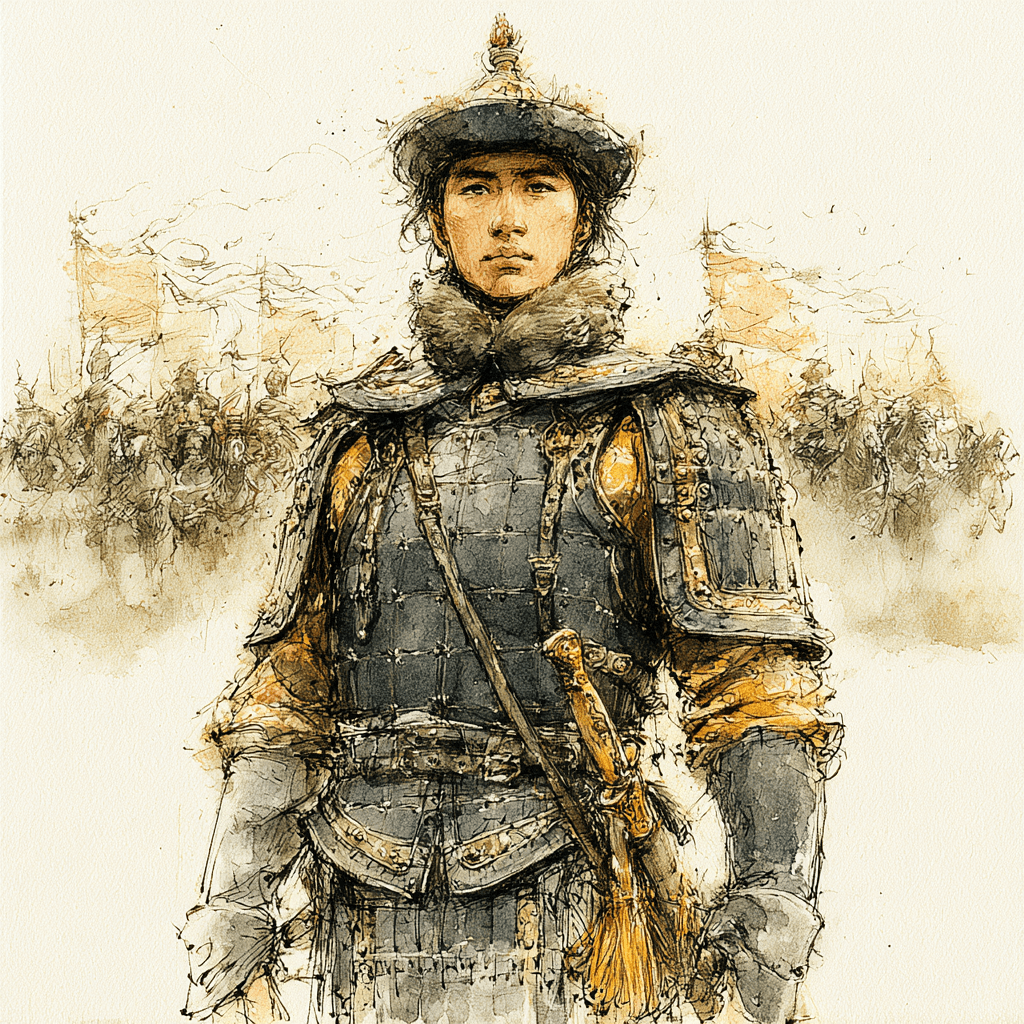
Fukang'an
Manchu General & Commander of the Lin Shuangwen Campaign
Qing Dynasty
1754–1796
Fukang'an was the most celebrated Manchu general of the late Qianlong reign, born in Beijing in 1754 to the Fuca clan as the third son of the Grand Secretary Fuheng and nephew of the Empress Xiaoxianchun, and raised within the palace alongside the imperial princes. The Qianlong Emperor cherished him almost as an adopted son, and from his teenage years bestowed on him senior appointments such as Guard of the Imperial Presence, grooming him as the empire's most prized military reserve. From the 1770s he served successively as Governor-General of Sichuan, Shaan-Gan, and Yun-Gui, and on Qianlong's orders led campaigns to pacify the Jinchuan, the Muslim oases, and the Gurkha kingdom, accumulating deep experience in command, logistics, and frontier ethnic policy. After the Lin Shuangwen rebellion broke out on Taiwan in 1786 and several earlier expeditions across the strait had failed, the emperor appointed him in early 1787 as Grand General and Imperial Commissioner, with full authority over military and civil affairs on both sides of the strait. In the winter of that year he led a force of sixty thousand Manchu, Han, Muslim, and indigenous garrison troops, equipped with the finest imperial firearms, in a two-pronged landing at Lukang and Anping that rapidly reversed the war. He personally led cavalry through the rebel cordon at Changhua to relieve the besieged city of Chu-lo, which had been holding out for six months on the brink of collapse, and combined precise artillery tactics with a policy of dividing the Hoklo, Hakka, and indigenous coalition to crush the rebellion completely by early 1788. He memorialized the resolute defense of the Chu-lo townsmen to the court, prompting the emperor to bestow the imperial name Jiayi on the city, a name that has remained in use ever since. Returning to Beijing he was enfeoffed as Duke Jiayong of the First Class for his Taiwan campaign and rose to the pinnacle of Manchu military rank within the imperial court. In 1792, when the Gurkha kingdom invaded the western reaches of Tibet, he led another army across the Himalayas into the Kathmandu valley, compelling Nepal to send tribute to the Qing and consolidating the empire's suzerainty over Tibet. He died of exhaustion and malaria in his camp in Hunan in 1796 while supervising the suppression of the Miao uprisings, at the age of just forty-two. The Qianlong Emperor, deeply grieved, broke precedent by posthumously enfeoffing him as a junior prince and composed an imperial elegy in his honor, an unusual distinction for a Manchu general of the period. Fukang'an is generally regarded as the emblematic figure of late-Qianlong imperial military power, and his suppression of the Lin Shuangwen rebellion together with his role in the imperial naming of Jiayi left an indelible imprint on the early modern history of Taiwan.
Led a 60,000-strong army to crush the Lin Shuangwen rebellion in 1787, prompting the imperial naming of Jiayi
Manchu General & Commander of the Lin Shuangwen Campaign
Fukang'an
Era
Qing Dynasty
Lifespan
1754–1796
Fukang'an was the most celebrated Manchu general of the late Qianlong reign, born in Beijing in 1754 to the Fuca clan as the third son of the Grand Secretary Fuheng and nephew of the Empress Xiaoxianchun, and raised within the palace alongside the imperial princes. The Qianlong Emperor cherished him almost as an adopted son, and from his teenage years bestowed on him senior appointments such as Guard of the Imperial Presence, grooming him as the empire's most prized military reserve. From the 1770s he served successively as Governor-General of Sichuan, Shaan-Gan, and Yun-Gui, and on Qianlong's orders led campaigns to pacify the Jinchuan, the Muslim oases, and the Gurkha kingdom, accumulating deep experience in command, logistics, and frontier ethnic policy. After the Lin Shuangwen rebellion broke out on Taiwan in 1786 and several earlier expeditions across the strait had failed, the emperor appointed him in early 1787 as Grand General and Imperial Commissioner, with full authority over military and civil affairs on both sides of the strait. In the winter of that year he led a force of sixty thousand Manchu, Han, Muslim, and indigenous garrison troops, equipped with the finest imperial firearms, in a two-pronged landing at Lukang and Anping that rapidly reversed the war. He personally led cavalry through the rebel cordon at Changhua to relieve the besieged city of Chu-lo, which had been holding out for six months on the brink of collapse, and combined precise artillery tactics with a policy of dividing the Hoklo, Hakka, and indigenous coalition to crush the rebellion completely by early 1788. He memorialized the resolute defense of the Chu-lo townsmen to the court, prompting the emperor to bestow the imperial name Jiayi on the city, a name that has remained in use ever since. Returning to Beijing he was enfeoffed as Duke Jiayong of the First Class for his Taiwan campaign and rose to the pinnacle of Manchu military rank within the imperial court. In 1792, when the Gurkha kingdom invaded the western reaches of Tibet, he led another army across the Himalayas into the Kathmandu valley, compelling Nepal to send tribute to the Qing and consolidating the empire's suzerainty over Tibet. He died of exhaustion and malaria in his camp in Hunan in 1796 while supervising the suppression of the Miao uprisings, at the age of just forty-two. The Qianlong Emperor, deeply grieved, broke precedent by posthumously enfeoffing him as a junior prince and composed an imperial elegy in his honor, an unusual distinction for a Manchu general of the period. Fukang'an is generally regarded as the emblematic figure of late-Qianlong imperial military power, and his suppression of the Lin Shuangwen rebellion together with his role in the imperial naming of Jiayi left an indelible imprint on the early modern history of Taiwan.
Led a 60,000-strong army to crush the Lin Shuangwen rebellion in 1787, prompting the imperial naming of Jiayi