

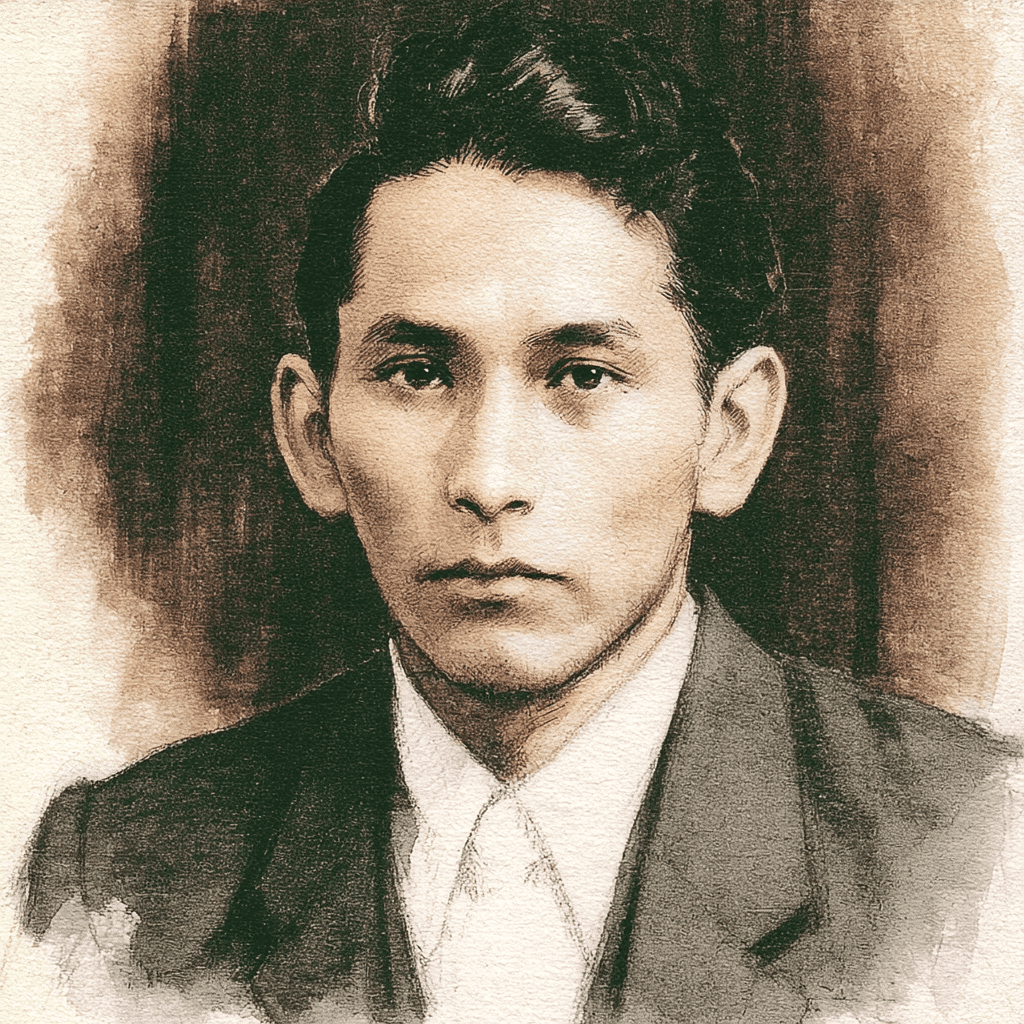
Kao I-sheng
Tsou Leader & Composer
Authoritarian Era
1908–1954
Kao I-sheng, known by his Tsou name Uyongu Yatauyungana, was born in 1908 in the Tapangʉ community of Alishan and became one of the most prominent indigenous intellectual leaders of the late colonial and early post-war eras. Selected in youth into the Japanese education system, he graduated from the Tainan Normal School and served as both teacher and policeman, while displaying remarkable musical talent and composing many songs in the Tsou language. He worked to preserve his people's culture and modernize the tribe, promoting agriculture and education, and commanded great prestige within Tsou society. After the change of regime at the end of World War II, he became head of Wufeng Township (today's Alishan Township), an important local leader. During the February 28 Incident he helped maintain local order and sheltered people fleeing arrest. He went on to advocate "highland self-government," arguing that the indigenous peoples of the Alishan region should enjoy a substantial measure of autonomy — a stance that touched the authorities' nerves. During the White Terror of the 1950s he was accused of espionage and corruption and arrested in 1952. After prolonged detention and interrogation he was executed in 1954, together with fellow Tsou leaders such as Tang Shou-jen. His death dealt a devastating blow to a generation of Tsou leadership, gravely setting back the tribe's development and cultural transmission. Songs he wrote in prison, such as "Spring Goddess Saohime," later became emblems by which his people remembered him. Kao is remembered as a representative of the post-war indigenous elite persecuted under the authoritarian system, and his life is an important lens on the relationship between Taiwan's indigenous peoples and the state.
Executed during the White Terror (1954)
Advocated Tsou self-government in Alishan
Tsou Leader & Composer
Kao I-sheng
Era
Authoritarian Era
Lifespan
1908–1954
Kao I-sheng, known by his Tsou name Uyongu Yatauyungana, was born in 1908 in the Tapangʉ community of Alishan and became one of the most prominent indigenous intellectual leaders of the late colonial and early post-war eras. Selected in youth into the Japanese education system, he graduated from the Tainan Normal School and served as both teacher and policeman, while displaying remarkable musical talent and composing many songs in the Tsou language. He worked to preserve his people's culture and modernize the tribe, promoting agriculture and education, and commanded great prestige within Tsou society. After the change of regime at the end of World War II, he became head of Wufeng Township (today's Alishan Township), an important local leader. During the February 28 Incident he helped maintain local order and sheltered people fleeing arrest. He went on to advocate "highland self-government," arguing that the indigenous peoples of the Alishan region should enjoy a substantial measure of autonomy — a stance that touched the authorities' nerves. During the White Terror of the 1950s he was accused of espionage and corruption and arrested in 1952. After prolonged detention and interrogation he was executed in 1954, together with fellow Tsou leaders such as Tang Shou-jen. His death dealt a devastating blow to a generation of Tsou leadership, gravely setting back the tribe's development and cultural transmission. Songs he wrote in prison, such as "Spring Goddess Saohime," later became emblems by which his people remembered him. Kao is remembered as a representative of the post-war indigenous elite persecuted under the authoritarian system, and his life is an important lens on the relationship between Taiwan's indigenous peoples and the state.
Executed during the White Terror (1954)
Advocated Tsou self-government in Alishan