

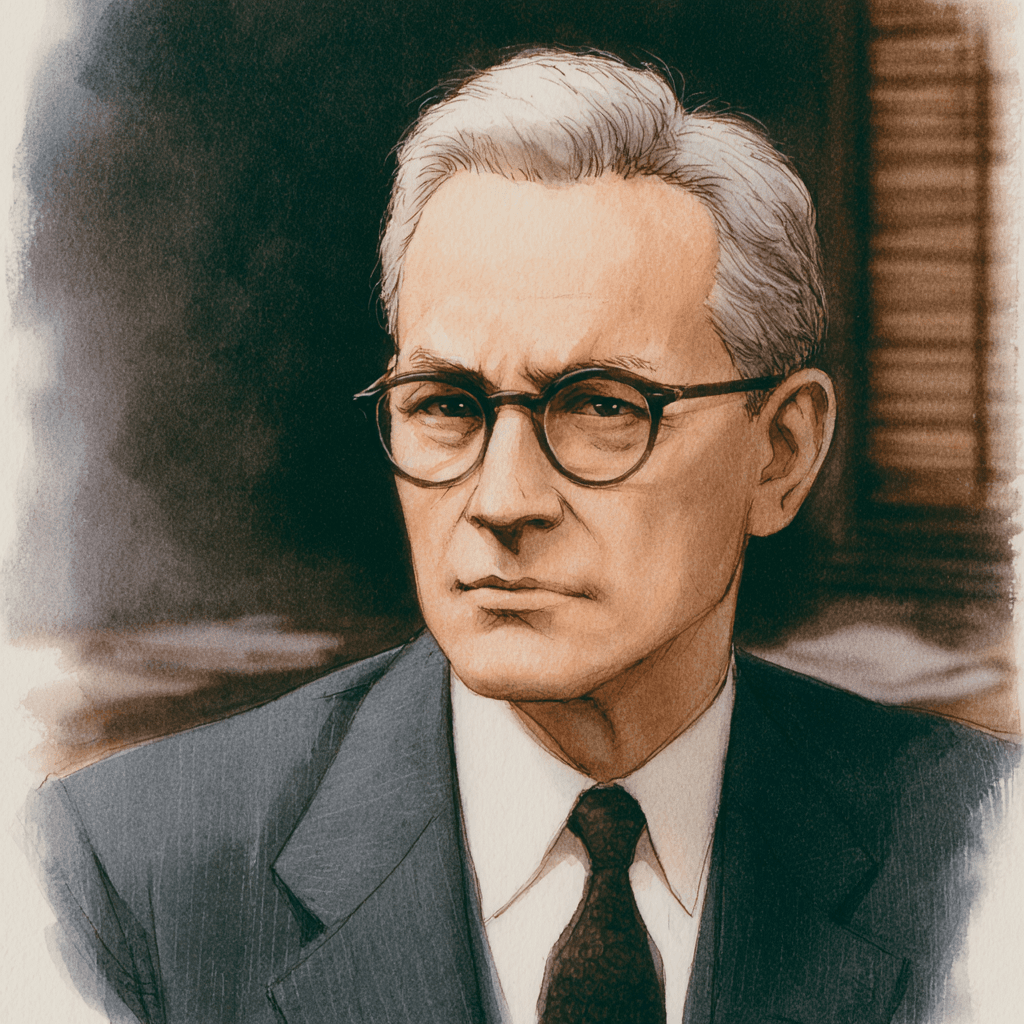
George H. Kerr
US Diplomat & Author of "Formosa Betrayed"
Post-War Taiwan
1911–1992
George H. Kerr, born in 1911 in the United States, was among the most important foreign witnesses and chroniclers of the February 28 Incident. He came to Taiwan in the late 1930s to teach English at the Taihoku High School, gaining firsthand contact with late-colonial Taiwanese society and its young intellectuals. During World War II he served in the US Navy, becoming one of the US government's few Taiwan-affairs specialists, involved in intelligence and post-war planning for the island. After the war he returned to Taiwan as vice-consul at the US consulate in Taipei, closely observing the Nationalist takeover and administration. When the February 28 Incident broke out in 1947 he was in Taiwan, witnessing the clashes between officials and the public and the bloody crackdown that followed, which he documented in detail and reported. Deeply sympathetic to the Taiwanese, he argued that Taiwan's future should be left to self-determination or international trusteeship, straining his relations with the Nationalist government. After leaving Taiwan he continued research and writing, publishing "Formosa Betrayed" in 1965, a systematic expose of the February 28 Incident and the problems of Nationalist rule. The book became an important text for post-war Taiwanese history and the independence movement, long circulated abroad. He also wrote a scholarly study of Taiwan's home-rule movement, a pioneer of Taiwan studies in Western academia. He died in the United States in 1992, and part of his ashes were, by his wish, interred in Taiwan. Kerr is regarded as a key international witness to February 28, and his writings preserve a valuable outside perspective for Taiwan's historical memory.
Witnessed and documented the February 28 Incident (1947)
Published "Formosa Betrayed" (1965)
US Diplomat & Author of "Formosa Betrayed"
George H. Kerr
Era
Post-War Taiwan
Lifespan
1911–1992
George H. Kerr, born in 1911 in the United States, was among the most important foreign witnesses and chroniclers of the February 28 Incident. He came to Taiwan in the late 1930s to teach English at the Taihoku High School, gaining firsthand contact with late-colonial Taiwanese society and its young intellectuals. During World War II he served in the US Navy, becoming one of the US government's few Taiwan-affairs specialists, involved in intelligence and post-war planning for the island. After the war he returned to Taiwan as vice-consul at the US consulate in Taipei, closely observing the Nationalist takeover and administration. When the February 28 Incident broke out in 1947 he was in Taiwan, witnessing the clashes between officials and the public and the bloody crackdown that followed, which he documented in detail and reported. Deeply sympathetic to the Taiwanese, he argued that Taiwan's future should be left to self-determination or international trusteeship, straining his relations with the Nationalist government. After leaving Taiwan he continued research and writing, publishing "Formosa Betrayed" in 1965, a systematic expose of the February 28 Incident and the problems of Nationalist rule. The book became an important text for post-war Taiwanese history and the independence movement, long circulated abroad. He also wrote a scholarly study of Taiwan's home-rule movement, a pioneer of Taiwan studies in Western academia. He died in the United States in 1992, and part of his ashes were, by his wish, interred in Taiwan. Kerr is regarded as a key international witness to February 28, and his writings preserve a valuable outside perspective for Taiwan's historical memory.
Witnessed and documented the February 28 Incident (1947)
Published "Formosa Betrayed" (1965)