

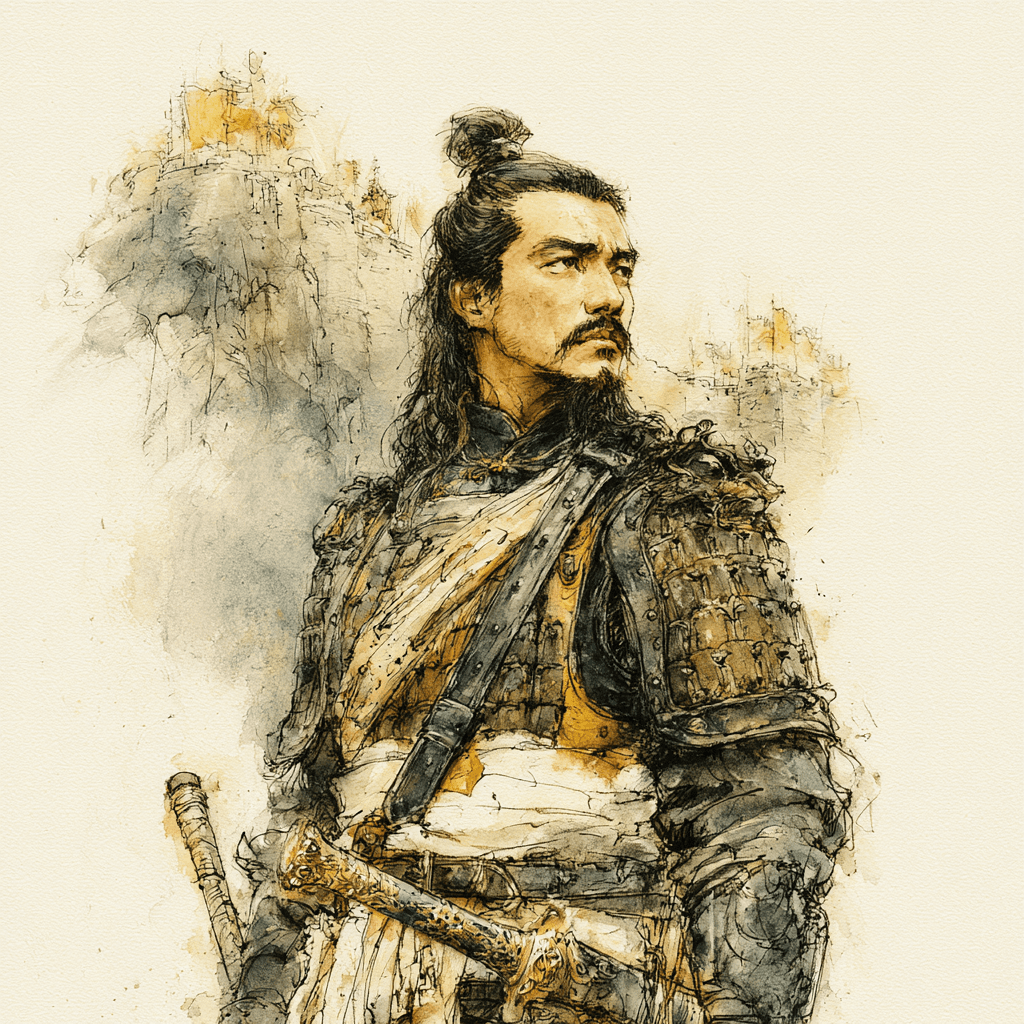
Geng Jingzhong
Prince of Jingnan & Fujian Leader of the Three Feudatories Revolt
Early Qing / Tungning Kingdom
1644–1682
Geng Jingzhong was the third-generation Prince of Jingnan in early Qing service, born in 1644 into a Liaodong military family whose grandfather Geng Zhongming had defected from the late Ming to the rising Manchu state. Under the so-called Three Loyal Princes system that allowed defector families to garrison the southern frontier, his lineage held hereditary command over southern provinces, and in the late 1660s he succeeded to the Jingnan title and the perpetual governorship of Fujian. He established his princely seat at Fuzhou and controlled the coastal defenses of Fujian and Zhejiang as well as the southern Fujian frontier, sustaining a tense and ambivalent relationship — at once confrontational and quietly commercial — with the Zheng regime across the Taiwan Strait. The Jingnan fief in Fujian commanded its own armies and revenues and had become a semi-independent power that the Qing court found increasingly difficult to restrain. After Wu Sangui rose in revolt in Yunnan in 1673, he joined the rebellion in 1674, styling himself Grand Commander of the Armies and quickly seizing control of all of Fujian before sending troops into Zhejiang and Jiangxi. To strengthen the loyalist coalition he dispatched envoys across the strait to negotiate a joint operation with the Tungning ruler Zheng Jing at Xiamen, hoping to use the Zheng navy to tie down the Qing coastal forces in the southeast. The alliance rapidly fractured over disputes about jurisdiction in Quanzhou and Zhangzhou, the allocation of military grain, and command authority, and Zheng Jing's westward expeditionary forces ended up in open combat with his troops along the southern Fujian coast, depriving the rebellion of its decisive southeastern thrust. Hard pressed by Qing armies advancing south in 1676, he surrendered to the Qing and turned his troops against his former ally Zheng Jing. The Qing court nonetheless remained deeply suspicious of his repeated changes of allegiance. After the final suppression of the Three Feudatories Revolt in 1681, he and his brothers Geng Zhaozhong and Geng Juzhong were detained and brought to Beijing. In 1682 the Kangxi Emperor charged him with treason and ordered him executed by slow slicing in the marketplace at the age of thirty-eight, extinguishing the Jingnan princely line. Geng Jingzhong is generally regarded as the most politically opportunistic and strategically incoherent of the three feudatory princes, and his breakdown with Zheng Jing is widely cited as a principal cause of the Tungning Kingdom's failure to convert the rebellion into a lasting opening for the recovery of the mainland.
Joined the Three Feudatories Revolt in 1674; his alliance with Zheng Jing quickly broke down
Prince of Jingnan & Fujian Leader of the Three Feudatories Revolt
Geng Jingzhong
Era
Early Qing / Tungning Kingdom
Lifespan
1644–1682
Geng Jingzhong was the third-generation Prince of Jingnan in early Qing service, born in 1644 into a Liaodong military family whose grandfather Geng Zhongming had defected from the late Ming to the rising Manchu state. Under the so-called Three Loyal Princes system that allowed defector families to garrison the southern frontier, his lineage held hereditary command over southern provinces, and in the late 1660s he succeeded to the Jingnan title and the perpetual governorship of Fujian. He established his princely seat at Fuzhou and controlled the coastal defenses of Fujian and Zhejiang as well as the southern Fujian frontier, sustaining a tense and ambivalent relationship — at once confrontational and quietly commercial — with the Zheng regime across the Taiwan Strait. The Jingnan fief in Fujian commanded its own armies and revenues and had become a semi-independent power that the Qing court found increasingly difficult to restrain. After Wu Sangui rose in revolt in Yunnan in 1673, he joined the rebellion in 1674, styling himself Grand Commander of the Armies and quickly seizing control of all of Fujian before sending troops into Zhejiang and Jiangxi. To strengthen the loyalist coalition he dispatched envoys across the strait to negotiate a joint operation with the Tungning ruler Zheng Jing at Xiamen, hoping to use the Zheng navy to tie down the Qing coastal forces in the southeast. The alliance rapidly fractured over disputes about jurisdiction in Quanzhou and Zhangzhou, the allocation of military grain, and command authority, and Zheng Jing's westward expeditionary forces ended up in open combat with his troops along the southern Fujian coast, depriving the rebellion of its decisive southeastern thrust. Hard pressed by Qing armies advancing south in 1676, he surrendered to the Qing and turned his troops against his former ally Zheng Jing. The Qing court nonetheless remained deeply suspicious of his repeated changes of allegiance. After the final suppression of the Three Feudatories Revolt in 1681, he and his brothers Geng Zhaozhong and Geng Juzhong were detained and brought to Beijing. In 1682 the Kangxi Emperor charged him with treason and ordered him executed by slow slicing in the marketplace at the age of thirty-eight, extinguishing the Jingnan princely line. Geng Jingzhong is generally regarded as the most politically opportunistic and strategically incoherent of the three feudatory princes, and his breakdown with Zheng Jing is widely cited as a principal cause of the Tungning Kingdom's failure to convert the rebellion into a lasting opening for the recovery of the mainland.
Joined the Three Feudatories Revolt in 1674; his alliance with Zheng Jing quickly broke down