

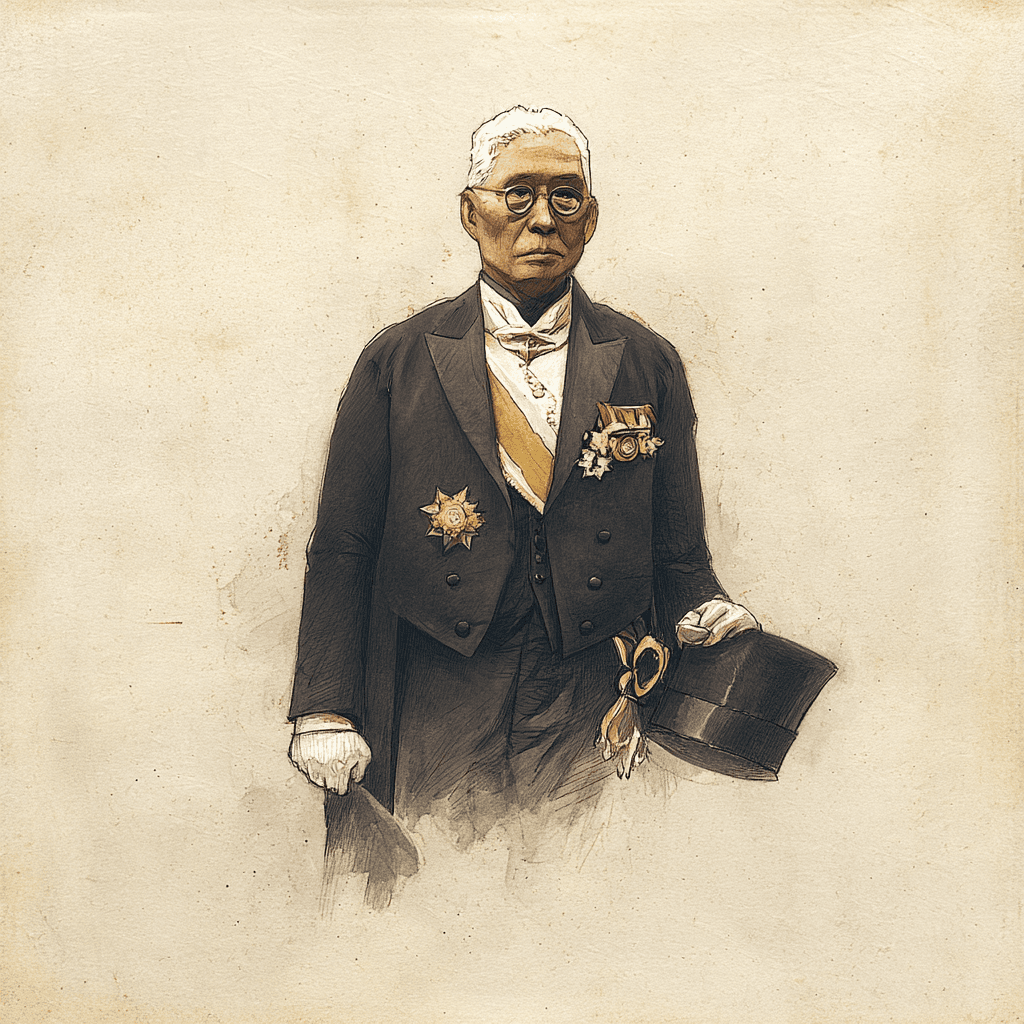
Ku Hsien-jung
Merchant and Colonial Collaborator
Japanese Colonial
1866–1937
Ku Hsien-jung was born in 1866 in Lukang, Changhua, into a merchant family. In 1895, as the Qing ceded Taiwan and the short-lived resistance collapsed, the gentry of a chaotic and leaderless Taipei were desperate to prevent looting — and it was Ku who went out to meet the advancing Japanese army and guided it into the city, an act that would define, and forever divide opinion on, his life. The colonial authorities rewarded him richly, granting him lucrative monopolies in salt, camphor and other trades on which he built one of Taiwan's great commercial fortunes. He became the leading Taiwanese collaborator-notable of his era, cultivated by the regime and appointed in 1934 to the House of Peers in Tokyo — the first Taiwanese to hold such a seat. To the colonial government he was a model loyal subject; to the activists of the parliament and cultural movements he was the embodiment of collaboration, and the two camps clashed bitterly. Ku Hsien-jung died in 1937, founder of the powerful Lukang Ku family and one of the most controversial figures of the colonial age.
Guided the Japanese army into Taipei (1895)
First Taiwanese appointed to Japan's House of Peers (1934)
Merchant and Colonial Collaborator
Ku Hsien-jung
Era
Japanese Colonial
Lifespan
1866–1937
Ku Hsien-jung was born in 1866 in Lukang, Changhua, into a merchant family. In 1895, as the Qing ceded Taiwan and the short-lived resistance collapsed, the gentry of a chaotic and leaderless Taipei were desperate to prevent looting — and it was Ku who went out to meet the advancing Japanese army and guided it into the city, an act that would define, and forever divide opinion on, his life. The colonial authorities rewarded him richly, granting him lucrative monopolies in salt, camphor and other trades on which he built one of Taiwan's great commercial fortunes. He became the leading Taiwanese collaborator-notable of his era, cultivated by the regime and appointed in 1934 to the House of Peers in Tokyo — the first Taiwanese to hold such a seat. To the colonial government he was a model loyal subject; to the activists of the parliament and cultural movements he was the embodiment of collaboration, and the two camps clashed bitterly. Ku Hsien-jung died in 1937, founder of the powerful Lukang Ku family and one of the most controversial figures of the colonial age.
Guided the Japanese army into Taipei (1895)
First Taiwanese appointed to Japan's House of Peers (1934)