

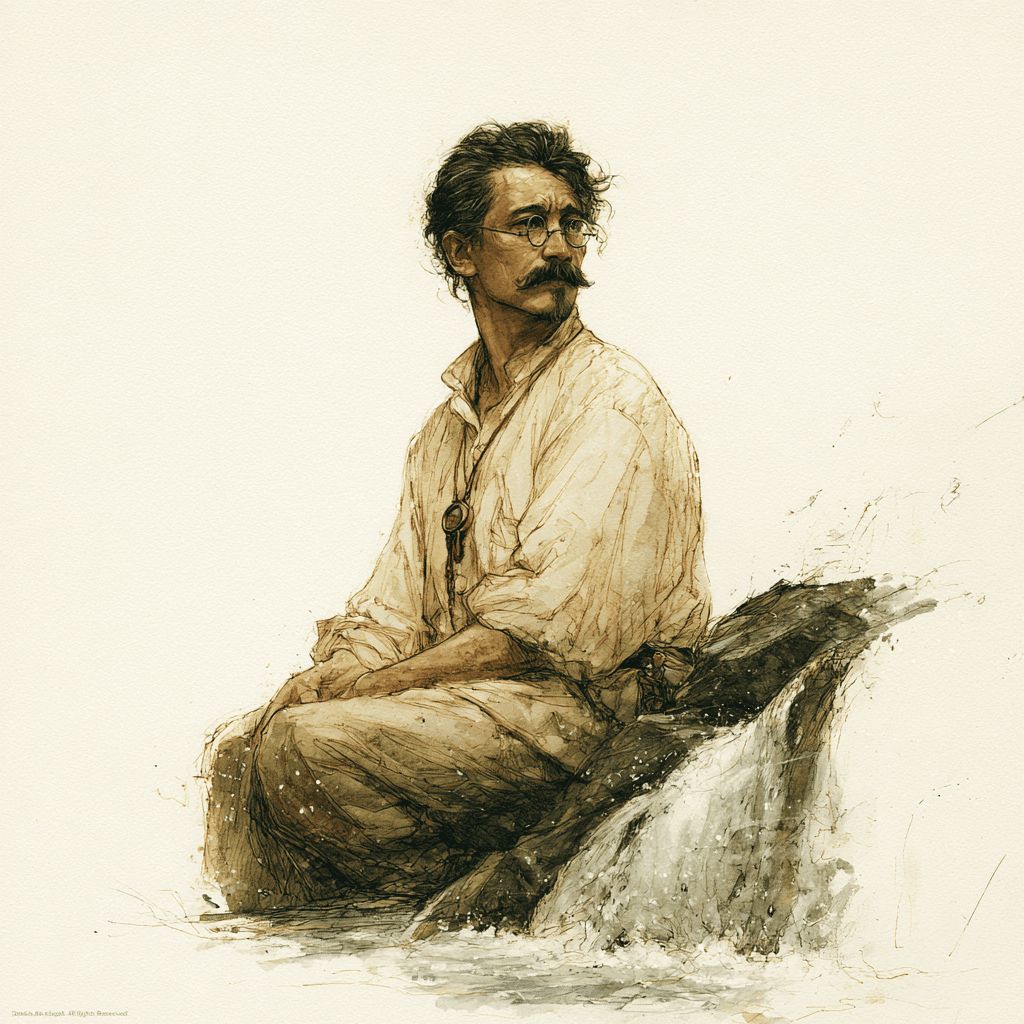
Hamano Yashiro
Father of Taiwan's Waterworks
Japanese Rule
1869–1932
Hamano Yashiro (1869–1932) was a Japanese sanitary engineer honoured as the 'Father of Taiwan's Waterworks.' He was a student and able assistant of the British engineer William K. Burton, who had been hired to come to Taiwan, and from the early years of Japanese rule he accompanied his teacher to the island to survey and plan modern water-supply and sewerage systems. At the time epidemics raged across Taiwan and public sanitation was wretched, and the supply of clean water was regarded as fundamental to colonial modernization and to safeguarding the health of the population. After Burton died young of malaria, Hamano carried on his teacher's mission, single-handedly undertaking waterworks for Taiwan's major cities for more than twenty years. He successively planned and built the water-supply and sewerage systems of Taipei, Keelung, Tainan, Chiayi and other cities, introducing modern techniques such as sedimentation, filtration and pressurized supply, thereby laying the foundation of modern sanitary water supply for Taiwan's cities and greatly improving urban drinking water and disease prevention. His engineering ideals and his cultivation of talent were passed down across generations; his student Hatta Yoichi later completed the unprecedented Chianan Canal, allowing the lineage of Taiwan's modern hydraulic engineering to continue. Though Hamano's contributions were less conspicuous than those of battlefield heroes, they profoundly changed the daily life and health of countless Taiwanese.
1896+ Planned water-supply and sewerage systems for Taiwan's cities
1900s–10s Established modern sanitary water supply in Taipei, Tainan and elsewhere
Father of Taiwan's Waterworks
Hamano Yashiro
Era
Japanese Rule
Lifespan
1869–1932
Hamano Yashiro (1869–1932) was a Japanese sanitary engineer honoured as the 'Father of Taiwan's Waterworks.' He was a student and able assistant of the British engineer William K. Burton, who had been hired to come to Taiwan, and from the early years of Japanese rule he accompanied his teacher to the island to survey and plan modern water-supply and sewerage systems. At the time epidemics raged across Taiwan and public sanitation was wretched, and the supply of clean water was regarded as fundamental to colonial modernization and to safeguarding the health of the population. After Burton died young of malaria, Hamano carried on his teacher's mission, single-handedly undertaking waterworks for Taiwan's major cities for more than twenty years. He successively planned and built the water-supply and sewerage systems of Taipei, Keelung, Tainan, Chiayi and other cities, introducing modern techniques such as sedimentation, filtration and pressurized supply, thereby laying the foundation of modern sanitary water supply for Taiwan's cities and greatly improving urban drinking water and disease prevention. His engineering ideals and his cultivation of talent were passed down across generations; his student Hatta Yoichi later completed the unprecedented Chianan Canal, allowing the lineage of Taiwan's modern hydraulic engineering to continue. Though Hamano's contributions were less conspicuous than those of battlefield heroes, they profoundly changed the daily life and health of countless Taiwanese.
1896+ Planned water-supply and sewerage systems for Taiwan's cities
1900s–10s Established modern sanitary water supply in Taipei, Tainan and elsewhere