

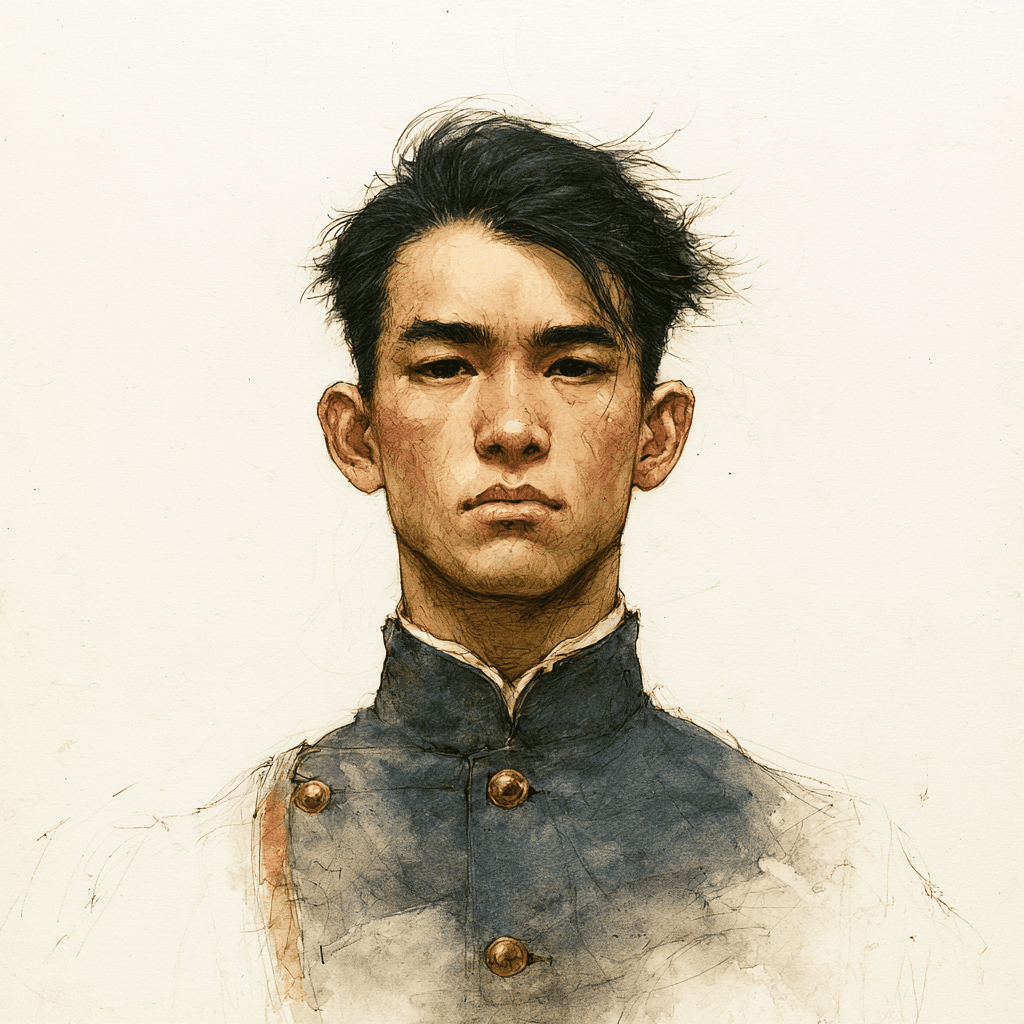
Hanaoka Ichiro
Seediq Policeman Educated in the Japanese System
Japanese Rule
1908–1930
Hanaoka Ichiro, whose original name was Dakis Nomin (1908–1930), was a Seediq of the Hogo community and a model figure deliberately cultivated by the Japanese colonial policy of 'savage management' and assimilation. Selected into the Japanese education system as a child, he excelled, graduated from a normal school and obtained a post as an assistant policeman, and the colonial authorities held him up as an exemplar of a 'successfully civilized savage,' even changing his name to the Japanese 'Hanaoka Ichiro.' Yet this assimilated identity left him caught between his own people and the colonizers, bearing a profound rupture of identity. When the Wushe Incident broke out in 1930 and his people rose in revolt under Mona Rudao, as a policeman raised by the Japanese he could neither betray the people who had reared him nor stand against the colonial system he served, and was trapped in an impossible dilemma. In the chaos and despair of the uprising he finally hanged himself in the mountains together with his wife and kin in the traditional Japanese manner, leaving a sorrowful suicide note bearing the words 'it could not be helped.' His death became a tragic symbol of how colonial assimilationist education forcibly tore apart indigenous identity, and it remains an important window into the complexity of the Wushe Incident.
1920s Educated in the Japanese system and served as a policeman
1930 Hanged himself during the Wushe Incident
Seediq Policeman Educated in the Japanese System
Hanaoka Ichiro
Era
Japanese Rule
Lifespan
1908–1930
Hanaoka Ichiro, whose original name was Dakis Nomin (1908–1930), was a Seediq of the Hogo community and a model figure deliberately cultivated by the Japanese colonial policy of 'savage management' and assimilation. Selected into the Japanese education system as a child, he excelled, graduated from a normal school and obtained a post as an assistant policeman, and the colonial authorities held him up as an exemplar of a 'successfully civilized savage,' even changing his name to the Japanese 'Hanaoka Ichiro.' Yet this assimilated identity left him caught between his own people and the colonizers, bearing a profound rupture of identity. When the Wushe Incident broke out in 1930 and his people rose in revolt under Mona Rudao, as a policeman raised by the Japanese he could neither betray the people who had reared him nor stand against the colonial system he served, and was trapped in an impossible dilemma. In the chaos and despair of the uprising he finally hanged himself in the mountains together with his wife and kin in the traditional Japanese manner, leaving a sorrowful suicide note bearing the words 'it could not be helped.' His death became a tragic symbol of how colonial assimilationist education forcibly tore apart indigenous identity, and it remains an important window into the complexity of the Wushe Incident.
1920s Educated in the Japanese system and served as a policeman
1930 Hanged himself during the Wushe Incident