

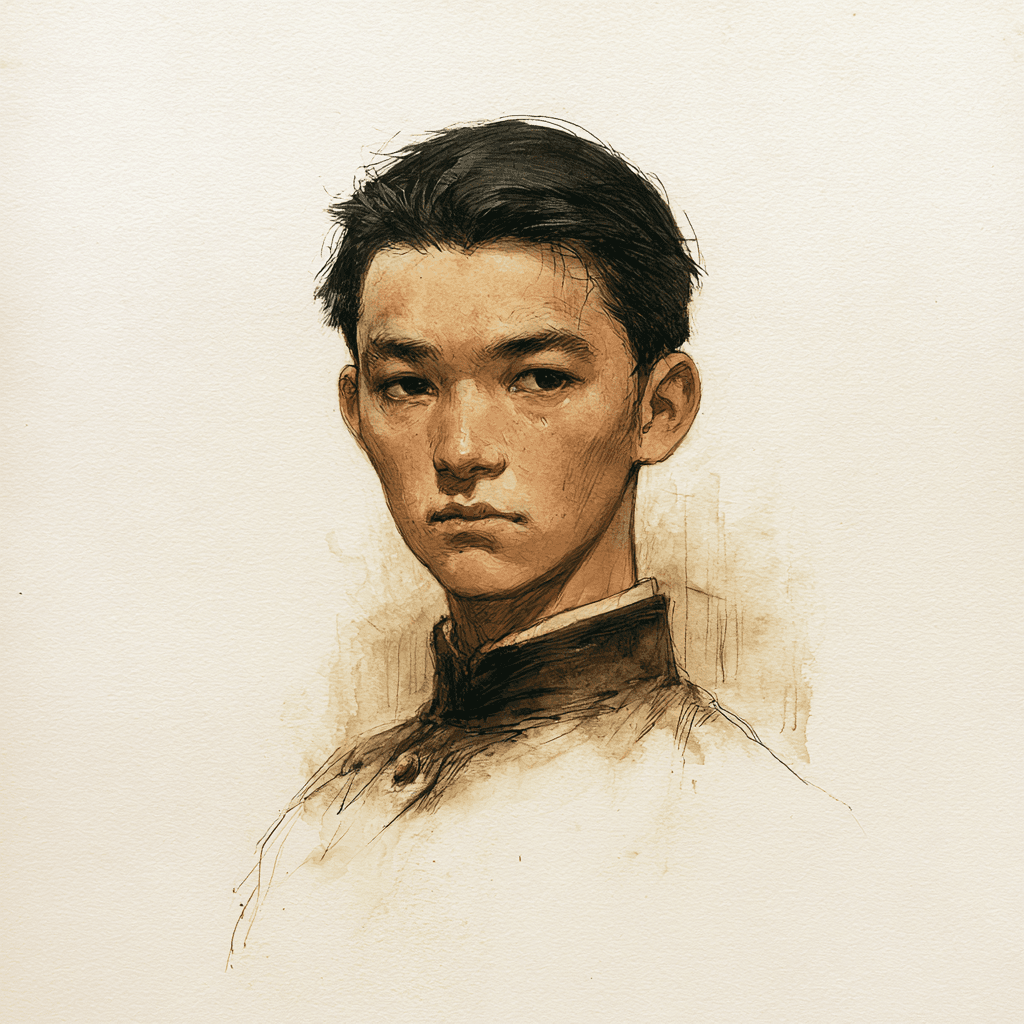
Hanaoka Jiro
Seediq Policeman Educated in the Japanese System
Japanese Rule
1908–1930
Hanaoka Jiro, whose original name was Dakis Nawi (1908–1930), was a Seediq of the Hogo community and, like Hanaoka Ichiro, a representative figure cultivated by Japanese colonial assimilation policy. Though the two shared the surname 'Hanaoka' and bore linked given names, they were in fact unrelated by blood, having been deliberately arranged by the colonial authorities as 'model brothers' to symbolize the achievements of 'savage education.' He too was educated in the Japanese system from childhood, took up a police post after graduating, and played the role of an intermediary between his people and the colonial system, living the life of one expected to become 'civilized.' When the Wushe Incident broke out in 1930 he, like Ichiro, was caught in the dilemma of loyalty to his people and loyalty to the colonial government, unable to choose and in deep anguish. As the uprising reached its hopeless end, he hanged himself in the mountains together with Ichiro's household and his kin, ending his torn life in the most resolute way. The deaths of both Hanaoka Jiro and Ichiro stand as another witness to the tragedy of indigenous identity wrought by colonial assimilation policy, laying bare the cruel cost behind the apparent success of the 'savage management' program.
1920s Educated in the Japanese system and served as a policeman
1930 Hanged himself during the Wushe Incident
Seediq Policeman Educated in the Japanese System
Hanaoka Jiro
Era
Japanese Rule
Lifespan
1908–1930
Hanaoka Jiro, whose original name was Dakis Nawi (1908–1930), was a Seediq of the Hogo community and, like Hanaoka Ichiro, a representative figure cultivated by Japanese colonial assimilation policy. Though the two shared the surname 'Hanaoka' and bore linked given names, they were in fact unrelated by blood, having been deliberately arranged by the colonial authorities as 'model brothers' to symbolize the achievements of 'savage education.' He too was educated in the Japanese system from childhood, took up a police post after graduating, and played the role of an intermediary between his people and the colonial system, living the life of one expected to become 'civilized.' When the Wushe Incident broke out in 1930 he, like Ichiro, was caught in the dilemma of loyalty to his people and loyalty to the colonial government, unable to choose and in deep anguish. As the uprising reached its hopeless end, he hanged himself in the mountains together with Ichiro's household and his kin, ending his torn life in the most resolute way. The deaths of both Hanaoka Jiro and Ichiro stand as another witness to the tragedy of indigenous identity wrought by colonial assimilation policy, laying bare the cruel cost behind the apparent success of the 'savage management' program.
1920s Educated in the Japanese system and served as a policeman
1930 Hanged himself during the Wushe Incident