

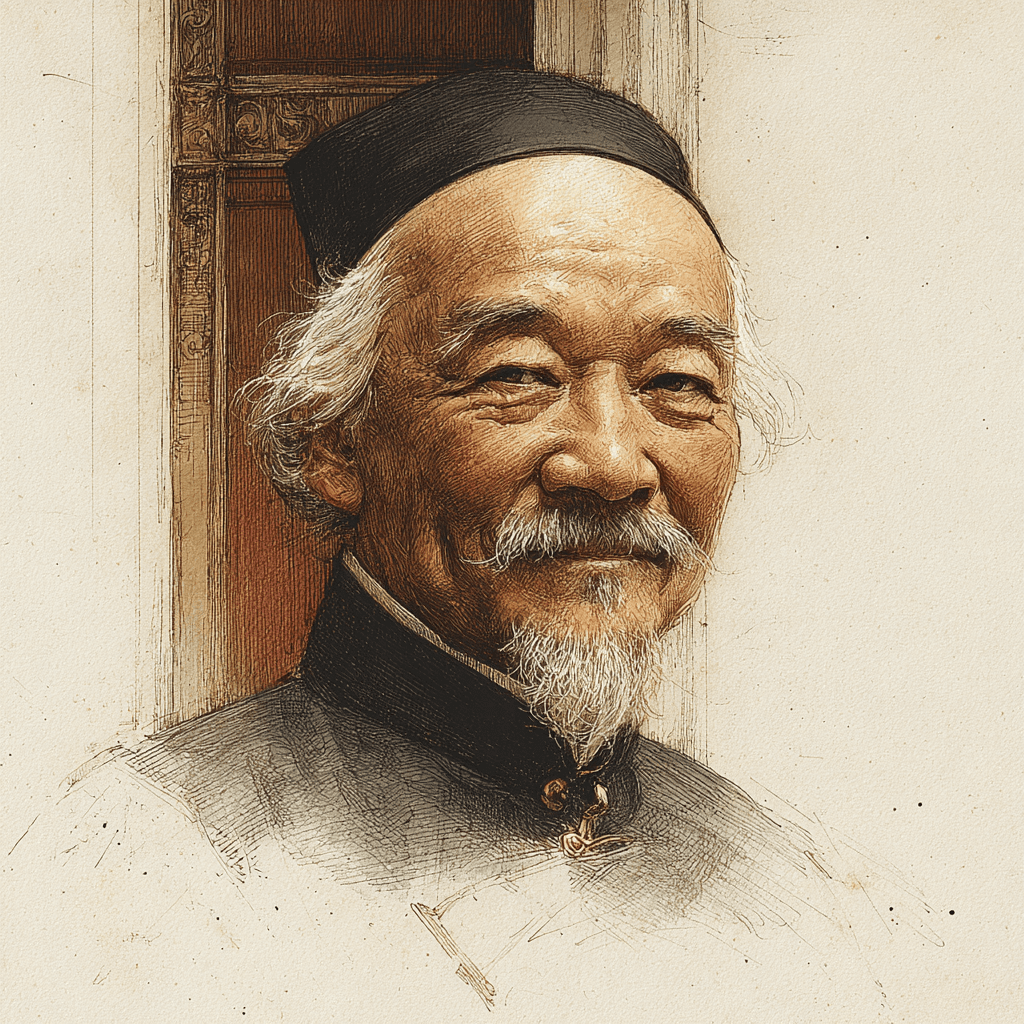
Hong Tengyun
Merchant and Patron of Taipei City
Qing Dynasty
1819–1899
Hong Tengyun, born in 1819 in Anxi County, Fujian, and arriving in Taiwan in his youth, became the wealthiest and most philanthropically active Hokkien merchant in northern Taiwan during the second half of the nineteenth century, best known for his decisive financial contribution to the construction of Taipei City (臺北府城) and his patronage of the Taipei City God Temple (臺北府城隍廟), institutions that remain central to the city's identity today. He built his fortune through tea and rice trade in the Tamsui and Danshui regions, benefiting from the rapid expansion of northern Taiwan's export economy following the opening of the treaty ports, and used his wealth to establish a commercial and philanthropic network that made him the preeminent patron of public life in what would become the Taipei basin. When Liu Mingchuan was appointed Taiwan's first governor and began the project of constructing Taipei City as the island's new capital in 1879, Hong Tengyun was among the handful of local merchants whose financial contributions made the enterprise possible, donating substantial sums and land that were essential to the construction of the city's walls, gates, and administrative buildings. He was also the founding patron of the Taipei City God Temple, established in 1881 on land he donated in what is today the Zhongzheng District of Taipei, which became the most important ceremonial center for the Hokkien settler communities of the Taipei basin and remains an active religious site today. Hong invested in a wide range of public goods: he contributed to the repair of roads and bridges, donated to charitable granaries during famines, sponsored the construction of public baths and market infrastructure, and funded the maintenance of schools and examination halls, embodying the Confucian ideal of the benevolent merchant using private wealth for collective benefit. He also navigated with skill the complex patronage networks linking Hokkien merchant communities, Qing officials, and indigenous peoples in the Tamsui basin, serving as a broker whose connections across these different worlds gave him access to both official favor and commercial opportunity. His social prominence was formalized through the purchase of official titles and the accumulation of honorific recognition from Qing authorities, who valued his ability to mobilize local resources for state projects without drawing on imperial funds. Hong Tengyun died in 1899, having witnessed the transition from Qing to Japanese rule in 1895; his business empire was absorbed by his descendants, who continued to operate in the new colonial economy. His most visible legacy is the Taipei City God Temple, which stands today in the old city center as a direct physical embodiment of his patronage and is visited by hundreds of thousands of worshippers annually. Hong Tengyun is widely regarded as the model of the nineteenth-century Taiwanese civic merchant — a man who accumulated wealth through trade and invested it in the institutions that gave a new city its communal identity, social cohesion, and spiritual center.
Donated land and funds essential to the construction of Taipei City's walls, gates, and administrative buildings (1879–84)
Founded the Taipei City God Temple (臺北府城隍廟, 1881), which remains the spiritual center of Taipei's Hokkien communities
Merchant and Patron of Taipei City
Hong Tengyun
Era
Qing Dynasty
Lifespan
1819–1899
Hong Tengyun, born in 1819 in Anxi County, Fujian, and arriving in Taiwan in his youth, became the wealthiest and most philanthropically active Hokkien merchant in northern Taiwan during the second half of the nineteenth century, best known for his decisive financial contribution to the construction of Taipei City (臺北府城) and his patronage of the Taipei City God Temple (臺北府城隍廟), institutions that remain central to the city's identity today. He built his fortune through tea and rice trade in the Tamsui and Danshui regions, benefiting from the rapid expansion of northern Taiwan's export economy following the opening of the treaty ports, and used his wealth to establish a commercial and philanthropic network that made him the preeminent patron of public life in what would become the Taipei basin. When Liu Mingchuan was appointed Taiwan's first governor and began the project of constructing Taipei City as the island's new capital in 1879, Hong Tengyun was among the handful of local merchants whose financial contributions made the enterprise possible, donating substantial sums and land that were essential to the construction of the city's walls, gates, and administrative buildings. He was also the founding patron of the Taipei City God Temple, established in 1881 on land he donated in what is today the Zhongzheng District of Taipei, which became the most important ceremonial center for the Hokkien settler communities of the Taipei basin and remains an active religious site today. Hong invested in a wide range of public goods: he contributed to the repair of roads and bridges, donated to charitable granaries during famines, sponsored the construction of public baths and market infrastructure, and funded the maintenance of schools and examination halls, embodying the Confucian ideal of the benevolent merchant using private wealth for collective benefit. He also navigated with skill the complex patronage networks linking Hokkien merchant communities, Qing officials, and indigenous peoples in the Tamsui basin, serving as a broker whose connections across these different worlds gave him access to both official favor and commercial opportunity. His social prominence was formalized through the purchase of official titles and the accumulation of honorific recognition from Qing authorities, who valued his ability to mobilize local resources for state projects without drawing on imperial funds. Hong Tengyun died in 1899, having witnessed the transition from Qing to Japanese rule in 1895; his business empire was absorbed by his descendants, who continued to operate in the new colonial economy. His most visible legacy is the Taipei City God Temple, which stands today in the old city center as a direct physical embodiment of his patronage and is visited by hundreds of thousands of worshippers annually. Hong Tengyun is widely regarded as the model of the nineteenth-century Taiwanese civic merchant — a man who accumulated wealth through trade and invested it in the institutions that gave a new city its communal identity, social cohesion, and spiritual center.
Donated land and funds essential to the construction of Taipei City's walls, gates, and administrative buildings (1879–84)
Founded the Taipei City God Temple (臺北府城隍廟, 1881), which remains the spiritual center of Taipei's Hokkien communities