


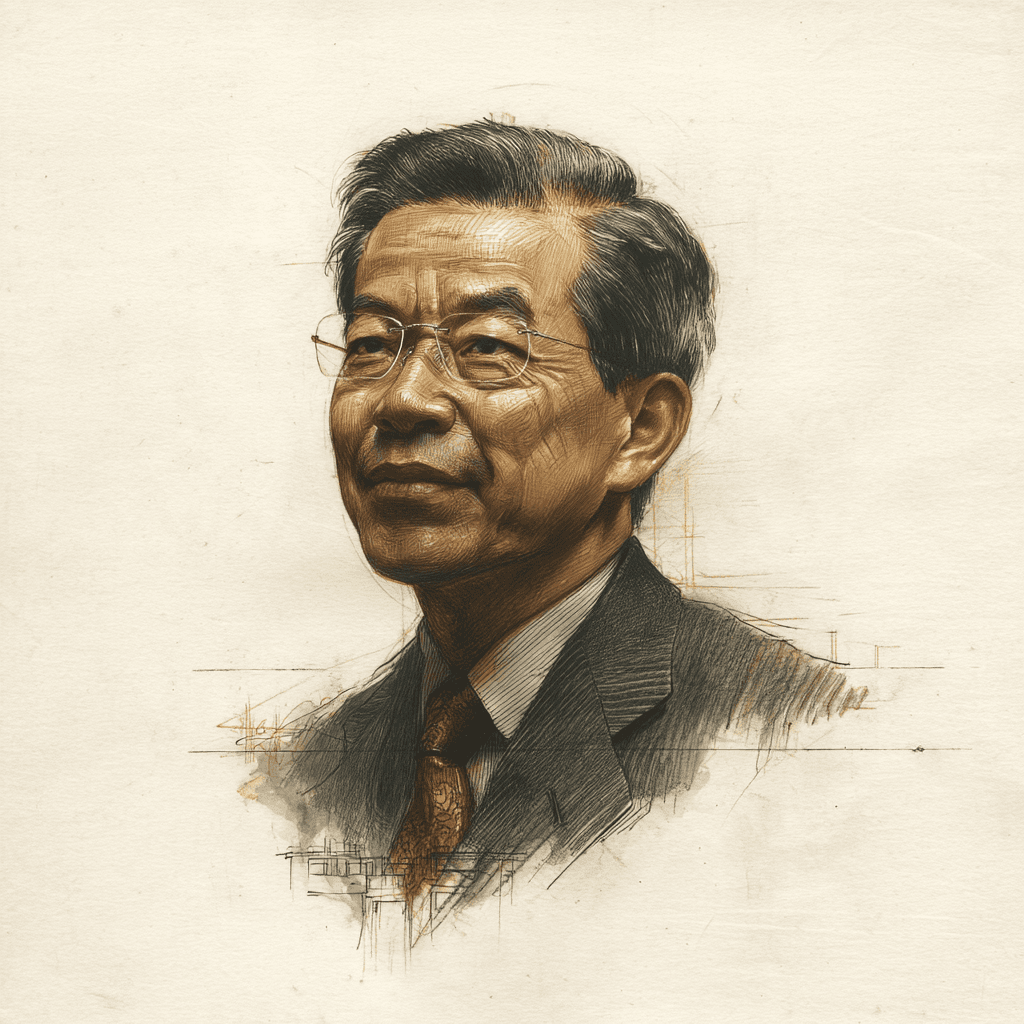
Democratic Transition
1946–
Hsieh Chang-ting was born in 1946 in Dadaocheng, Taipei. He graduated in law from National Taiwan University, qualified as a lawyer, and later went to Kyoto University for graduate study in law.
At the 1980 Kaohsiung Incident trials fifteen lawyers took the defendants' cases; he defended Yao Chia-wen. Defending a sedition case could cost a lawyer his practice. After the verdicts he, like most of the defense team, went into politics, winning a seat on the Taipei City Council in 1981. On 28 September 1986, when tangwai figures meeting at the Grand Hotel voted to found a party on the spot, the name they adopted — the Democratic Progressive Party — was his proposal.
He was elected to the Legislative Yuan in 1989, and in 1996 ran as Peng Ming-min's running mate in the first direct presidential election. In 1998 he beat Wu Den-yih by some four thousand votes to become mayor of Kaohsiung, and was re-elected in 2002, chairing the DPP along the way. He became premier early in 2005 and resigned a year later. In 2008 he was the DPP's presidential candidate, took 41.55 percent, and lost to Ma Ying-jeou.
From 2016 to 2024 he was Taiwan's representative to Japan. He had studied law in Kyoto as a young man; forty years later he went back to Japan as an ambassador without diplomatic relations.
1980 Defended Yao Chia-wen at the Kaohsiung Incident trials
1986 Proposed the name "Democratic Progressive Party"
Hsieh Chang-ting
Kaohsiung Incident Defense Lawyer and Premier
Era
Democratic Transition
Lifespan
1946–
Hsieh Chang-ting was born in 1946 in Dadaocheng, Taipei. He graduated in law from National Taiwan University, qualified as a lawyer, and later went to Kyoto University for graduate study in law.
At the 1980 Kaohsiung Incident trials fifteen lawyers took the defendants' cases; he defended Yao Chia-wen. Defending a sedition case could cost a lawyer his practice. After the verdicts he, like most of the defense team, went into politics, winning a seat on the Taipei City Council in 1981. On 28 September 1986, when tangwai figures meeting at the Grand Hotel voted to found a party on the spot, the name they adopted — the Democratic Progressive Party — was his proposal.
He was elected to the Legislative Yuan in 1989, and in 1996 ran as Peng Ming-min's running mate in the first direct presidential election. In 1998 he beat Wu Den-yih by some four thousand votes to become mayor of Kaohsiung, and was re-elected in 2002, chairing the DPP along the way. He became premier early in 2005 and resigned a year later. In 2008 he was the DPP's presidential candidate, took 41.55 percent, and lost to Ma Ying-jeou.
From 2016 to 2024 he was Taiwan's representative to Japan. He had studied law in Kyoto as a young man; forty years later he went back to Japan as an ambassador without diplomatic relations.
1980 Defended Yao Chia-wen at the Kaohsiung Incident trials
1986 Proposed the name "Democratic Progressive Party"