

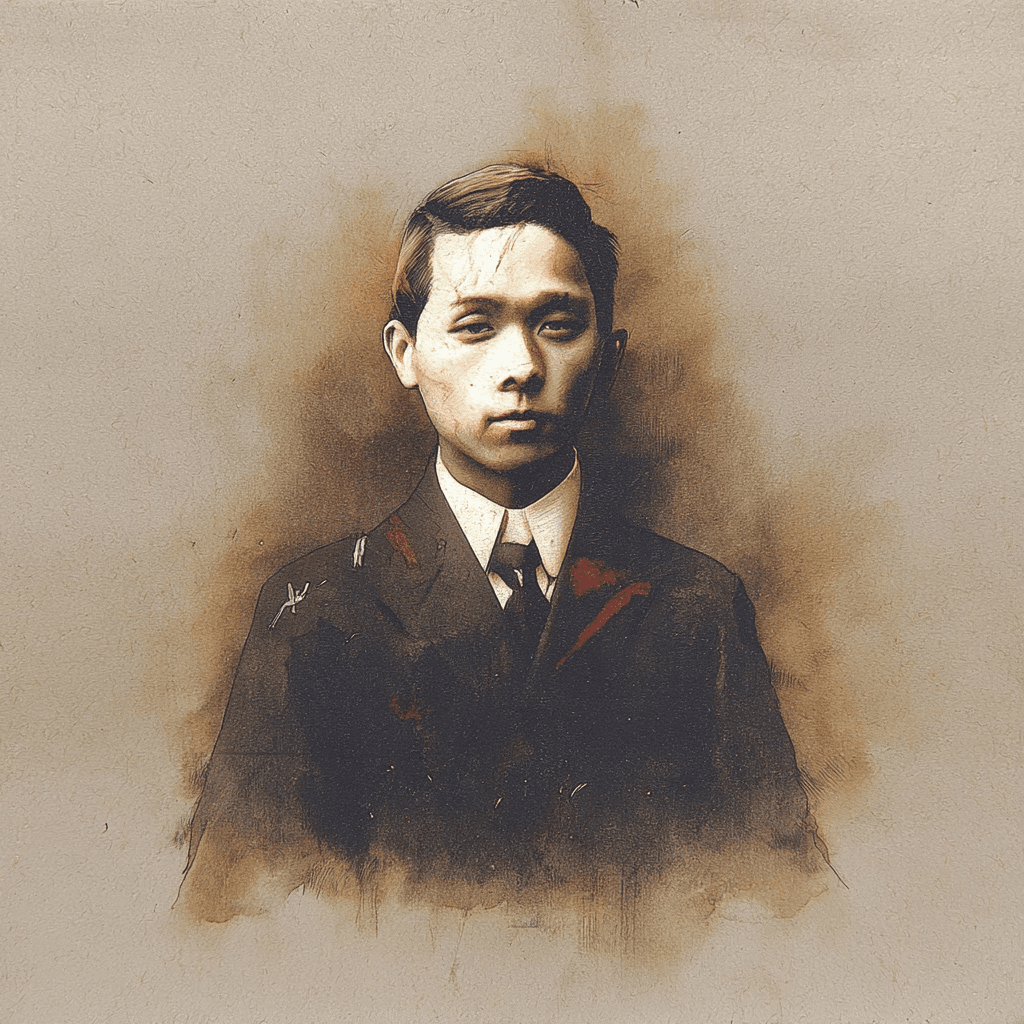
Huang Tu-shui
Sculptor
Japanese Colonial
1895–1930
Huang Tu-shui was born in 1895 in Bangka, Taipei, the son of a rickshaw repairman, and grew up among the woodcarvers of the temple district whose craft first drew him to sculpture. His talent won him a place at the Tokyo Fine Arts School, making him the first Taiwanese ever to study there. In 1920 he became the first Taiwanese artist selected for Japan's prestigious Imperial Art Exhibition, with a work depicting an Indigenous boy — a breakthrough that made him a source of pride across the island. His marble figure Sweet Dew and other works fused Western academic technique with the subjects of his homeland, and he dreamed of creating a truly Taiwanese art. He poured his final years into the great relief Buffaloes, a serene vision of the island's rural life. But he drove himself relentlessly, and in 1930, at only thirty-five, he died suddenly of peritonitis, leaving that masterpiece as his testament. Huang Tu-shui remains revered as the pioneer of modern Taiwanese sculpture, an artist who proved a colonial subject could reach the summit of the art world.
First Taiwanese selected for Japan's Imperial Art Exhibition (1920)
Created the relief masterpiece Buffaloes
Sculptor
Huang Tu-shui
Era
Japanese Colonial
Lifespan
1895–1930
Huang Tu-shui was born in 1895 in Bangka, Taipei, the son of a rickshaw repairman, and grew up among the woodcarvers of the temple district whose craft first drew him to sculpture. His talent won him a place at the Tokyo Fine Arts School, making him the first Taiwanese ever to study there. In 1920 he became the first Taiwanese artist selected for Japan's prestigious Imperial Art Exhibition, with a work depicting an Indigenous boy — a breakthrough that made him a source of pride across the island. His marble figure Sweet Dew and other works fused Western academic technique with the subjects of his homeland, and he dreamed of creating a truly Taiwanese art. He poured his final years into the great relief Buffaloes, a serene vision of the island's rural life. But he drove himself relentlessly, and in 1930, at only thirty-five, he died suddenly of peritonitis, leaving that masterpiece as his testament. Huang Tu-shui remains revered as the pioneer of modern Taiwanese sculpture, an artist who proved a colonial subject could reach the summit of the art world.
First Taiwanese selected for Japan's Imperial Art Exhibition (1920)
Created the relief masterpiece Buffaloes