

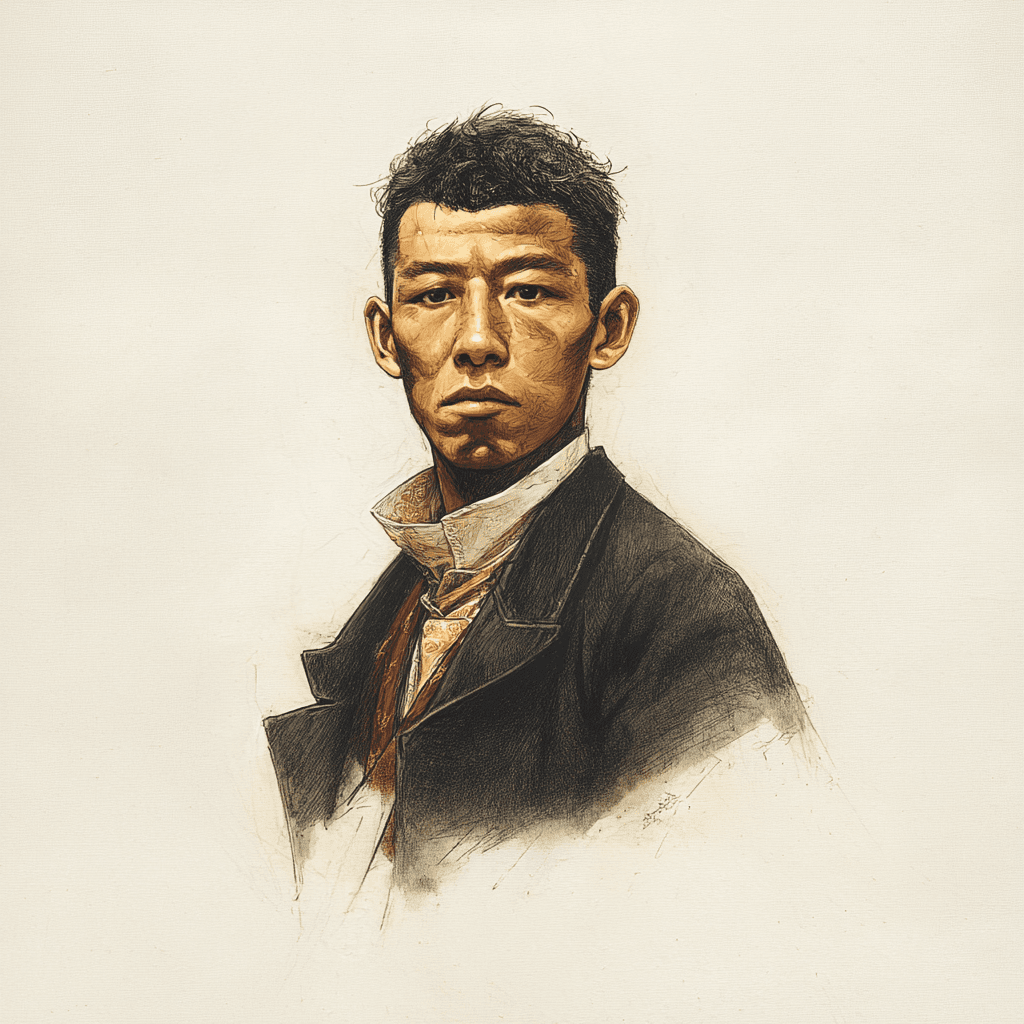
Ino Kanori
Anthropologist and Historian
Japanese Colonial
1867–1925
Ino Kanori was born in 1867 in Iwate in northern Japan and came to Taiwan in 1895, in the very first year of colonial rule, driven by a scholar's hunger to understand the island's peoples. At a time when little was known of Taiwan's Indigenous societies, he undertook arduous field surveys across plains and mountains, recording languages, customs and migration histories at first hand. From this work he produced the first systematic classification of Taiwan's Indigenous peoples, distinguishing the plains-dwelling groups from those of the high mountains — a framework that shaped Indigenous studies for generations. He also turned his attention to the island's documented past, compiling an encyclopaedic history of Taiwanese culture that drew together records from the Dutch, Zheng, Qing and Japanese eras. The malaria he contracted during his years of fieldwork undermined his health, and he died in 1925; his monumental cultural history was published only after his death. Ino Kanori is remembered as a founding figure of Taiwan studies, whose meticulous records remain an indispensable source even as later scholars have questioned his colonial-era assumptions.
Made the first systematic classification of Taiwan's Indigenous peoples
Compiled a monumental history of Taiwanese culture
Anthropologist and Historian
Ino Kanori
Era
Japanese Colonial
Lifespan
1867–1925
Ino Kanori was born in 1867 in Iwate in northern Japan and came to Taiwan in 1895, in the very first year of colonial rule, driven by a scholar's hunger to understand the island's peoples. At a time when little was known of Taiwan's Indigenous societies, he undertook arduous field surveys across plains and mountains, recording languages, customs and migration histories at first hand. From this work he produced the first systematic classification of Taiwan's Indigenous peoples, distinguishing the plains-dwelling groups from those of the high mountains — a framework that shaped Indigenous studies for generations. He also turned his attention to the island's documented past, compiling an encyclopaedic history of Taiwanese culture that drew together records from the Dutch, Zheng, Qing and Japanese eras. The malaria he contracted during his years of fieldwork undermined his health, and he died in 1925; his monumental cultural history was published only after his death. Ino Kanori is remembered as a founding figure of Taiwan studies, whose meticulous records remain an indispensable source even as later scholars have questioned his colonial-era assumptions.
Made the first systematic classification of Taiwan's Indigenous peoples
Compiled a monumental history of Taiwanese culture