

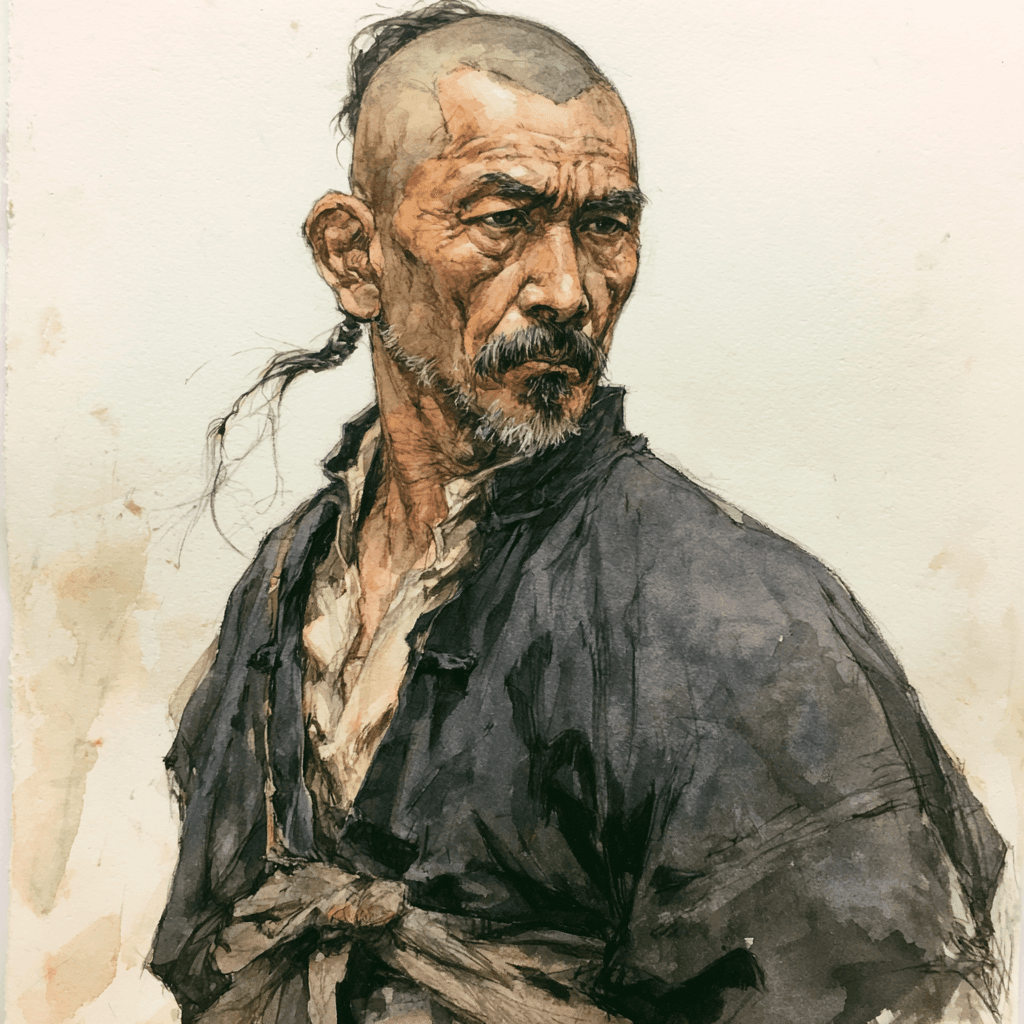
Jiang Ding
Southern Field Commander of the Tapani Incident
Armed Resistance / 1896–1915
1866–1916
Jiang Ding, born in 1866 in Zhutouqi in the Nanxi area of Tainan, was a locally powerful figure who became one of the two principal leaders of the Tapani Incident (the Xilai Temple Incident or Jiaobani Incident) during the mid-colonial period, on a par with Yu Qingfang. He had served earlier as a district headman and was already an influential figure in the Nanxi mountains in the early years of Japanese rule, maintaining sustained contact with local Indigenous communities and possessing detailed knowledge of mountain geography and methods of mobilization. Around 1914 he came into contact with the religiously framed anti-Japanese organization led by Yu Qingfang, embraced its anti-colonial stance, and brought his local networks and mountain contacts into the conspiracy. During the planning phase he was chiefly responsible for mobilizing supporters and concentrating arms across Nanxi, Yujing, and Nanhua in Tainan. When the uprising broke out he led raids on Japanese police substations as the most important field commander in the Jiaobani sector. When Japanese forces launched their major encirclement in July and August 1915, he withdrew with Yu Qingfang and the remaining fighters into the Houjuezi mountains and continued a guerrilla campaign. After Yu Qingfang was captured, he held out in the deep mountains for several more months, leading the last cohesive remnant of the uprising. In April 1916 the colonial authorities adopted an inducement policy, promising leniency to draw him out of the hills, and he led his remaining followers down in surrender. He was, however, arrested immediately afterward, tried, and sentenced to death the same month, with the sentence carried out at Tainan. His prolonged resistance in the deep mountains was the final operational chapter of the Tapani Incident. His surrender and execution closed out the southern guerrilla phase that followed Yu Qingfang's capture. He is widely regarded, together with Yu Qingfang, as a figure whose fall marked the end of Han armed resistance built on religiously framed mass mobilization.
1915 Joined the Tapani Incident uprising
1916 Surrendered and was subsequently executed
Southern Field Commander of the Tapani Incident
Jiang Ding
Era
Armed Resistance / 1896–1915
Lifespan
1866–1916
Jiang Ding, born in 1866 in Zhutouqi in the Nanxi area of Tainan, was a locally powerful figure who became one of the two principal leaders of the Tapani Incident (the Xilai Temple Incident or Jiaobani Incident) during the mid-colonial period, on a par with Yu Qingfang. He had served earlier as a district headman and was already an influential figure in the Nanxi mountains in the early years of Japanese rule, maintaining sustained contact with local Indigenous communities and possessing detailed knowledge of mountain geography and methods of mobilization. Around 1914 he came into contact with the religiously framed anti-Japanese organization led by Yu Qingfang, embraced its anti-colonial stance, and brought his local networks and mountain contacts into the conspiracy. During the planning phase he was chiefly responsible for mobilizing supporters and concentrating arms across Nanxi, Yujing, and Nanhua in Tainan. When the uprising broke out he led raids on Japanese police substations as the most important field commander in the Jiaobani sector. When Japanese forces launched their major encirclement in July and August 1915, he withdrew with Yu Qingfang and the remaining fighters into the Houjuezi mountains and continued a guerrilla campaign. After Yu Qingfang was captured, he held out in the deep mountains for several more months, leading the last cohesive remnant of the uprising. In April 1916 the colonial authorities adopted an inducement policy, promising leniency to draw him out of the hills, and he led his remaining followers down in surrender. He was, however, arrested immediately afterward, tried, and sentenced to death the same month, with the sentence carried out at Tainan. His prolonged resistance in the deep mountains was the final operational chapter of the Tapani Incident. His surrender and execution closed out the southern guerrilla phase that followed Yu Qingfang's capture. He is widely regarded, together with Yu Qingfang, as a figure whose fall marked the end of Han armed resistance built on religiously framed mass mobilization.
1915 Joined the Tapani Incident uprising
1916 Surrendered and was subsequently executed