

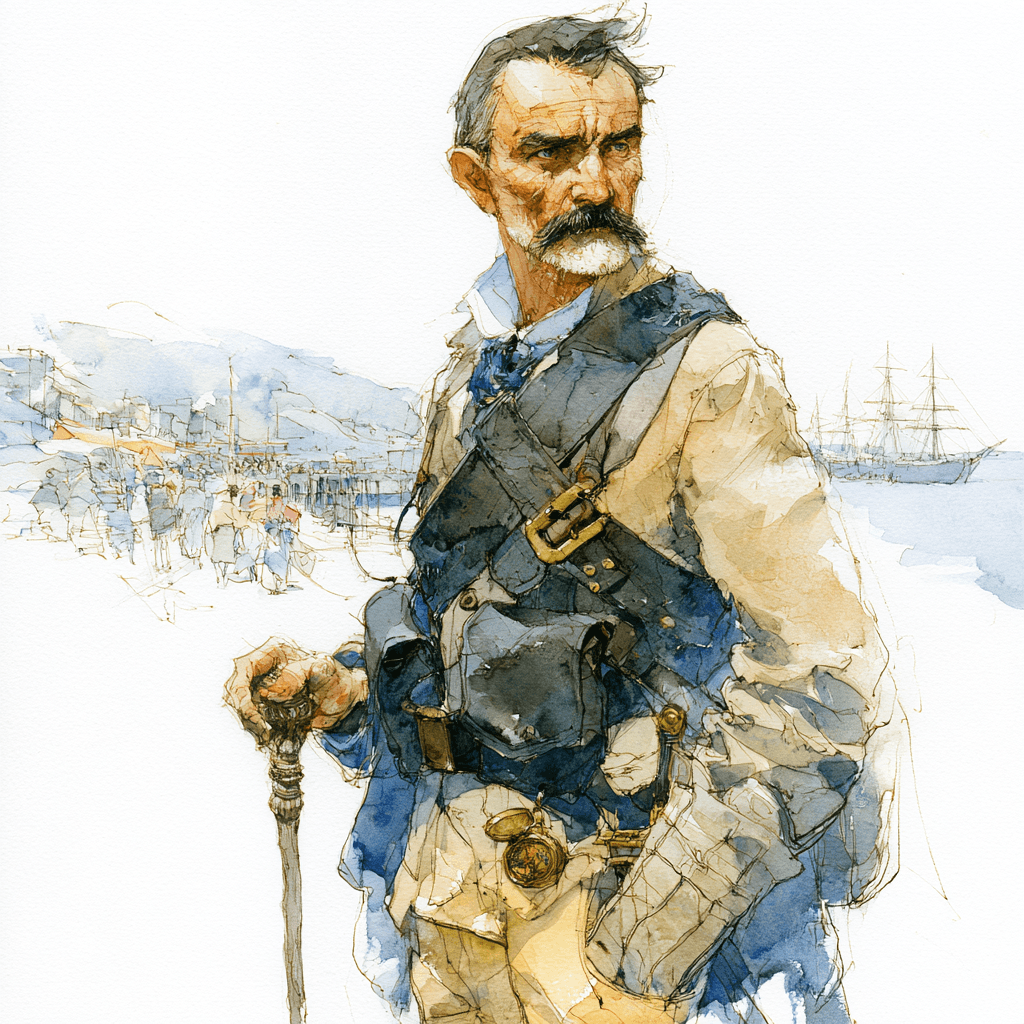
John Dodd
British Tea Pioneer of Northern Taiwan
Late Qing / Treaty Port Era
1838–1907
John Dodd was the British merchant who pioneered the export of Taiwanese oolong tea to New York in the nineteenth century, born in 1838 in Scotland and drawn to the Far East as a young man through his family's textile trade connections. In the late 1850s he served at successive European trading houses in Hong Kong, Canton, and Amoy, building up a deep familiarity with the southern Chinese commercial world and the compradore partnership system. After the Second Opium War the Treaty of Beijing in 1860 forced the Qing court to open the Taiwanese ports of Tamsui, Keelung, Anping, and Takao to international trade, exposing the island to Western capital and goods for the first time. He arrived in Tamsui in 1865 as the resident representative of the British firm Dent and Co. At that time the tea industry of northern Taiwan was rudimentary and lacked any international market, but after surveying the Tamsui basin and the hills further inland he became convinced that the climate, terrain, and soils were exceptionally well suited to high-grade oolong tea cultivation. In 1866 he imported tea seedlings from Anxi in Fujian and promoted their planting in what are today the Sanxia and Wenshan districts of Taipei, providing interest-free loans and technical training to farmers and transforming the agricultural fabric of the northern hills. After Dent and Co. went into liquidation in 1867 he established his own firm, Dodd and Co., set up refining plants in Dadaocheng, and partnered with the Hokkien merchant Li Chunsheng to build a complete picking, sorting, firing, and packaging system for high-quality oolong. In 1869 he shipped approximately two hundred and twenty thousand pounds of Formosa Oolong directly to New York, triggering a global craze for premium tea, establishing Formosa Oolong as a luxury commodity among Western elites, and placing Taiwan on the world commercial map through a single export industry for the first time. Over the next three decades Dadaocheng's Dihua Street became the most prosperous and cosmopolitan quarter on the island, with foreign trading houses, Western-style buildings, telegraph offices, and piped water concentrated there, laying the foundations of northern Taiwan's enduring economic leadership through the Japanese colonial period and beyond. From the 1880s he shifted the center of his business activity back to Britain and Southeast Asia but continued to underwrite the marketing of Taiwanese tea at international expositions in London and New York. He retired in England in the 1890s and died in 1907 at the age of sixty-nine. John Dodd is generally regarded as the key figure who transformed the Taiwanese economy from a frontier agricultural backwater into an internationally oriented export economy, and the tea industry he pioneered was the first Taiwanese product to establish a truly global brand.
Shipped Formosa Oolong directly to New York for the first time in 1869, triggering a global craze
British Tea Pioneer of Northern Taiwan
John Dodd
Era
Late Qing / Treaty Port Era
Lifespan
1838–1907
John Dodd was the British merchant who pioneered the export of Taiwanese oolong tea to New York in the nineteenth century, born in 1838 in Scotland and drawn to the Far East as a young man through his family's textile trade connections. In the late 1850s he served at successive European trading houses in Hong Kong, Canton, and Amoy, building up a deep familiarity with the southern Chinese commercial world and the compradore partnership system. After the Second Opium War the Treaty of Beijing in 1860 forced the Qing court to open the Taiwanese ports of Tamsui, Keelung, Anping, and Takao to international trade, exposing the island to Western capital and goods for the first time. He arrived in Tamsui in 1865 as the resident representative of the British firm Dent and Co. At that time the tea industry of northern Taiwan was rudimentary and lacked any international market, but after surveying the Tamsui basin and the hills further inland he became convinced that the climate, terrain, and soils were exceptionally well suited to high-grade oolong tea cultivation. In 1866 he imported tea seedlings from Anxi in Fujian and promoted their planting in what are today the Sanxia and Wenshan districts of Taipei, providing interest-free loans and technical training to farmers and transforming the agricultural fabric of the northern hills. After Dent and Co. went into liquidation in 1867 he established his own firm, Dodd and Co., set up refining plants in Dadaocheng, and partnered with the Hokkien merchant Li Chunsheng to build a complete picking, sorting, firing, and packaging system for high-quality oolong. In 1869 he shipped approximately two hundred and twenty thousand pounds of Formosa Oolong directly to New York, triggering a global craze for premium tea, establishing Formosa Oolong as a luxury commodity among Western elites, and placing Taiwan on the world commercial map through a single export industry for the first time. Over the next three decades Dadaocheng's Dihua Street became the most prosperous and cosmopolitan quarter on the island, with foreign trading houses, Western-style buildings, telegraph offices, and piped water concentrated there, laying the foundations of northern Taiwan's enduring economic leadership through the Japanese colonial period and beyond. From the 1880s he shifted the center of his business activity back to Britain and Southeast Asia but continued to underwrite the marketing of Taiwanese tea at international expositions in London and New York. He retired in England in the 1890s and died in 1907 at the age of sixty-nine. John Dodd is generally regarded as the key figure who transformed the Taiwanese economy from a frontier agricultural backwater into an internationally oriented export economy, and the tea industry he pioneered was the first Taiwanese product to establish a truly global brand.
Shipped Formosa Oolong directly to New York for the first time in 1869, triggering a global craze