

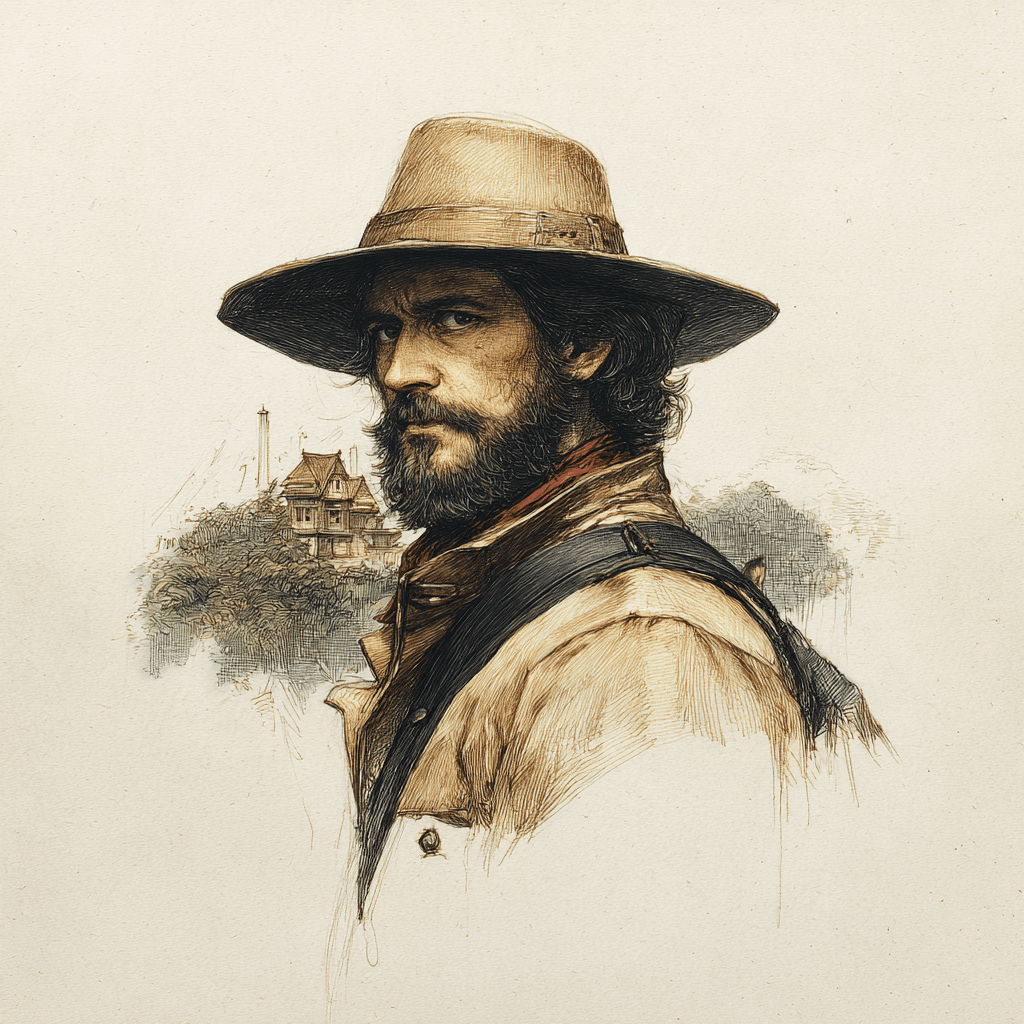
John Thomson
Pioneer Photographer of Taiwan
Qing Dynasty
1837–1921
John Thomson, born in 1837 in Edinburgh, Scotland, was a pioneering documentary photographer who visited Taiwan (Formosa) in 1871 and produced the earliest photographic record of the island's people, landscapes, and communities, images that remain among the most important visual documents of pre-colonial Taiwan. He had trained as an optician and lens maker in Edinburgh before turning to photography in the early 1860s and establishing himself in Asia, first in Singapore and then in Bangkok, Hong Kong, and Cambodia, where he documented the ruins of Angkor Wat and became recognized as one of the foremost photographers working in Asia. His Taiwan visit in 1871 was part of an extended journey through China and Formosa that would eventually produce his landmark multi-volume work Illustrations of China and Its People (1873–1874), one of the most significant photographic documents of nineteenth-century Asia. In Taiwan, Thomson traveled from Tamsui south to Anping and Tainan, photographing the treaty port communities, Qing administrative buildings, Han settler villages, and most significantly the indigenous Siraya and other Pingpu communities of the southern plains, whose way of life he documented with a sympathetic eye rare among Western visitors of his era. His portraits of Siraya men and women, the streetscapes of Tainan's commercial districts, the fortified walls of the Anping Dutch-era fort, and the faces of merchants, officials, and ordinary people represent the only photographic record of Taiwanese society from before the final decades of Qing rule, making them invaluable primary sources for historians and a touchstone for Taiwanese cultural identity. Thomson used the wet collodion process, which required him to prepare and develop glass-plate negatives in the field under conditions of intense heat and humidity, a technically demanding achievement that required skill and patience in equal measure. He was accompanied on some of his Taiwan travels by James Richardson, a British merchant based at Tamsui who served as guide and interpreter, and the two men ventured inland from the coastal plains to document indigenous communities that were rarely if ever visited by outside observers. His written account of Taiwan, published as part of the Illustrations of China volumes and in separate magazine articles for the Geographical Magazine, complemented his photographs with precise observations on geography, social customs, trade, and the political situation of the island, making Thomson a dual-medium witness of exceptional quality. Thomson returned to London in 1872 and eventually became one of the most celebrated documentary photographers of the Victorian era, known particularly for his work Street Life in London (1877–1878), which pioneered the use of photography as social documentary in the metropolitan context. His Taiwan photographs are held in the Wellcome Collection in London, where they have been digitized and made publicly accessible, and they have been widely reproduced in Taiwan through exhibitions, publications, and educational materials that use his images to anchor the island's visual historical memory. Thomson was appointed photographer to the British Foreign Office in 1881, in recognition of his unparalleled contribution to documenting the peoples and societies of Asia. John Thomson is widely regarded as the founder of Taiwan's photographic heritage — the man who, in a brief visit to a remote treaty port, produced the visual archive that allows people today to see the faces of the Taiwanese world that existed before the colonial transformation of 1895.
Photographed Taiwan in 1871, producing the earliest photographic record of the island's people, landscapes, and indigenous communities
Published Illustrations of China and Its People (1873–74), including his Taiwan photographs, establishing the island's visual presence in the Western historical record
Pioneer Photographer of Taiwan
John Thomson
Era
Qing Dynasty
Lifespan
1837–1921
John Thomson, born in 1837 in Edinburgh, Scotland, was a pioneering documentary photographer who visited Taiwan (Formosa) in 1871 and produced the earliest photographic record of the island's people, landscapes, and communities, images that remain among the most important visual documents of pre-colonial Taiwan. He had trained as an optician and lens maker in Edinburgh before turning to photography in the early 1860s and establishing himself in Asia, first in Singapore and then in Bangkok, Hong Kong, and Cambodia, where he documented the ruins of Angkor Wat and became recognized as one of the foremost photographers working in Asia. His Taiwan visit in 1871 was part of an extended journey through China and Formosa that would eventually produce his landmark multi-volume work Illustrations of China and Its People (1873–1874), one of the most significant photographic documents of nineteenth-century Asia. In Taiwan, Thomson traveled from Tamsui south to Anping and Tainan, photographing the treaty port communities, Qing administrative buildings, Han settler villages, and most significantly the indigenous Siraya and other Pingpu communities of the southern plains, whose way of life he documented with a sympathetic eye rare among Western visitors of his era. His portraits of Siraya men and women, the streetscapes of Tainan's commercial districts, the fortified walls of the Anping Dutch-era fort, and the faces of merchants, officials, and ordinary people represent the only photographic record of Taiwanese society from before the final decades of Qing rule, making them invaluable primary sources for historians and a touchstone for Taiwanese cultural identity. Thomson used the wet collodion process, which required him to prepare and develop glass-plate negatives in the field under conditions of intense heat and humidity, a technically demanding achievement that required skill and patience in equal measure. He was accompanied on some of his Taiwan travels by James Richardson, a British merchant based at Tamsui who served as guide and interpreter, and the two men ventured inland from the coastal plains to document indigenous communities that were rarely if ever visited by outside observers. His written account of Taiwan, published as part of the Illustrations of China volumes and in separate magazine articles for the Geographical Magazine, complemented his photographs with precise observations on geography, social customs, trade, and the political situation of the island, making Thomson a dual-medium witness of exceptional quality. Thomson returned to London in 1872 and eventually became one of the most celebrated documentary photographers of the Victorian era, known particularly for his work Street Life in London (1877–1878), which pioneered the use of photography as social documentary in the metropolitan context. His Taiwan photographs are held in the Wellcome Collection in London, where they have been digitized and made publicly accessible, and they have been widely reproduced in Taiwan through exhibitions, publications, and educational materials that use his images to anchor the island's visual historical memory. Thomson was appointed photographer to the British Foreign Office in 1881, in recognition of his unparalleled contribution to documenting the peoples and societies of Asia. John Thomson is widely regarded as the founder of Taiwan's photographic heritage — the man who, in a brief visit to a remote treaty port, produced the visual archive that allows people today to see the faces of the Taiwanese world that existed before the colonial transformation of 1895.
Photographed Taiwan in 1871, producing the earliest photographic record of the island's people, landscapes, and indigenous communities
Published Illustrations of China and Its People (1873–74), including his Taiwan photographs, establishing the island's visual presence in the Western historical record