

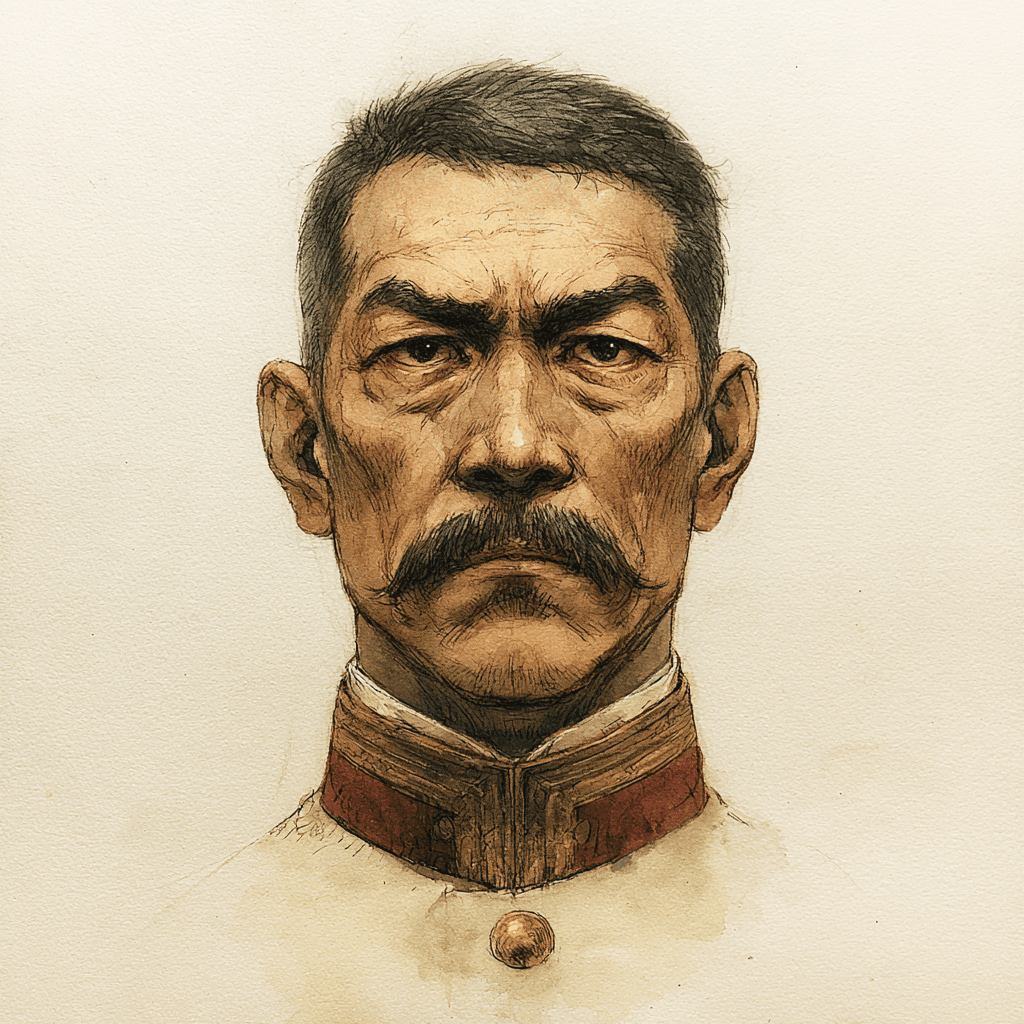
Kamada Yahiko
Taiwan Army Commander Who Suppressed the Wushe Incident
Japanese Rule
1879–1948
Kamada Yahiko (1879–1948) was a general of the Japanese army who served as commander of the Taiwan Army when the Wushe Incident broke out in 1930, making him the supreme commander of the Japanese military suppression. In the Wushe Incident the Seediq peoples, led by Mona Rudao, rose against colonial rule and attacked an athletic meet, shaking both Taiwan and the Japanese home islands. After the uprising he was ordered to direct the punitive campaign, mobilizing large numbers of regular troops, police and units equipped with mountain guns and machine guns to encircle the rebel communities deep in the mountains. Yet the Seediq warriors, relying on their knowledge of the terrain and their tenacity, waged a stubborn guerrilla resistance among the steep ranges, so that the Japanese forces could not subdue them quickly and suffered considerable casualties. In the deadlock he ordered aircraft to drop bombs containing blister gas on the communities holding out in the mountains; this means, in violation of the international norms of the time, caused heavy indigenous casualties and made him one of the most controversial figures of the incident. The Wushe Incident ended with the near annihilation of the rebel communities, followed by the so-called Second Wushe Incident and forced relocation. His decisions to use poison gas and large-scale military repression remain a major focus in examining the violent nature of Japanese colonial rule.
1930 Directed the suppression of the Wushe Incident as Taiwan Army commander
1930 Ordered aircraft to drop poison-gas bombs on the rebel communities
Taiwan Army Commander Who Suppressed the Wushe Incident
Kamada Yahiko
Era
Japanese Rule
Lifespan
1879–1948
Kamada Yahiko (1879–1948) was a general of the Japanese army who served as commander of the Taiwan Army when the Wushe Incident broke out in 1930, making him the supreme commander of the Japanese military suppression. In the Wushe Incident the Seediq peoples, led by Mona Rudao, rose against colonial rule and attacked an athletic meet, shaking both Taiwan and the Japanese home islands. After the uprising he was ordered to direct the punitive campaign, mobilizing large numbers of regular troops, police and units equipped with mountain guns and machine guns to encircle the rebel communities deep in the mountains. Yet the Seediq warriors, relying on their knowledge of the terrain and their tenacity, waged a stubborn guerrilla resistance among the steep ranges, so that the Japanese forces could not subdue them quickly and suffered considerable casualties. In the deadlock he ordered aircraft to drop bombs containing blister gas on the communities holding out in the mountains; this means, in violation of the international norms of the time, caused heavy indigenous casualties and made him one of the most controversial figures of the incident. The Wushe Incident ended with the near annihilation of the rebel communities, followed by the so-called Second Wushe Incident and forced relocation. His decisions to use poison gas and large-scale military repression remain a major focus in examining the violent nature of Japanese colonial rule.
1930 Directed the suppression of the Wushe Incident as Taiwan Army commander
1930 Ordered aircraft to drop poison-gas bombs on the rebel communities