

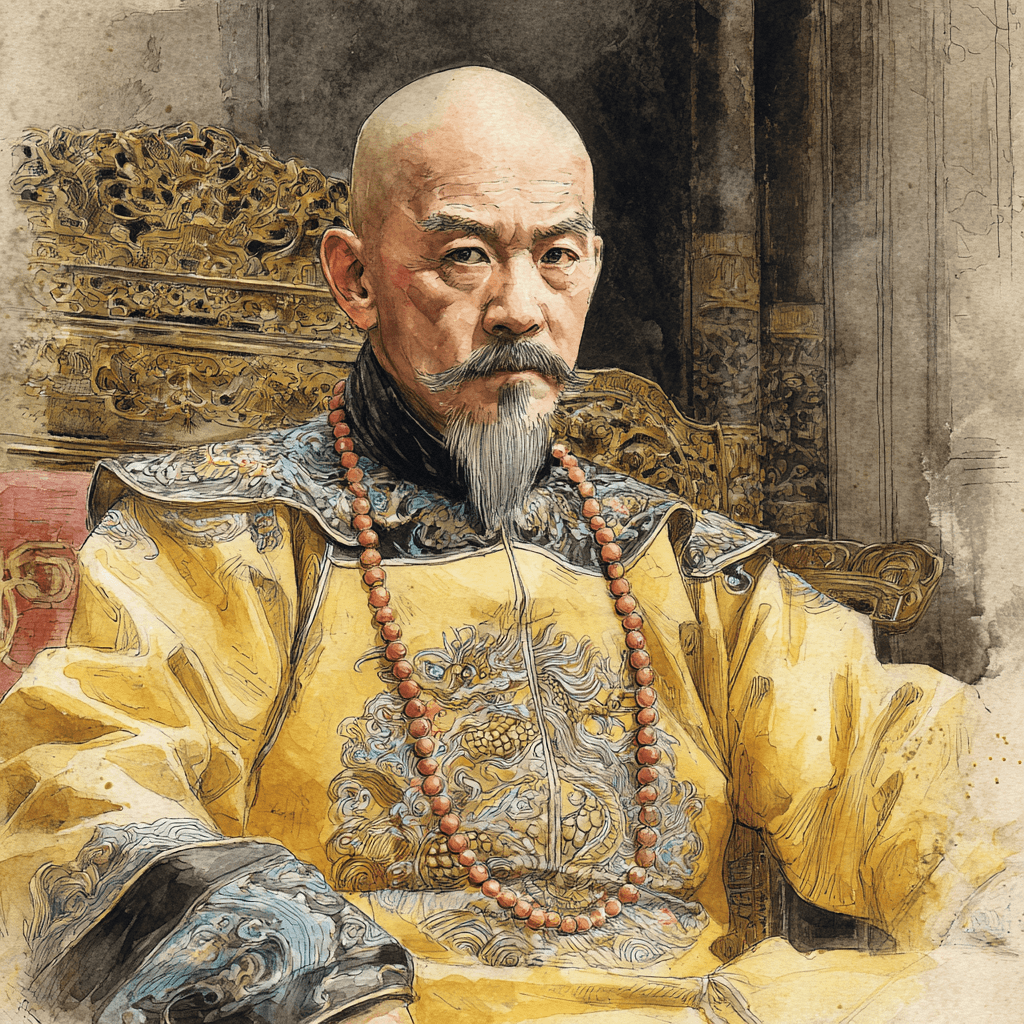
Kangxi Emperor
Emperor of the Qing Dynasty
Kingdom of Tungning
1654–1722
The Kangxi Emperor, personal name Xuanye, was the second emperor of the Qing dynasty after its conquest of China proper, and his sixty-one-year reign from 1662 to 1722 is the longest of any Chinese emperor. Born in 1654 in Beijing as the third son of the Shunzhi Emperor, he ascended the throne at the age of seven under a regency dominated by the Manchu noble Oboi. In 1669 he removed Oboi in a palace coup and assumed personal rule, beginning the active phase of his reign at the age of fifteen. He consolidated Qing power by suppressing the Revolt of the Three Feudatories between 1673 and 1681, in which the southern warlords Wu Sangui, Shang Zhixin, and Geng Jingzhong, supported externally by the Kingdom of Tungning, contested Qing rule for nearly a decade. With the mainland secured, he turned his attention to the surviving Zheng base in Taiwan, supporting Shi Lang's appointment as Fujian Naval Commander and authorizing the 1683 invasion that ended the Kingdom of Tungning. Initial Qing court opinion favored abandoning Taiwan after the victory, with senior officials arguing that the island was a remote burden, but Shi Lang's memorial persuaded the emperor to incorporate it as Taiwan Prefecture under Fujian Province in 1684. His Taiwan policy combined economic restriction — limiting immigration from the mainland and barring most coastal residents from settling — with a light administrative footprint that nonetheless integrated the island into the Qing tax and tributary system. Beyond Taiwan, his reign saw the Treaty of Nerchinsk with Russia in 1689 (the first treaty between China and a European power), the submission of the Khalkha Mongols, and the establishment of Qing protection over Tibet. He cultivated an image of a model Confucian ruler, lectured on the classics, sponsored the great Kangxi Dictionary, and maintained close personal relationships with Jesuit advisors at court. His twilight years were marred by an unresolved succession dispute among his many sons that would dominate court politics for a decade and shape the bloody accession of his fourth son as the Yongzheng Emperor. He died in December 1722 at the age of 68 at the Garden of Joyful Spring outside Beijing. For Taiwan, the Kangxi Emperor's decisions in 1683–1684 are foundational: his ratification of Shi Lang's case for retention is the moment that anchored the island to the East Asian mainland imperial system for the next two centuries.
Ordered Shi Lang's expedition that ended the Kingdom of Tungning (1683)
Emperor of the Qing Dynasty
Kangxi Emperor
Era
Kingdom of Tungning
Lifespan
1654–1722
The Kangxi Emperor, personal name Xuanye, was the second emperor of the Qing dynasty after its conquest of China proper, and his sixty-one-year reign from 1662 to 1722 is the longest of any Chinese emperor. Born in 1654 in Beijing as the third son of the Shunzhi Emperor, he ascended the throne at the age of seven under a regency dominated by the Manchu noble Oboi. In 1669 he removed Oboi in a palace coup and assumed personal rule, beginning the active phase of his reign at the age of fifteen. He consolidated Qing power by suppressing the Revolt of the Three Feudatories between 1673 and 1681, in which the southern warlords Wu Sangui, Shang Zhixin, and Geng Jingzhong, supported externally by the Kingdom of Tungning, contested Qing rule for nearly a decade. With the mainland secured, he turned his attention to the surviving Zheng base in Taiwan, supporting Shi Lang's appointment as Fujian Naval Commander and authorizing the 1683 invasion that ended the Kingdom of Tungning. Initial Qing court opinion favored abandoning Taiwan after the victory, with senior officials arguing that the island was a remote burden, but Shi Lang's memorial persuaded the emperor to incorporate it as Taiwan Prefecture under Fujian Province in 1684. His Taiwan policy combined economic restriction — limiting immigration from the mainland and barring most coastal residents from settling — with a light administrative footprint that nonetheless integrated the island into the Qing tax and tributary system. Beyond Taiwan, his reign saw the Treaty of Nerchinsk with Russia in 1689 (the first treaty between China and a European power), the submission of the Khalkha Mongols, and the establishment of Qing protection over Tibet. He cultivated an image of a model Confucian ruler, lectured on the classics, sponsored the great Kangxi Dictionary, and maintained close personal relationships with Jesuit advisors at court. His twilight years were marred by an unresolved succession dispute among his many sons that would dominate court politics for a decade and shape the bloody accession of his fourth son as the Yongzheng Emperor. He died in December 1722 at the age of 68 at the Garden of Joyful Spring outside Beijing. For Taiwan, the Kangxi Emperor's decisions in 1683–1684 are foundational: his ratification of Shi Lang's case for retention is the moment that anchored the island to the East Asian mainland imperial system for the next two centuries.
Ordered Shi Lang's expedition that ended the Kingdom of Tungning (1683)