

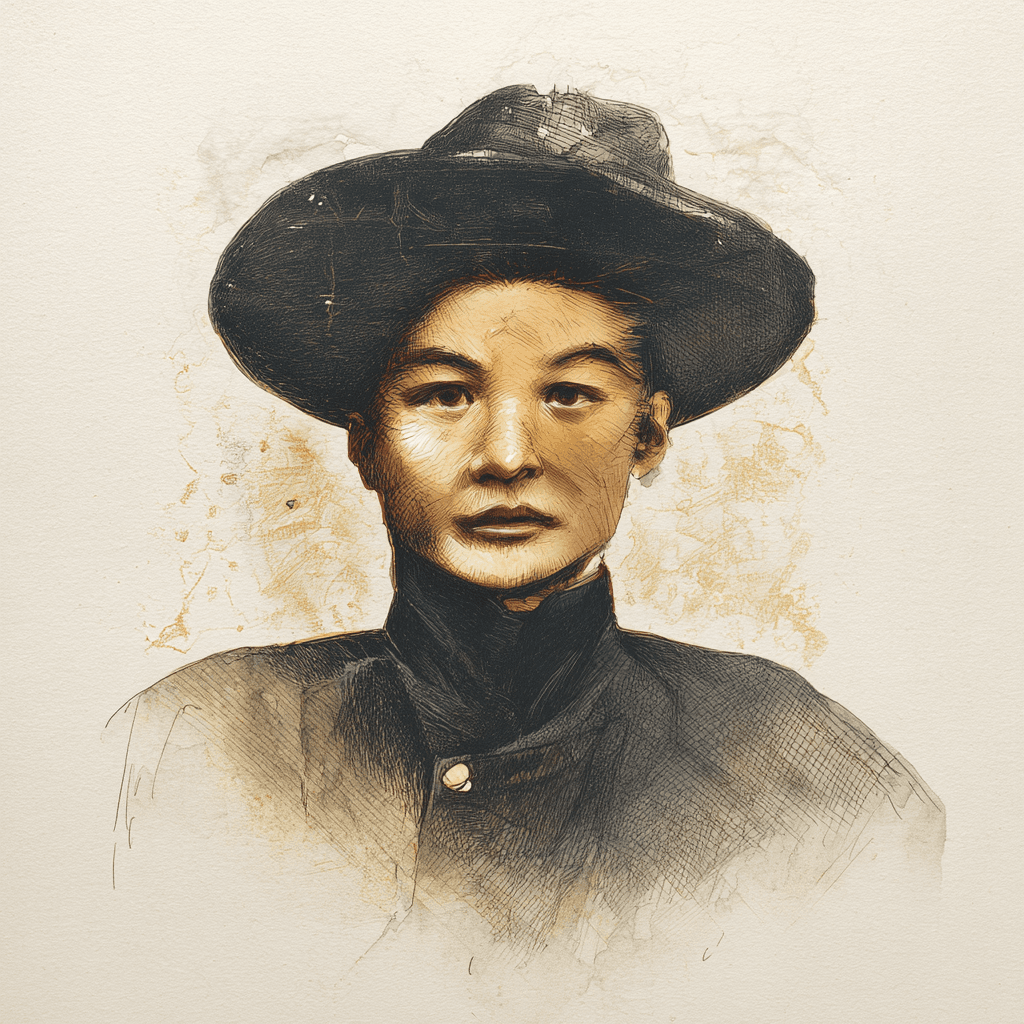
Ke Tiehu
Guerrilla Leader of Iron Kingdom Mountain
Armed Resistance / 1896–1915
1876–1900
Ke Tiehu, born in 1876 in Dapingding (later renamed Iron Kingdom Mountain) in Yunlin, was one of the most prominent armed anti-Japanese guerrilla leaders in central Taiwan in the early years of Japanese rule. His given name was Ke Tie, and he acquired the nickname 'Iron Tiger' because of his powerful build and combat prowess. After the Yiwei War of 1895 scattered Han Chinese resistance across central and southern Taiwan, he gathered followers in the Yunlin highlands and turned the rugged terrain into a stronghold. In June 1896 the so-called Yunlin Massacre, in which Japanese forces burned numerous villages along the foothills under the pretext of bandit suppression, fueled widespread popular outrage and prompted him to rise in revolt later that year, styling himself 'President' and establishing a base on Iron Kingdom Mountain. At its peak his network reached into the mountain districts of Chiayi, Changhua, and Nantou, and he was grouped together with Jian Dashi and Lin Xiaomao as the so-called 'Three Fierce Anti-Japanese Leaders.' Between 1896 and 1899 he repeatedly engaged Japanese troops, frustrating several sweep operations and waging a war of attrition that relied on the difficult mountain terrain. Japanese policy at first emphasized military sweeps with limited success. After 1898 the new administration under Governor-General Kodama Gentaro and civilian chief Goto Shimpei shifted to a so-called pacification-by-amnesty policy intended to divide the resistance from within. The Iron Kingdom Mountain camp gradually wavered, and a portion of his followers accepted surrender terms. Ke Tiehu himself died of illness on the mountain in 1900 at the age of only twenty-four, after which the Iron Kingdom Mountain force collapsed. His campaign is regarded as one of the final high-water marks of Han Chinese armed resistance in central Taiwan during the late-Qing-to-early-Japanese transition. He is widely credited with being the most enduring figure among the so-called 'Three Fierce Anti-Japanese Leaders' of the early colonial period.
1896 Raised the banner of resistance on Iron Kingdom Mountain
1900 Died of illness on Iron Kingdom Mountain
Guerrilla Leader of Iron Kingdom Mountain
Ke Tiehu
Era
Armed Resistance / 1896–1915
Lifespan
1876–1900
Ke Tiehu, born in 1876 in Dapingding (later renamed Iron Kingdom Mountain) in Yunlin, was one of the most prominent armed anti-Japanese guerrilla leaders in central Taiwan in the early years of Japanese rule. His given name was Ke Tie, and he acquired the nickname 'Iron Tiger' because of his powerful build and combat prowess. After the Yiwei War of 1895 scattered Han Chinese resistance across central and southern Taiwan, he gathered followers in the Yunlin highlands and turned the rugged terrain into a stronghold. In June 1896 the so-called Yunlin Massacre, in which Japanese forces burned numerous villages along the foothills under the pretext of bandit suppression, fueled widespread popular outrage and prompted him to rise in revolt later that year, styling himself 'President' and establishing a base on Iron Kingdom Mountain. At its peak his network reached into the mountain districts of Chiayi, Changhua, and Nantou, and he was grouped together with Jian Dashi and Lin Xiaomao as the so-called 'Three Fierce Anti-Japanese Leaders.' Between 1896 and 1899 he repeatedly engaged Japanese troops, frustrating several sweep operations and waging a war of attrition that relied on the difficult mountain terrain. Japanese policy at first emphasized military sweeps with limited success. After 1898 the new administration under Governor-General Kodama Gentaro and civilian chief Goto Shimpei shifted to a so-called pacification-by-amnesty policy intended to divide the resistance from within. The Iron Kingdom Mountain camp gradually wavered, and a portion of his followers accepted surrender terms. Ke Tiehu himself died of illness on the mountain in 1900 at the age of only twenty-four, after which the Iron Kingdom Mountain force collapsed. His campaign is regarded as one of the final high-water marks of Han Chinese armed resistance in central Taiwan during the late-Qing-to-early-Japanese transition. He is widely credited with being the most enduring figure among the so-called 'Three Fierce Anti-Japanese Leaders' of the early colonial period.
1896 Raised the banner of resistance on Iron Kingdom Mountain
1900 Died of illness on Iron Kingdom Mountain