

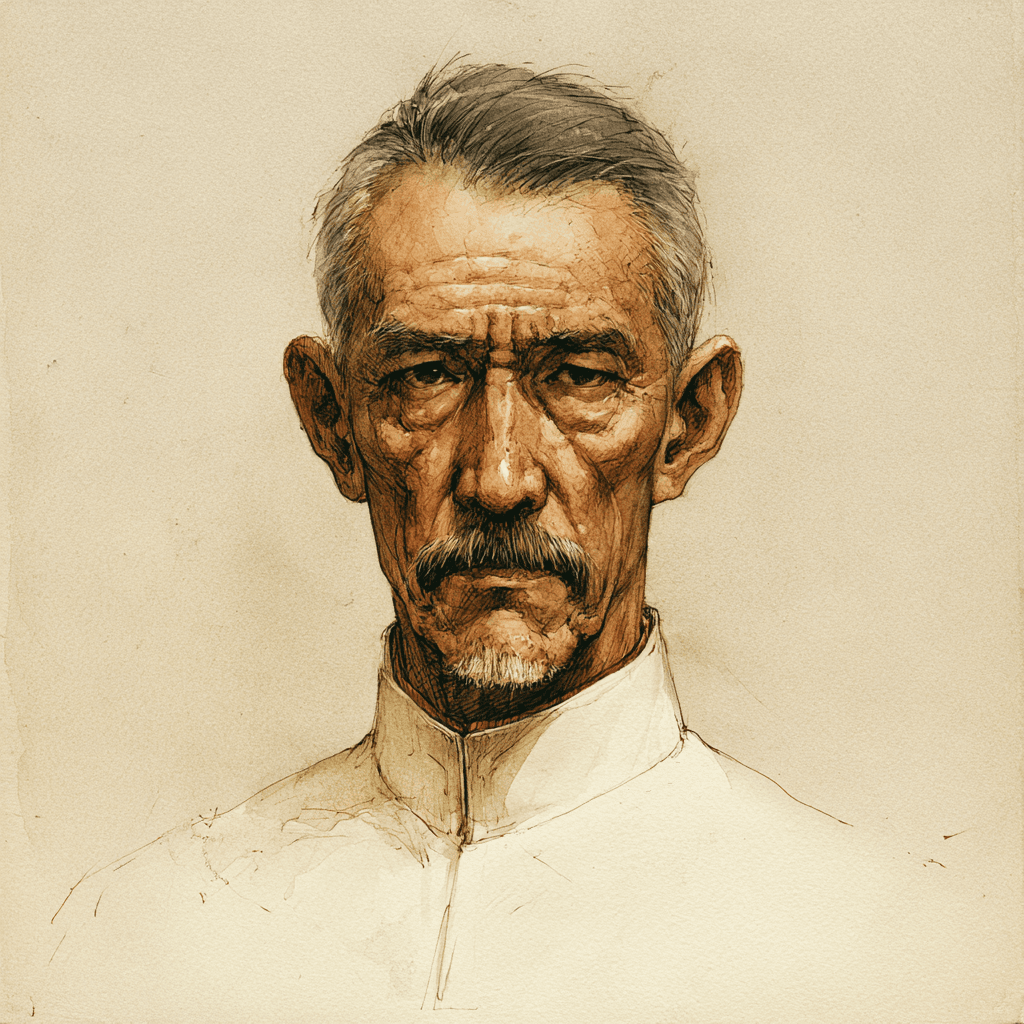
Kobayashi Seizo
Governor-General Who Drove Kominka
Japanese Rule
1877–1962
Kobayashi Seizo (1877–1962), a Japanese navy admiral by background, served as Governor-General of Taiwan from 1936 to 1940 and was the first military governor restored after the era of civilian governors, symbolizing the renewed hardening of Japanese rule under the shadow of war. He took office at the height of Japanese militarism, with war between Japan and China imminent, and put forward three guiding principles for governing Taiwan—'Kominka (imperialization), industrialization, and use as a base for the southward advance'—positioning Taiwan as a forward base for Japan's expansion to the south and pushing assimilation across the board. Under the Kominka movement he vigorously enforced the use of Japanese, abolished the Chinese-language columns of newspapers, rewarded 'national-language households,' promoted the campaign to adopt Japanese surnames, and required people to worship at Shinto shrines and venerate the sun goddess Amaterasu, seeking to remake the Taiwanese—from language, names and faith to ways of life—into 'imperial subjects' loyal to the emperor. The movement profoundly shook Taiwan's traditional culture and identity, suppressing the mother tongues, rituals and customs of many Han and indigenous people. At the same time he advanced industrialization and military production to meet wartime needs. As the foremost promoter of the Kominka policy, the measures of his tenure had a profound and complex impact on Taiwanese society and culture.
1936 Became Governor-General, restoring military governorship
1937 Launched the Kominka movement in full
Governor-General Who Drove Kominka
Kobayashi Seizo
Era
Japanese Rule
Lifespan
1877–1962
Kobayashi Seizo (1877–1962), a Japanese navy admiral by background, served as Governor-General of Taiwan from 1936 to 1940 and was the first military governor restored after the era of civilian governors, symbolizing the renewed hardening of Japanese rule under the shadow of war. He took office at the height of Japanese militarism, with war between Japan and China imminent, and put forward three guiding principles for governing Taiwan—'Kominka (imperialization), industrialization, and use as a base for the southward advance'—positioning Taiwan as a forward base for Japan's expansion to the south and pushing assimilation across the board. Under the Kominka movement he vigorously enforced the use of Japanese, abolished the Chinese-language columns of newspapers, rewarded 'national-language households,' promoted the campaign to adopt Japanese surnames, and required people to worship at Shinto shrines and venerate the sun goddess Amaterasu, seeking to remake the Taiwanese—from language, names and faith to ways of life—into 'imperial subjects' loyal to the emperor. The movement profoundly shook Taiwan's traditional culture and identity, suppressing the mother tongues, rituals and customs of many Han and indigenous people. At the same time he advanced industrialization and military production to meet wartime needs. As the foremost promoter of the Kominka policy, the measures of his tenure had a profound and complex impact on Taiwanese society and culture.
1936 Became Governor-General, restoring military governorship
1937 Launched the Kominka movement in full