

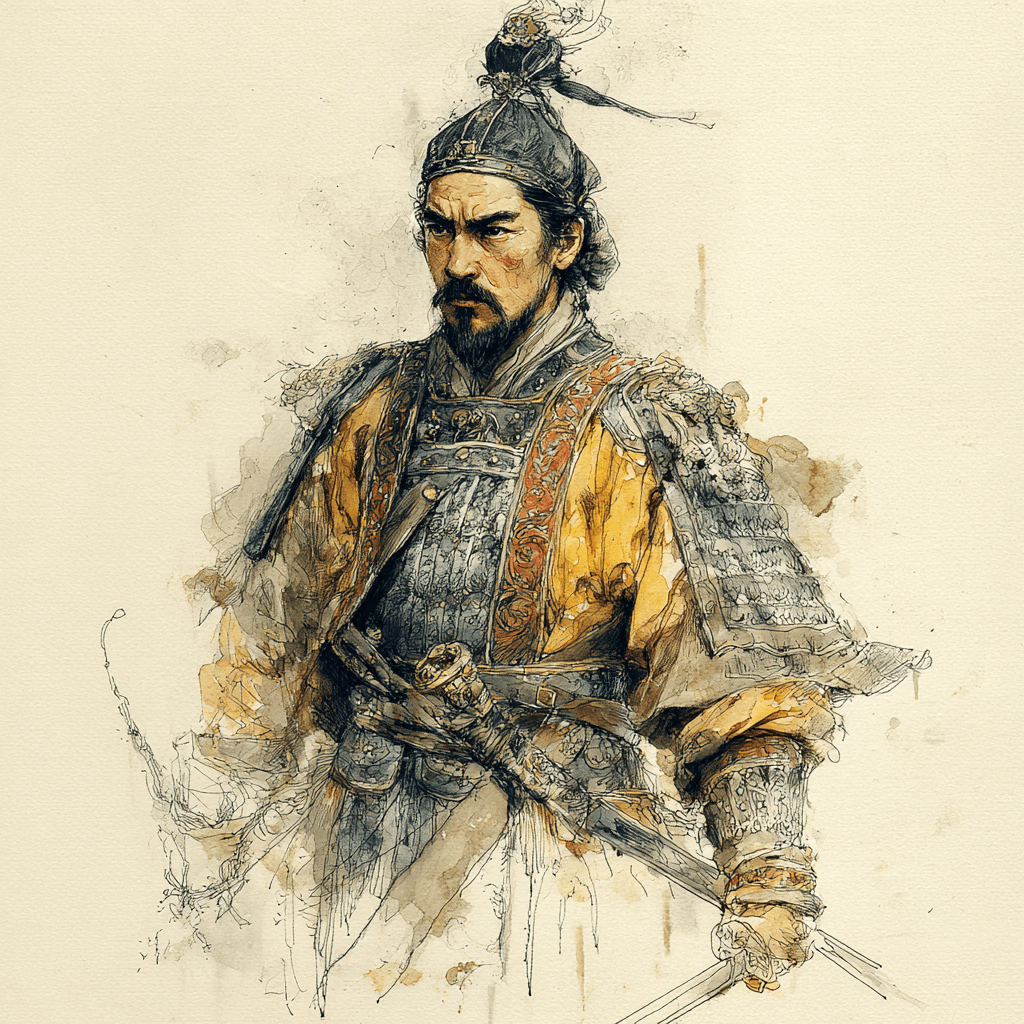
Koxinga
Ming Loyalist General & Founder of Tungning
Dutch Colonial / Tungning Kingdom
1624–1662
Zheng Cheng-gong, better known by his honorific name Koxinga (Kok-seng-iâ, Lord of the Imperial Surname), was born in 1624 in Hirado, Japan, to the powerful Fujianese merchant-pirate Zheng Zhilong and a Japanese mother of the Tagawa family. Brought to his father's homeland in southern Fujian at the age of seven, he received a classical Confucian education and was studying at the Imperial University in Nanjing when the Ming dynasty collapsed in 1644. The Southern Ming court of the Longwu Emperor bestowed upon him the imperial Zhu surname, the source of his lifelong honorific, marking him out as one of the rising hopes of the loyalist resistance. In 1646, when his father Zheng Zhilong defected to the Qing and his mother died during the ensuing Qing raid on the family home, Koxinga refused to follow his father and raised an independent army committed to restoring the Ming. Operating from a maritime base centered on Xiamen and Kinmen, he built one of the largest privately commanded fleets in the seventeenth century and conducted prolonged campaigns along the Fujian and Zhejiang coasts. His attempt in 1659 to break Qing power by besieging Nanjing ended in disastrous defeat, forcing him to seek a more secure rear base for the resistance. In April 1661 he launched a massive amphibious operation across the Taiwan Strait, landing his fleet of some four hundred ships at Lakjemuyse Bay and beginning a nine-month siege of the Dutch East India Company's Fort Zeelandia. After repeated naval clashes, supply blockades, and the storming of Fort Provintia, the Dutch Governor Frederick Coyett capitulated in February 1662 under treaty terms that allowed the Company to withdraw with honor. Koxinga reorganized the former Dutch colony as the Kingdom of Tungning, founding Chengtian Prefecture in Tainan with the counties of Tianxing and Wannian and inaugurating Han Chinese settler administration of the island. He encouraged systematic land reclamation by military garrisons, imposed Confucian administrative norms, and laid the foundations of an immigrant agrarian society that displaced the prior indigenous and Dutch order. He died in Tainan in June 1662, only months after his triumph, almost certainly of malaria, at the age of 38. Koxinga is venerated across Taiwan and southern Fujian as the Sage King who Opened Taiwan (開臺聖王), and his role has been variously reframed by Qing, Japanese, and post-1945 regimes as Ming loyalist hero, founder of overseas Chinese rule, and symbol of cross-strait struggle.
Siege and capture of Fort Zeelandia from the Dutch (1661–1662)
Established the Tungning Kingdom in Taiwan
Ming Loyalist General & Founder of Tungning
Koxinga
Era
Dutch Colonial / Tungning Kingdom
Lifespan
1624–1662
Zheng Cheng-gong, better known by his honorific name Koxinga (Kok-seng-iâ, Lord of the Imperial Surname), was born in 1624 in Hirado, Japan, to the powerful Fujianese merchant-pirate Zheng Zhilong and a Japanese mother of the Tagawa family. Brought to his father's homeland in southern Fujian at the age of seven, he received a classical Confucian education and was studying at the Imperial University in Nanjing when the Ming dynasty collapsed in 1644. The Southern Ming court of the Longwu Emperor bestowed upon him the imperial Zhu surname, the source of his lifelong honorific, marking him out as one of the rising hopes of the loyalist resistance. In 1646, when his father Zheng Zhilong defected to the Qing and his mother died during the ensuing Qing raid on the family home, Koxinga refused to follow his father and raised an independent army committed to restoring the Ming. Operating from a maritime base centered on Xiamen and Kinmen, he built one of the largest privately commanded fleets in the seventeenth century and conducted prolonged campaigns along the Fujian and Zhejiang coasts. His attempt in 1659 to break Qing power by besieging Nanjing ended in disastrous defeat, forcing him to seek a more secure rear base for the resistance. In April 1661 he launched a massive amphibious operation across the Taiwan Strait, landing his fleet of some four hundred ships at Lakjemuyse Bay and beginning a nine-month siege of the Dutch East India Company's Fort Zeelandia. After repeated naval clashes, supply blockades, and the storming of Fort Provintia, the Dutch Governor Frederick Coyett capitulated in February 1662 under treaty terms that allowed the Company to withdraw with honor. Koxinga reorganized the former Dutch colony as the Kingdom of Tungning, founding Chengtian Prefecture in Tainan with the counties of Tianxing and Wannian and inaugurating Han Chinese settler administration of the island. He encouraged systematic land reclamation by military garrisons, imposed Confucian administrative norms, and laid the foundations of an immigrant agrarian society that displaced the prior indigenous and Dutch order. He died in Tainan in June 1662, only months after his triumph, almost certainly of malaria, at the age of 38. Koxinga is venerated across Taiwan and southern Fujian as the Sage King who Opened Taiwan (開臺聖王), and his role has been variously reframed by Qing, Japanese, and post-1945 regimes as Ming loyalist hero, founder of overseas Chinese rule, and symbol of cross-strait struggle.
Siege and capture of Fort Zeelandia from the Dutch (1661–1662)
Established the Tungning Kingdom in Taiwan