

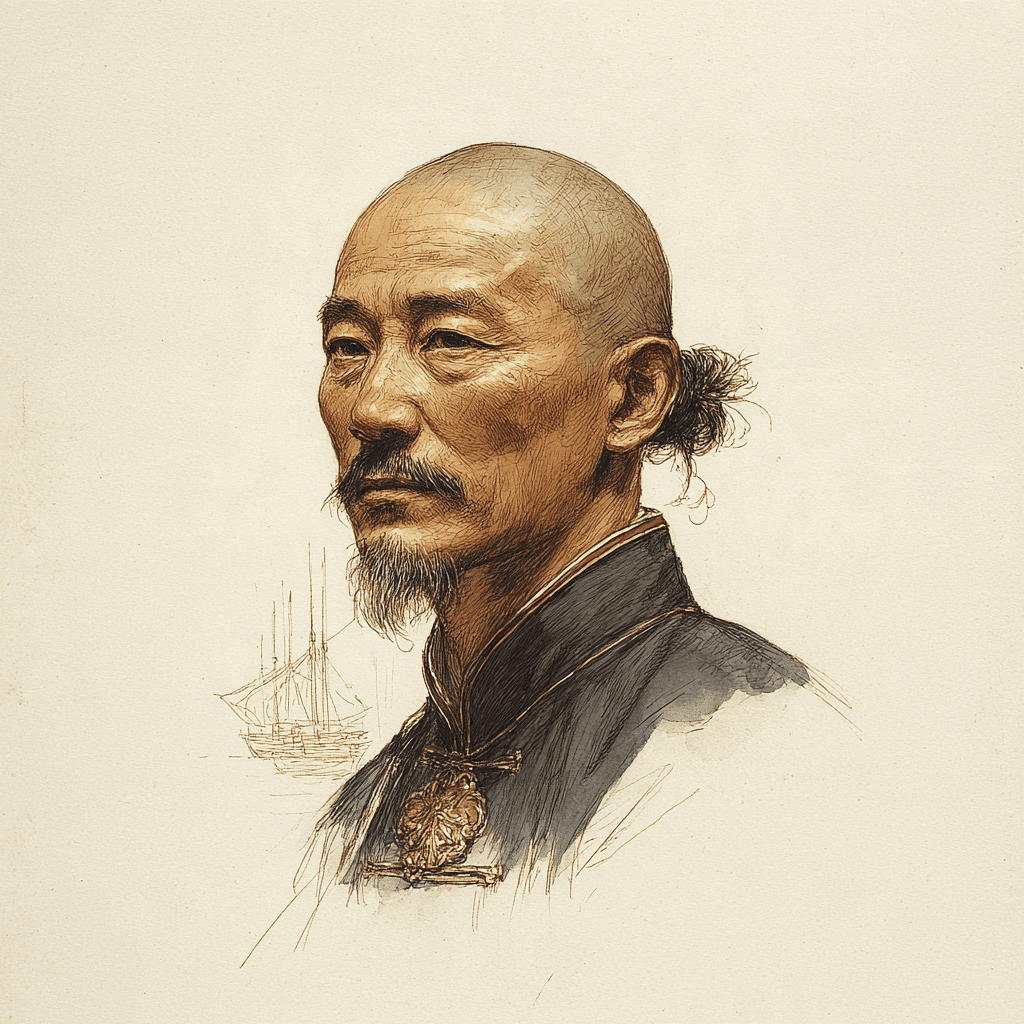
Lan Tingzhen
Qing Commander and Admiral of the Fujian Navy
Qing Dynasty
1664–1729
Lan Tingzhen was born in 1664 in Zhangpu, Fujian, and rose through the ranks from junior military posts. In 1719 he moved from deputy commander at Penghu to commander of the Nan'ao garrison, responsible for the coastal defences along the Fujian-Guangdong border.
When Zhu Yigui rose in 1721 and the whole island fell, the Governor-General of Fujian and Zhejiang, Gioro Manbao, put him in command of the combined land and naval force sent across the strait. Qing troops entered Luermen on the sixteenth of the sixth month, took Anping first, retook the prefectural city on the twenty-third, and Zhu Yigui was captured at Gouwei village on the fifth of the intercalary sixth month. Crossing with him was his cousin Lan Dingyuan, and the reason a full first-hand record of the campaign survives is that Lan Dingyuan wrote it up in two books.
He did not go straight back once the rising was put down, but stayed on Taiwan for more than a year. In 1722 he became commander of the Taiwan garrison, and in October 1723 he was made admiral of the Fujian navy. His memorials on governing Taiwan from this period were largely adopted by the court, from new garrison posts to easier land-clearing permits and the discipline of local officials.
He died in office in 1729 at the age of sixty-six, was posthumously made Junior Guardian of the Heir Apparent and given the honorific name Xiangyi. Few early Qing officers left behind both a campaign record and a body of argument about how Taiwan should be governed. Between the two cousins, one with the troops and one with the brush, a two-month rebellion became a reference work the court kept using.
Commanded the land and naval force that put down the Zhu Yigui rebellion in 1721, entering Luermen and retaking the prefectural city
Made admiral of the Fujian navy in 1723; his memorials on governing Taiwan were largely adopted by the court
Lan Tingzhen
Qing Commander and Admiral of the Fujian Navy
Era
Qing Dynasty
Lifespan
1664–1729
Lan Tingzhen was born in 1664 in Zhangpu, Fujian, and rose through the ranks from junior military posts. In 1719 he moved from deputy commander at Penghu to commander of the Nan'ao garrison, responsible for the coastal defences along the Fujian-Guangdong border.
When Zhu Yigui rose in 1721 and the whole island fell, the Governor-General of Fujian and Zhejiang, Gioro Manbao, put him in command of the combined land and naval force sent across the strait. Qing troops entered Luermen on the sixteenth of the sixth month, took Anping first, retook the prefectural city on the twenty-third, and Zhu Yigui was captured at Gouwei village on the fifth of the intercalary sixth month. Crossing with him was his cousin Lan Dingyuan, and the reason a full first-hand record of the campaign survives is that Lan Dingyuan wrote it up in two books.
He did not go straight back once the rising was put down, but stayed on Taiwan for more than a year. In 1722 he became commander of the Taiwan garrison, and in October 1723 he was made admiral of the Fujian navy. His memorials on governing Taiwan from this period were largely adopted by the court, from new garrison posts to easier land-clearing permits and the discipline of local officials.
He died in office in 1729 at the age of sixty-six, was posthumously made Junior Guardian of the Heir Apparent and given the honorific name Xiangyi. Few early Qing officers left behind both a campaign record and a body of argument about how Taiwan should be governed. Between the two cousins, one with the troops and one with the brush, a two-month rebellion became a reference work the court kept using.
Commanded the land and naval force that put down the Zhu Yigui rebellion in 1721, entering Luermen and retaking the prefectural city
Made admiral of the Fujian navy in 1723; his memorials on governing Taiwan were largely adopted by the court