

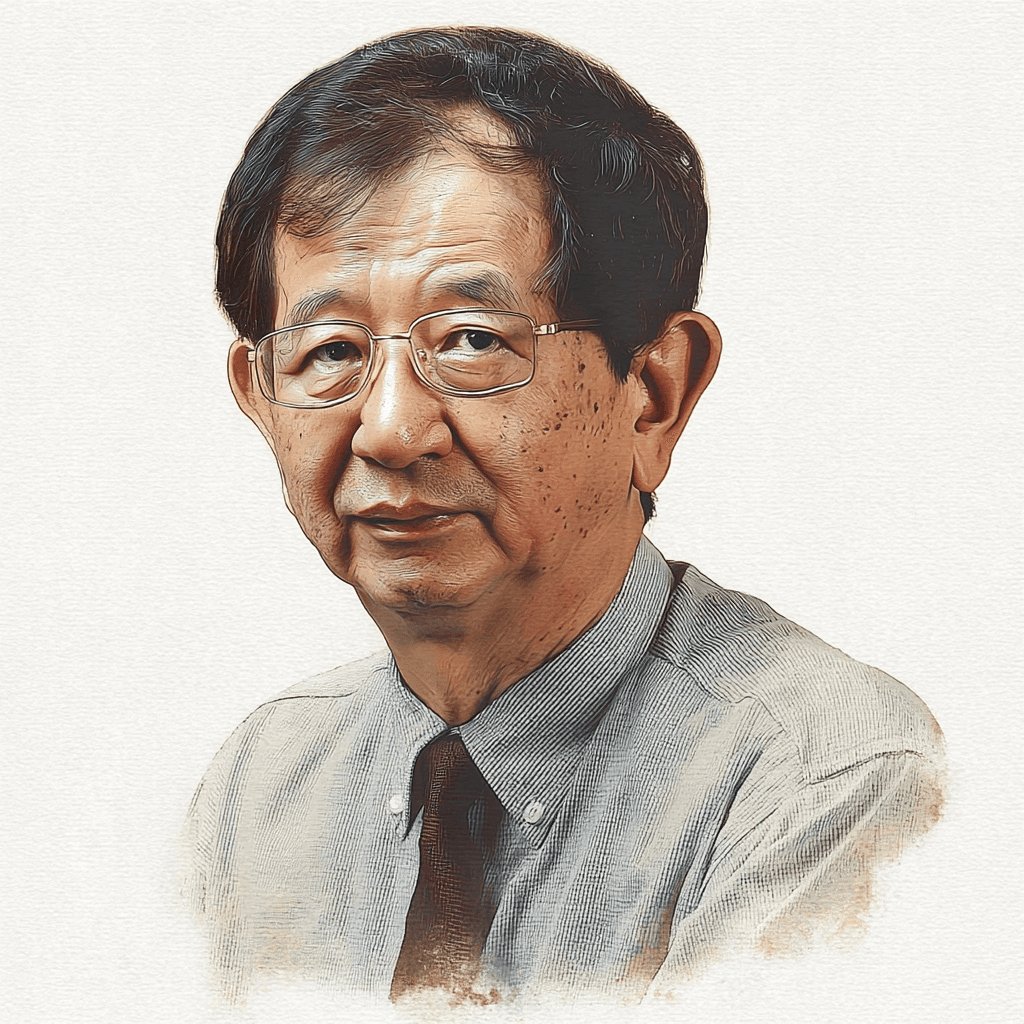
Lee Yuan-tseh
Nobel Chemistry Laureate & President of Academia Sinica
Modern Taiwan
1936–
Lee Yuan-tseh, born in 1936 in Hsinchu, is the first Nobel laureate of Taiwanese origin and an important guide of post-war Taiwan's science and education. Showing a keen interest in science from childhood, he studied at National Taiwan University and National Tsing Hua University before going to the United States, earning a doctorate from the University of California, Berkeley. He devoted himself to chemical reaction dynamics, developing experimental methods such as the crossed molecular beam to probe the microscopic processes of chemical reactions. In 1986, for his pioneering contributions to reaction dynamics, he shared the Nobel Prize in Chemistry with two other scholars, becoming a landmark figure in the ethnic-Chinese scientific world. He taught at several leading American universities and built a distinguished research team at Berkeley, enjoying high standing in the international academic community. In 1994 he returned to Taiwan to become president of Academia Sinica, devoting himself to building the country's research system and cultivating talent over twelve years. In office he attended to higher education and science policy and led the push for education reform, whose proposals sparked wide public debate and controversy. After stepping down he continued to take part in international scientific organizations, serving as president of the International Council for Science and engaging with global issues such as sustainable development and climate change. Lee is seen as a symbol of Taiwanese science reaching the world, his scholarly achievement and public engagement long a key benchmark for Taiwan's scientific and educational circles.
Awarded the Nobel Prize in Chemistry (1986)
Served as president of Academia Sinica and led education reform
Nobel Chemistry Laureate & President of Academia Sinica
Lee Yuan-tseh
Era
Modern Taiwan
Lifespan
1936–
Lee Yuan-tseh, born in 1936 in Hsinchu, is the first Nobel laureate of Taiwanese origin and an important guide of post-war Taiwan's science and education. Showing a keen interest in science from childhood, he studied at National Taiwan University and National Tsing Hua University before going to the United States, earning a doctorate from the University of California, Berkeley. He devoted himself to chemical reaction dynamics, developing experimental methods such as the crossed molecular beam to probe the microscopic processes of chemical reactions. In 1986, for his pioneering contributions to reaction dynamics, he shared the Nobel Prize in Chemistry with two other scholars, becoming a landmark figure in the ethnic-Chinese scientific world. He taught at several leading American universities and built a distinguished research team at Berkeley, enjoying high standing in the international academic community. In 1994 he returned to Taiwan to become president of Academia Sinica, devoting himself to building the country's research system and cultivating talent over twelve years. In office he attended to higher education and science policy and led the push for education reform, whose proposals sparked wide public debate and controversy. After stepping down he continued to take part in international scientific organizations, serving as president of the International Council for Science and engaging with global issues such as sustainable development and climate change. Lee is seen as a symbol of Taiwanese science reaching the world, his scholarly achievement and public engagement long a key benchmark for Taiwan's scientific and educational circles.
Awarded the Nobel Prize in Chemistry (1986)
Served as president of Academia Sinica and led education reform