

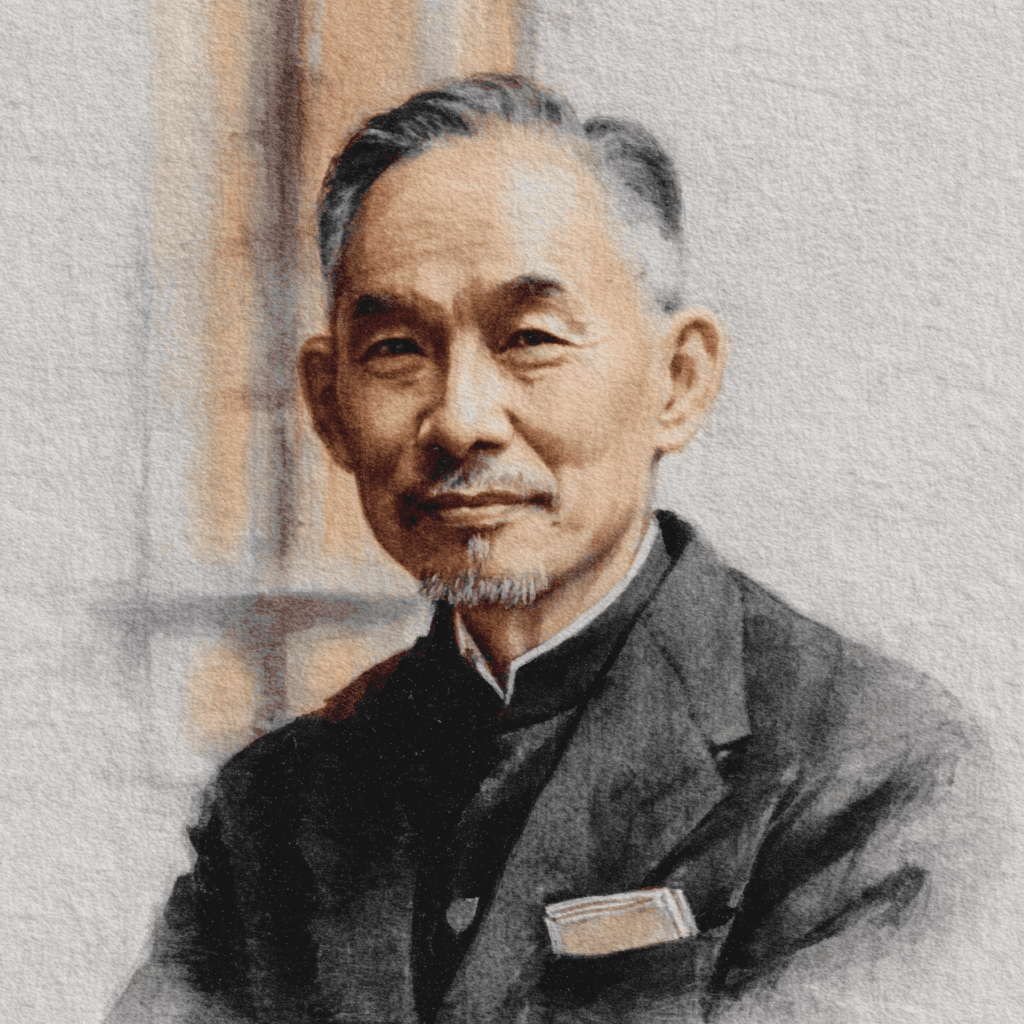
Lei Chen
Publisher of Free China Journal
Authoritarian Era
1897–1979
Lei Chen, born in 1897 in Changxing, Zhejiang, was a Republican-era liberal intellectual who became, through his Free China Journal and his abortive 1960 effort to found an opposition party, the most prominent victim of KMT political repression on Taiwan in the early 1960s. He studied law and economics at Kyoto Imperial University in the 1920s and returned to China to join the Nationalist movement, serving in central party and government positions through the Republican era. He held senior policy posts under Chiang Kai-shek in the 1940s, including secretary-general of the People's Political Council and member of the National Government Council, and was an intimate of the party's reformist wing. He moved to Taiwan with the Nationalist government in 1949 and continued in advisory positions while founding the bilingual liberal journal Free China (自由中國半月刊) in November 1949 with the philosopher Hu Shih as honorary publisher. Through the 1950s Free China became the most influential platform for constitutionalist criticism of the KMT regime, publishing articles on civil liberties, judicial independence, and the abuses of the security apparatus. The magazine's coverage of the abuse of constitutional norms and Chiang's evasion of the two-term presidential limit by amending the Temporary Provisions in 1960 made it a target of the security agencies. In mid-1960 Lei attempted to organize a new opposition party, the China Democratic Party (中國民主黨), in coalition with Taiwanese tangwai politicians including Kuo Kuo-chi and Wu San-lien. He was arrested with three associates on 4 September 1960, charged with sedition and 'knowingly harboring a communist spy' (referring to his colleague Liu Tzu-ying), and tried by military court in proceedings widely regarded as a political show trial. He was convicted and sentenced to ten years' imprisonment, sentences that effectively destroyed both Free China — whose publication was immediately suspended — and the nascent opposition party. He served the full ten-year sentence and was released in 1970, after which the security services closely monitored his remaining activities and continued to harass his family. He devoted his remaining years to writing his memoirs and remained in correspondence with younger democracy activists until his death in Taipei in 1979 at the age of 82. Lei is widely commemorated as the principal mainlander liberal martyr of the early authoritarian era, the man whose abortive 1960 cross-strait coalition with Taiwanese tangwai figures prefigured by twenty-six years the founding of the Democratic Progressive Party.
Arrested for attempting to form an opposition party (1960)
Publisher of Free China Journal
Lei Chen
Era
Authoritarian Era
Lifespan
1897–1979
Lei Chen, born in 1897 in Changxing, Zhejiang, was a Republican-era liberal intellectual who became, through his Free China Journal and his abortive 1960 effort to found an opposition party, the most prominent victim of KMT political repression on Taiwan in the early 1960s. He studied law and economics at Kyoto Imperial University in the 1920s and returned to China to join the Nationalist movement, serving in central party and government positions through the Republican era. He held senior policy posts under Chiang Kai-shek in the 1940s, including secretary-general of the People's Political Council and member of the National Government Council, and was an intimate of the party's reformist wing. He moved to Taiwan with the Nationalist government in 1949 and continued in advisory positions while founding the bilingual liberal journal Free China (自由中國半月刊) in November 1949 with the philosopher Hu Shih as honorary publisher. Through the 1950s Free China became the most influential platform for constitutionalist criticism of the KMT regime, publishing articles on civil liberties, judicial independence, and the abuses of the security apparatus. The magazine's coverage of the abuse of constitutional norms and Chiang's evasion of the two-term presidential limit by amending the Temporary Provisions in 1960 made it a target of the security agencies. In mid-1960 Lei attempted to organize a new opposition party, the China Democratic Party (中國民主黨), in coalition with Taiwanese tangwai politicians including Kuo Kuo-chi and Wu San-lien. He was arrested with three associates on 4 September 1960, charged with sedition and 'knowingly harboring a communist spy' (referring to his colleague Liu Tzu-ying), and tried by military court in proceedings widely regarded as a political show trial. He was convicted and sentenced to ten years' imprisonment, sentences that effectively destroyed both Free China — whose publication was immediately suspended — and the nascent opposition party. He served the full ten-year sentence and was released in 1970, after which the security services closely monitored his remaining activities and continued to harass his family. He devoted his remaining years to writing his memoirs and remained in correspondence with younger democracy activists until his death in Taipei in 1979 at the age of 82. Lei is widely commemorated as the principal mainlander liberal martyr of the early authoritarian era, the man whose abortive 1960 cross-strait coalition with Taiwanese tangwai figures prefigured by twenty-six years the founding of the Democratic Progressive Party.
Arrested for attempting to form an opposition party (1960)