

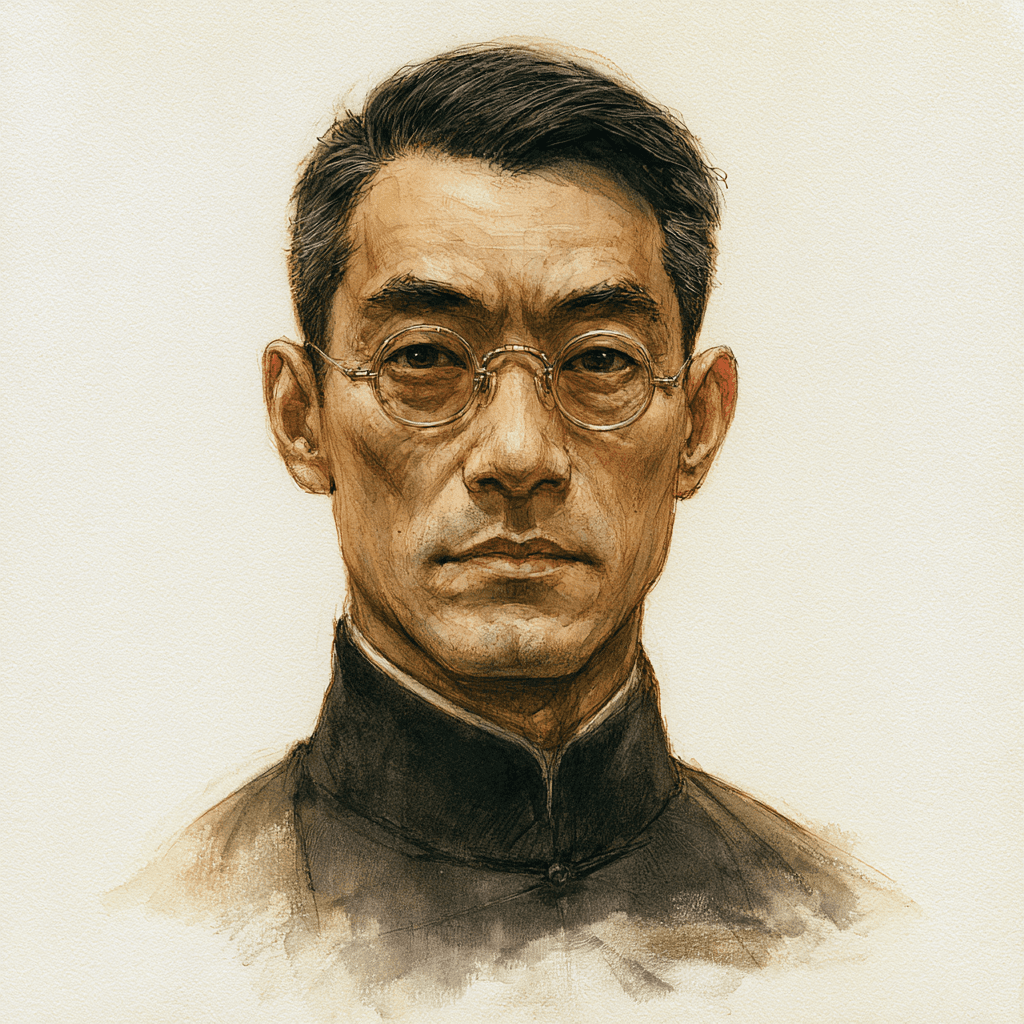
Lian Heng
Author of the General History of Taiwan
Japanese Rule
1878–1936
Lian Heng (1878–1936), courtesy name Yatang and sobriquet Jianhua, was born in the Mabingying neighborhood of Tainan and became one of the most important historians of modern Taiwan. Of scholarly family background, he was trained in classical learning and poetry from boyhood and traveled extensively in China during his early adulthood. He briefly served on the staff of the Fujian Daily News in Fuzhou, and his exposure to mainland intellectual life shaped his later historiographical ambitions. After returning to Taiwan he devoted himself to preserving and organizing the island's history, observing that despite Taiwan's many changes of regime — from the Dutch period through Koxinga, the Qing, and Japanese rule — no systematic chronicle of the island had ever been written. He resolved to compile one single-handedly and, beginning in 1908, set out to write the General History of Taiwan, a project of more than a decade. The work was published in successive volumes between 1920 and 1921 in thirty-six chapters modeled on Sima Qian's Records of the Grand Historian and divided into annals, biographies, treatises, and tables — the first general history of Taiwan written by a Taiwanese. After its completion, he also compiled the Taiwan Poetry Anthology and the Jianhua Studio Poems, securing a high standing in Taiwan's literary world and joining classical-poetry societies such as the Liushe. His historiographical contributions were widely recognized; however, in 1930 his essay 'On the Question of the Opium License in Taiwan' argued that opium was 'beneficial and not harmful' and defended the Government-General's renewed issuance of opium licenses, in sharp conflict with the prevailing anti-opium stance of Taiwan's cultural circles. The essay led to his expulsion from the Liushe and a break with many colleagues at the Taiwan Cultural Association, marking the gravest controversy of his career. In 1933 he relocated his family to Shanghai, in part to distance himself from the controversies surrounding him. He died of illness in Shanghai in 1936 at the age of 58, and his grandson Lien Chan would later become a senior figure in Republic of China politics in the postwar era. He is widely credited with founding the systematic historiography of Taiwan, though the opium controversy left a lasting blemish on his later reputation.
1920 Completed the General History of Taiwan
1930 Published pro-opium essay; expelled from the Liushe
Author of the General History of Taiwan
Lian Heng
Era
Japanese Rule
Lifespan
1878–1936
Lian Heng (1878–1936), courtesy name Yatang and sobriquet Jianhua, was born in the Mabingying neighborhood of Tainan and became one of the most important historians of modern Taiwan. Of scholarly family background, he was trained in classical learning and poetry from boyhood and traveled extensively in China during his early adulthood. He briefly served on the staff of the Fujian Daily News in Fuzhou, and his exposure to mainland intellectual life shaped his later historiographical ambitions. After returning to Taiwan he devoted himself to preserving and organizing the island's history, observing that despite Taiwan's many changes of regime — from the Dutch period through Koxinga, the Qing, and Japanese rule — no systematic chronicle of the island had ever been written. He resolved to compile one single-handedly and, beginning in 1908, set out to write the General History of Taiwan, a project of more than a decade. The work was published in successive volumes between 1920 and 1921 in thirty-six chapters modeled on Sima Qian's Records of the Grand Historian and divided into annals, biographies, treatises, and tables — the first general history of Taiwan written by a Taiwanese. After its completion, he also compiled the Taiwan Poetry Anthology and the Jianhua Studio Poems, securing a high standing in Taiwan's literary world and joining classical-poetry societies such as the Liushe. His historiographical contributions were widely recognized; however, in 1930 his essay 'On the Question of the Opium License in Taiwan' argued that opium was 'beneficial and not harmful' and defended the Government-General's renewed issuance of opium licenses, in sharp conflict with the prevailing anti-opium stance of Taiwan's cultural circles. The essay led to his expulsion from the Liushe and a break with many colleagues at the Taiwan Cultural Association, marking the gravest controversy of his career. In 1933 he relocated his family to Shanghai, in part to distance himself from the controversies surrounding him. He died of illness in Shanghai in 1936 at the age of 58, and his grandson Lien Chan would later become a senior figure in Republic of China politics in the postwar era. He is widely credited with founding the systematic historiography of Taiwan, though the opium controversy left a lasting blemish on his later reputation.
1920 Completed the General History of Taiwan
1930 Published pro-opium essay; expelled from the Liushe