

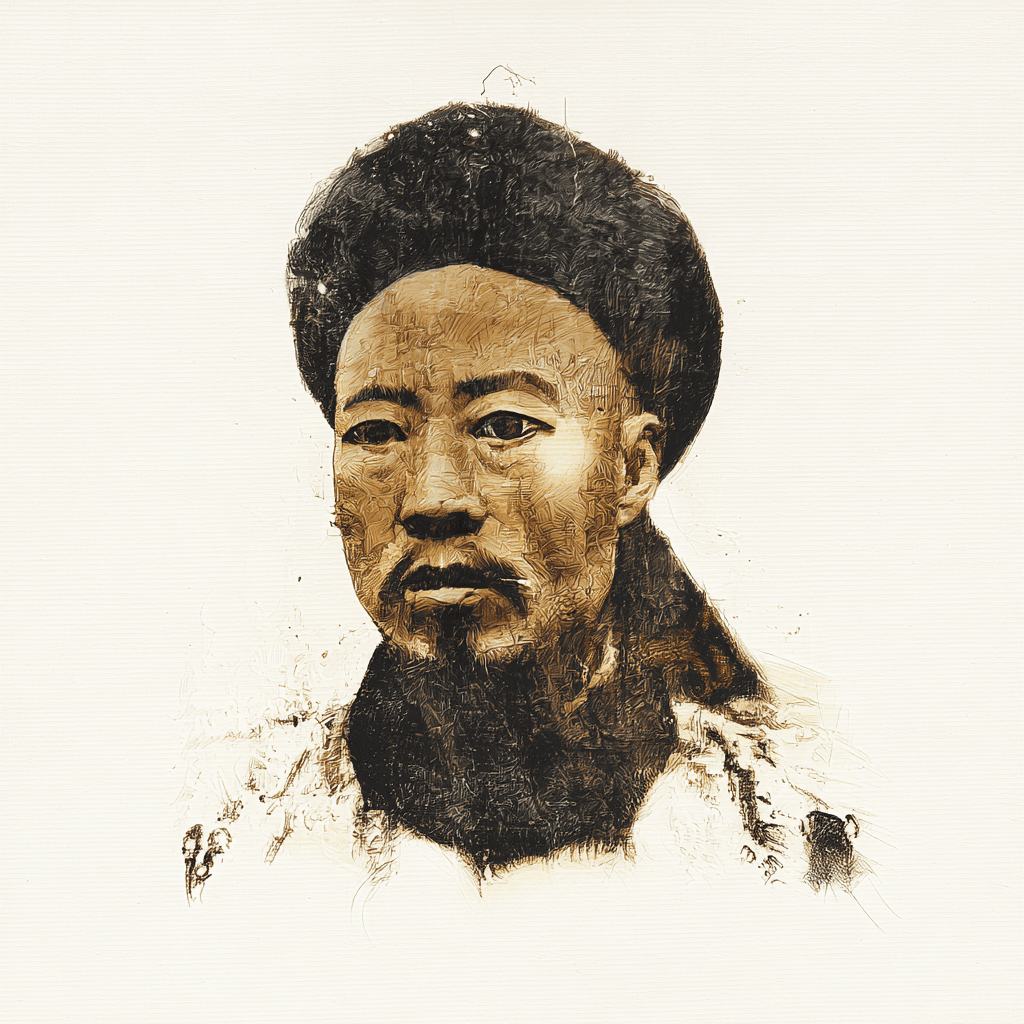
Lin Chaodong
Commander of the Dongying Militia
Qing Dynasty
1851–1904
Lin Chaodong, born in 1851 in Wufeng (霧峰), Taichung, to the prominent Wufeng Lin military family, commanded the private Dongying militia (棟軍) and led Taiwan's most effective indigenous military force during the island's last two major crises under Qing rule: the Sino-French War of 1884–1885 and the Japanese invasion of 1895. He was the son of Lin Wencha — the Qing general who had pacified the Dai Chaochun rebellion and died fighting Taiping forces on the mainland — and inherited both his father's military reputation and his command of the formidable Lin family militia, which by the 1880s numbered in the thousands and was better equipped and disciplined than most regular Qing forces in Taiwan. When French naval forces blockaded Taiwan's ports and landed troops at Keelung in 1884, Lin Chaodong moved his Dongying units north from Taichung and conducted sustained guerrilla operations in the jungle terrain around Keelung and Danshui that proved far more effective against the French than the regular Qing garrisons. His operations at Keelung, which resulted in significant French casualties and denied the French a decisive land victory despite their naval superiority, established his reputation as Taiwan's most capable military commander and contributed to the stalemate that eventually led to the French withdrawal after the Treaty of Tientsin. In the aftermath of the war, Governor Liu Mingchuan — who had worked closely with Lin during the French campaign — relied heavily on the Dongying militia to extend Qing administrative control into the mountainous interior of Taiwan, where regular forces had never penetrated, in a series of campaigns that subjugated a number of indigenous highland communities. Lin Chaodong prospered in the 1880s through official patronage: he received land grants in the camphor-producing mountain regions as compensation for his military service, transforming the Dongying militia into an economic as well as military enterprise and making him one of the wealthiest men in late Qing Taiwan. When Japan invaded Taiwan following the Treaty of Shimonoseki in 1895, Lin Chaodong initially pledged to defend the island under the banner of the short-lived Taiwan Republic (臺灣民主國), and his Dongying forces fought a series of engagements against the advancing Japanese columns in central Taiwan. However, as the Taiwan Republic collapsed within weeks and Japanese military superiority became overwhelming, Lin made the pragmatic decision to withdraw to the mainland in mid-1895 rather than face certain defeat, taking his family and remaining troops with him. He lived out his remaining years in Fujian and Guangdong, dying in 1904 without returning to the island his family had dominated for three generations. Lin Chaodong is commemorated in Wufeng today through the preserved Lin family compound (霧峰林家), a UNESCO-recognized heritage site that embodies the rise, military service, and eventual departure of one of Taiwan's most consequential nineteenth-century dynasties. He is widely regarded as the last great commander of Taiwan's private military tradition — the man who led the island's final indigenous defense against two foreign invasions before that tradition was extinguished by the total transformation of 1895.
Led the Dongying militia against French forces at Keelung (1884–85), inflicting significant casualties and contributing to the French withdrawal
Commanded the defense of central Taiwan during the Japanese invasion of 1895, ultimately withdrawing to the mainland as the Taiwan Republic collapsed
Commander of the Dongying Militia
Lin Chaodong
Era
Qing Dynasty
Lifespan
1851–1904
Lin Chaodong, born in 1851 in Wufeng (霧峰), Taichung, to the prominent Wufeng Lin military family, commanded the private Dongying militia (棟軍) and led Taiwan's most effective indigenous military force during the island's last two major crises under Qing rule: the Sino-French War of 1884–1885 and the Japanese invasion of 1895. He was the son of Lin Wencha — the Qing general who had pacified the Dai Chaochun rebellion and died fighting Taiping forces on the mainland — and inherited both his father's military reputation and his command of the formidable Lin family militia, which by the 1880s numbered in the thousands and was better equipped and disciplined than most regular Qing forces in Taiwan. When French naval forces blockaded Taiwan's ports and landed troops at Keelung in 1884, Lin Chaodong moved his Dongying units north from Taichung and conducted sustained guerrilla operations in the jungle terrain around Keelung and Danshui that proved far more effective against the French than the regular Qing garrisons. His operations at Keelung, which resulted in significant French casualties and denied the French a decisive land victory despite their naval superiority, established his reputation as Taiwan's most capable military commander and contributed to the stalemate that eventually led to the French withdrawal after the Treaty of Tientsin. In the aftermath of the war, Governor Liu Mingchuan — who had worked closely with Lin during the French campaign — relied heavily on the Dongying militia to extend Qing administrative control into the mountainous interior of Taiwan, where regular forces had never penetrated, in a series of campaigns that subjugated a number of indigenous highland communities. Lin Chaodong prospered in the 1880s through official patronage: he received land grants in the camphor-producing mountain regions as compensation for his military service, transforming the Dongying militia into an economic as well as military enterprise and making him one of the wealthiest men in late Qing Taiwan. When Japan invaded Taiwan following the Treaty of Shimonoseki in 1895, Lin Chaodong initially pledged to defend the island under the banner of the short-lived Taiwan Republic (臺灣民主國), and his Dongying forces fought a series of engagements against the advancing Japanese columns in central Taiwan. However, as the Taiwan Republic collapsed within weeks and Japanese military superiority became overwhelming, Lin made the pragmatic decision to withdraw to the mainland in mid-1895 rather than face certain defeat, taking his family and remaining troops with him. He lived out his remaining years in Fujian and Guangdong, dying in 1904 without returning to the island his family had dominated for three generations. Lin Chaodong is commemorated in Wufeng today through the preserved Lin family compound (霧峰林家), a UNESCO-recognized heritage site that embodies the rise, military service, and eventual departure of one of Taiwan's most consequential nineteenth-century dynasties. He is widely regarded as the last great commander of Taiwan's private military tradition — the man who led the island's final indigenous defense against two foreign invasions before that tradition was extinguished by the total transformation of 1895.
Led the Dongying militia against French forces at Keelung (1884–85), inflicting significant casualties and contributing to the French withdrawal
Commanded the defense of central Taiwan during the Japanese invasion of 1895, ultimately withdrawing to the mainland as the Taiwan Republic collapsed