

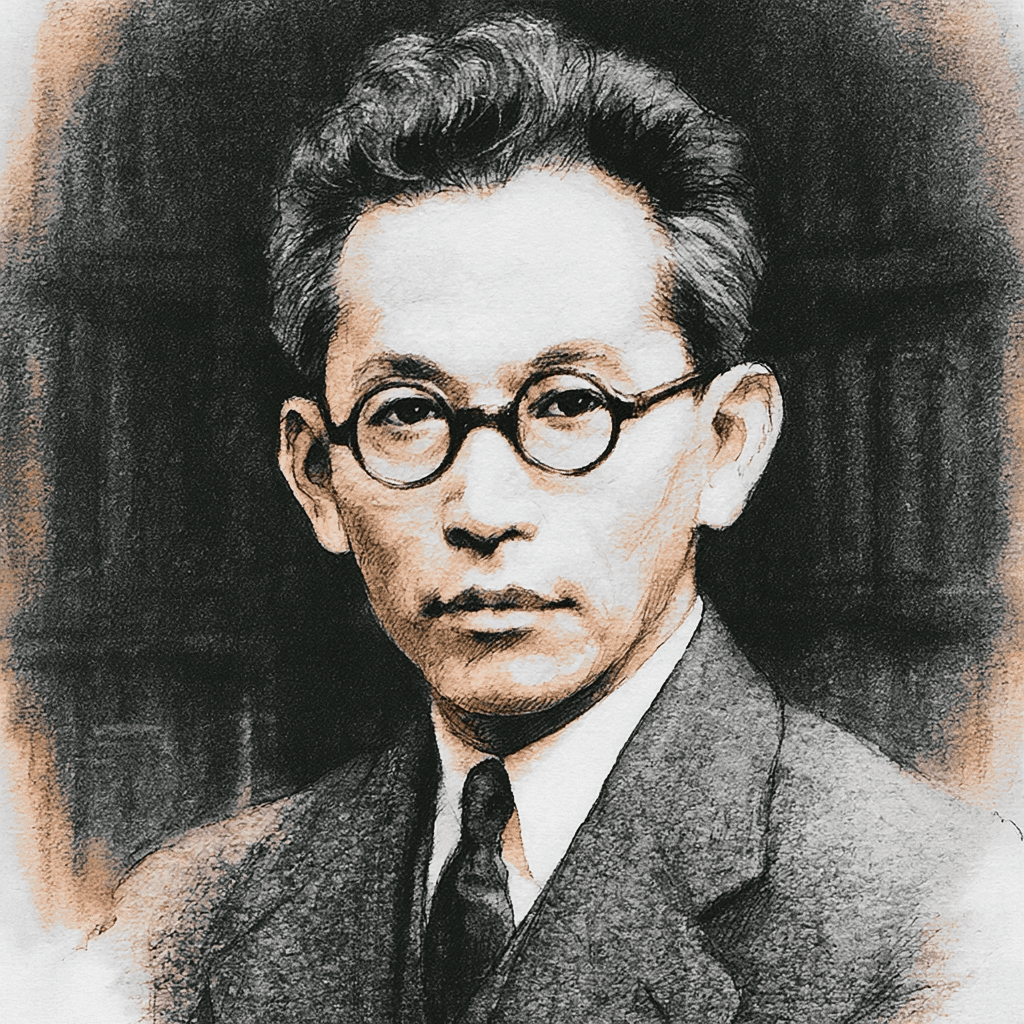
Lin Mao-sheng
Taiwan's First Doctor of Philosophy
Post-War Taiwan
1887–1947
Lin Mao-sheng, born in 1887 in Tainan into a Presbyterian family, was among the most prominent Taiwanese intellectuals bridging the Japanese colonial and early post-war eras. He studied at the Presbyterian school in Tainan before pursuing higher education in Japan, and in 1916 he graduated in philosophy from Tokyo Imperial University, becoming the first Taiwanese to earn a bachelor of letters there. Returning home, he devoted himself to education, teaching at institutions such as the Tainan Commercial College while actively joining the cultural enlightenment movement. In 1927 he traveled to Columbia University in the United States, where he studied under the education philosopher John Dewey, earning a doctorate in philosophy in 1929 — the first Taiwanese ever to hold such a degree. After returning to Taiwan he continued to work for education and for the cultural standing of the Taiwanese people, enjoying great prestige even under colonial rule. When the Nationalist government took over Taiwan at the end of World War II, he initially held hopes for the new order and founded and edited the Minbao (People's Journal) to scrutinize public affairs. He was also appointed to National Taiwan University, serving as director of its preparatory division and acting dean of the College of Liberal Arts, a key founder of early post-war higher education on the island. Yet his frequent criticism of the incoming administration's failings marked him out as a target of the authorities. After the February 28 Incident erupted in 1947, security agents took him from his Taipei home on March 11; he was never seen again and is generally believed to have been killed. His disappearance became a symbolic case of the mass loss of the Taiwanese elite during the incident. Spanning both Japanese and American scholarly training and fusing Eastern and Western thought, Lin is remembered as a model of the modern Taiwanese intellectual, and his tragic end remains central to the memory of February 28.
Abducted and vanished during the February 28 Incident (1947)
Earned a Ph.D. in philosophy from Columbia University (1929)
Taiwan's First Doctor of Philosophy
Lin Mao-sheng
Era
Post-War Taiwan
Lifespan
1887–1947
Lin Mao-sheng, born in 1887 in Tainan into a Presbyterian family, was among the most prominent Taiwanese intellectuals bridging the Japanese colonial and early post-war eras. He studied at the Presbyterian school in Tainan before pursuing higher education in Japan, and in 1916 he graduated in philosophy from Tokyo Imperial University, becoming the first Taiwanese to earn a bachelor of letters there. Returning home, he devoted himself to education, teaching at institutions such as the Tainan Commercial College while actively joining the cultural enlightenment movement. In 1927 he traveled to Columbia University in the United States, where he studied under the education philosopher John Dewey, earning a doctorate in philosophy in 1929 — the first Taiwanese ever to hold such a degree. After returning to Taiwan he continued to work for education and for the cultural standing of the Taiwanese people, enjoying great prestige even under colonial rule. When the Nationalist government took over Taiwan at the end of World War II, he initially held hopes for the new order and founded and edited the Minbao (People's Journal) to scrutinize public affairs. He was also appointed to National Taiwan University, serving as director of its preparatory division and acting dean of the College of Liberal Arts, a key founder of early post-war higher education on the island. Yet his frequent criticism of the incoming administration's failings marked him out as a target of the authorities. After the February 28 Incident erupted in 1947, security agents took him from his Taipei home on March 11; he was never seen again and is generally believed to have been killed. His disappearance became a symbolic case of the mass loss of the Taiwanese elite during the incident. Spanning both Japanese and American scholarly training and fusing Eastern and Western thought, Lin is remembered as a model of the modern Taiwanese intellectual, and his tragic end remains central to the memory of February 28.
Abducted and vanished during the February 28 Incident (1947)
Earned a Ph.D. in philosophy from Columbia University (1929)