

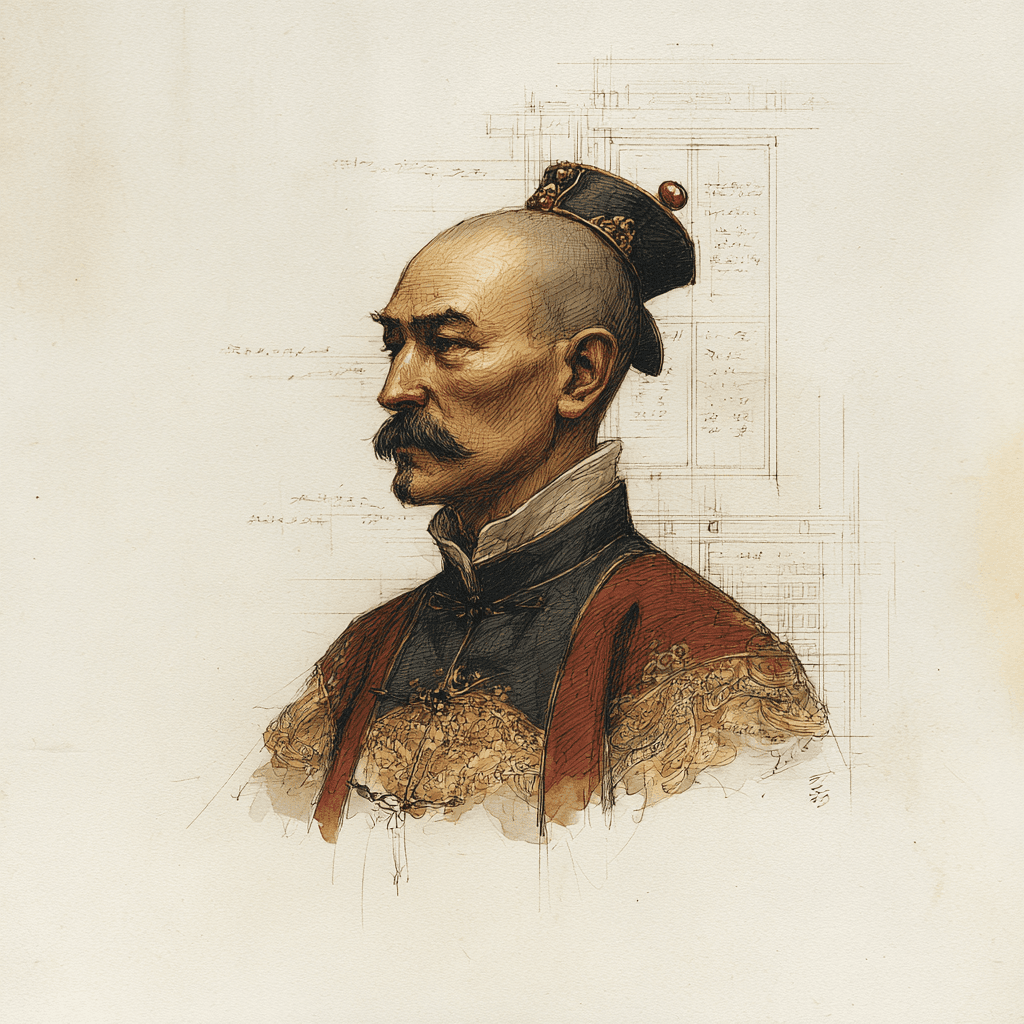
Lin Pinhou
Founder of the Banciao Lin Family
Qing Dynasty
1766–1844
Lin Pinhou, born in 1766 in Zhangzhou Prefecture, Fujian, arrived in Taiwan as a destitute youth and through shrewd commerce and timely alliance-building rose to become the founder of the wealthiest Han Chinese family in nineteenth-century Taiwan, the Banciao Lin family (板橋林家). He began his career as a laborer and shop assistant in the rice trade, gradually accumulating capital before establishing his own grain brokerage in the Tamsui River region, where he built connections with incoming settlers and Qing officials that proved decisive for his later ambitions. By purchasing the title of Imperial Student (監生) and later a military rank through contributions to the Qing treasury, Lin Pinhou secured the legal standing that enabled him to acquire large tracts of land across the Tamsui basin and the Keelung River plain in what is today the greater Taipei area. His business empire expanded from rice into landlordship, moneylending, and the management of reclamation projects, and he became one of the most important brokers between Qing authorities and the Han settler communities of northern Taiwan. In the turbulent 1810s and 1820s, Lin used his private militia to suppress local banditry and to mediate the fierce armed conflicts between settlers of Zhangzhou and Quanzhou origin that periodically devastated northern Taiwan, a role that reinforced his position as the dominant patron of the region. He relocated his household to Banciao around 1820, drawn by its strategic position between the Tamsui and Xinzhuang lowlands, and began constructing the fortified compound that would grow over the following decades into the celebrated Lin Family Mansion and Garden (林家花園). Lin Pinhou fathered five sons, among whom he distributed his landholdings and commercial interests, and he systematically invested in their education and official careers, laying the institutional foundation for the family's multigenerational influence. His son Lin Guohua and later his grandson Lin Weiyuan — already a figure in this archive — would expand the family's reach to include extensive philanthropic activity, public infrastructure, and service to successive colonial administrations. Lin Pinhou himself was known for generous donations to local temples, charitable granaries during famines, and the sponsorship of civil examinations in northern Taiwan, activities that embedded the family's name in the community fabric of Banciao and Taipei. He died in 1844 at the age of seventy-eight, having transformed the family from Fujian immigrants into the paramount landholding dynasty of northern Taiwan in the space of a single lifetime. The Lin family compound he established endured through the Japanese colonial period and is today preserved as a national historic site in New Taipei City, one of the finest examples of Qing-dynasty garden architecture surviving in Taiwan. Lin Pinhou is widely regarded as the exemplary figure of the self-made Qing immigrant who parlayed commercial acumen, political patronage, and strategic marriage into enduring dynastic power on the Taiwan frontier.
Established the Banciao Lin family fortune through land reclamation and grain trade in the Tamsui basin
Founded the Lin Family compound in Banciao (c. 1820), later expanded into the celebrated Lin Family Mansion and Garden
Founder of the Banciao Lin Family
Lin Pinhou
Era
Qing Dynasty
Lifespan
1766–1844
Lin Pinhou, born in 1766 in Zhangzhou Prefecture, Fujian, arrived in Taiwan as a destitute youth and through shrewd commerce and timely alliance-building rose to become the founder of the wealthiest Han Chinese family in nineteenth-century Taiwan, the Banciao Lin family (板橋林家). He began his career as a laborer and shop assistant in the rice trade, gradually accumulating capital before establishing his own grain brokerage in the Tamsui River region, where he built connections with incoming settlers and Qing officials that proved decisive for his later ambitions. By purchasing the title of Imperial Student (監生) and later a military rank through contributions to the Qing treasury, Lin Pinhou secured the legal standing that enabled him to acquire large tracts of land across the Tamsui basin and the Keelung River plain in what is today the greater Taipei area. His business empire expanded from rice into landlordship, moneylending, and the management of reclamation projects, and he became one of the most important brokers between Qing authorities and the Han settler communities of northern Taiwan. In the turbulent 1810s and 1820s, Lin used his private militia to suppress local banditry and to mediate the fierce armed conflicts between settlers of Zhangzhou and Quanzhou origin that periodically devastated northern Taiwan, a role that reinforced his position as the dominant patron of the region. He relocated his household to Banciao around 1820, drawn by its strategic position between the Tamsui and Xinzhuang lowlands, and began constructing the fortified compound that would grow over the following decades into the celebrated Lin Family Mansion and Garden (林家花園). Lin Pinhou fathered five sons, among whom he distributed his landholdings and commercial interests, and he systematically invested in their education and official careers, laying the institutional foundation for the family's multigenerational influence. His son Lin Guohua and later his grandson Lin Weiyuan — already a figure in this archive — would expand the family's reach to include extensive philanthropic activity, public infrastructure, and service to successive colonial administrations. Lin Pinhou himself was known for generous donations to local temples, charitable granaries during famines, and the sponsorship of civil examinations in northern Taiwan, activities that embedded the family's name in the community fabric of Banciao and Taipei. He died in 1844 at the age of seventy-eight, having transformed the family from Fujian immigrants into the paramount landholding dynasty of northern Taiwan in the space of a single lifetime. The Lin family compound he established endured through the Japanese colonial period and is today preserved as a national historic site in New Taipei City, one of the finest examples of Qing-dynasty garden architecture surviving in Taiwan. Lin Pinhou is widely regarded as the exemplary figure of the self-made Qing immigrant who parlayed commercial acumen, political patronage, and strategic marriage into enduring dynastic power on the Taiwan frontier.
Established the Banciao Lin family fortune through land reclamation and grain trade in the Tamsui basin
Founded the Lin Family compound in Banciao (c. 1820), later expanded into the celebrated Lin Family Mansion and Garden