

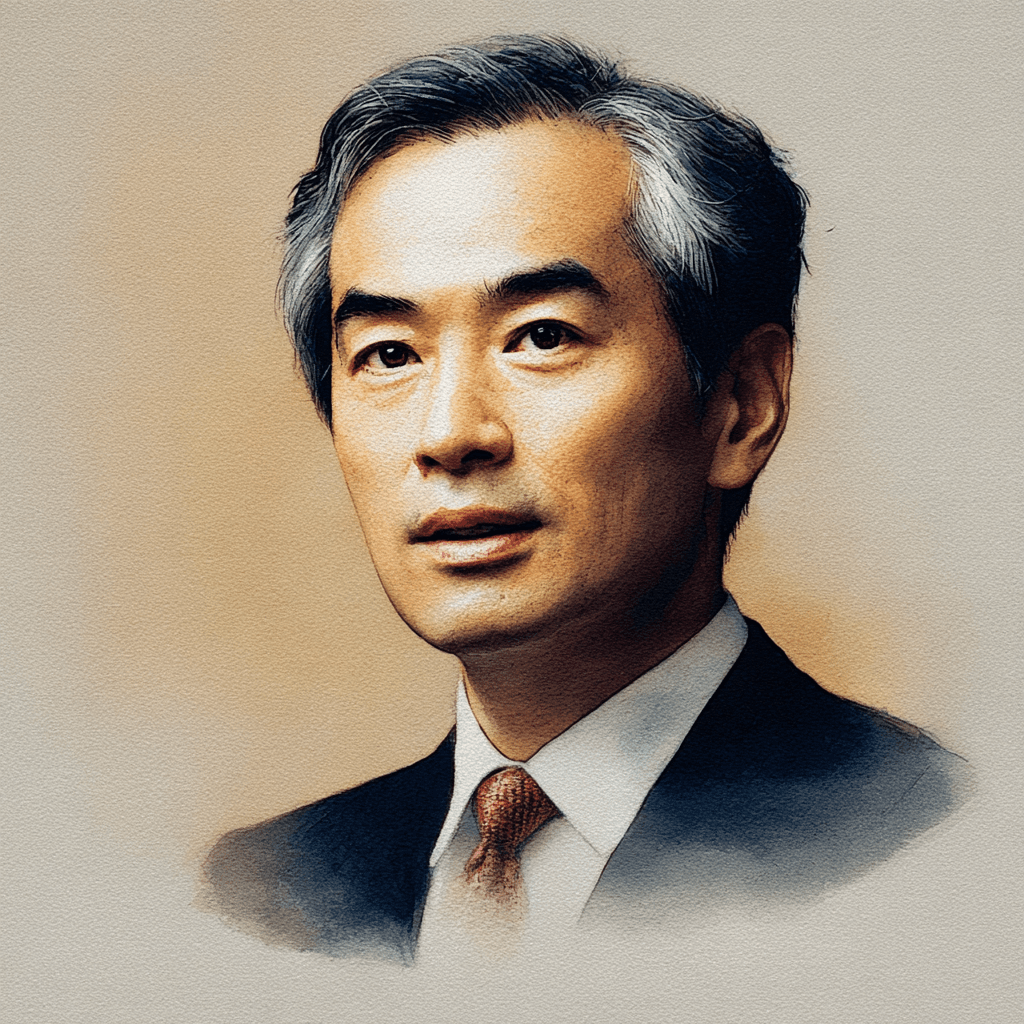
Lin I-hsiung
Democracy Movement Leader
Democratic Transition
1941–
Lin Yi-hsiung, born in 1941 in Yilan to a Hokkien family, was a defense lawyer turned tangwai politician who became one of the moral centers of Taiwan's democracy movement following the tragedy of the 1980 Lin Family Massacre. He graduated from the law department of National Taiwan University and built a successful Yilan practice in the 1970s, defending tangwai candidates and labor disputes in the late martial-law era. He was elected to the Yilan provincial assembly in 1977 and quickly emerged as one of the most articulate younger members of the tangwai opposition. As one of the principal defendants in the 1979 Kaohsiung Incident, he was tried by military court and sentenced to twelve years' imprisonment for sedition. On 28 February 1980 — while he was being interrogated in detention — his mother and seven-year-old twin daughters were murdered at his home in Taipei, and his elder daughter was gravely wounded, in a case that remains officially unsolved and has never been credibly attributed to anyone other than the security apparatus that controlled access to the property. The Lin Family Massacre became one of the defining moral atrocities of the late martial-law period and a permanent indictment of the regime's apparatus of fear. Released in 1984, he travelled abroad for several years and earned graduate degrees at Harvard and Cambridge before returning to Taiwan to resume political work. He served as chairman of the Democratic Progressive Party from 1998 to 2000, helping lay the foundations for Chen Shui-bian's election to the presidency in 2000. After leaving party leadership he devoted himself to constitutional reform causes, especially the campaign for direct democracy through referendum, and to the anti-nuclear movement. He undertook multiple high-profile fasts, including a 2014 hunger strike that helped force the indefinite suspension of construction at the Fourth Nuclear Power Plant in Gongliao. He converted his Taipei family home where the murders had taken place into a foundation and church, refusing to be drawn back into electoral politics in his later decades. Lin is widely regarded as one of the moral consciences of Taiwan's democratic transition, a figure whose suffering, principled withdrawal from power, and long advocacy of direct citizen participation continue to influence Taiwanese civic culture.
Kaohsiung Incident defendant; family murdered in 1980 Lin Family Massacre
Served as DPP chairman and led anti-nuclear and constitutional reform movements
Democracy Movement Leader
Lin I-hsiung
Era
Democratic Transition
Lifespan
1941–
Lin Yi-hsiung, born in 1941 in Yilan to a Hokkien family, was a defense lawyer turned tangwai politician who became one of the moral centers of Taiwan's democracy movement following the tragedy of the 1980 Lin Family Massacre. He graduated from the law department of National Taiwan University and built a successful Yilan practice in the 1970s, defending tangwai candidates and labor disputes in the late martial-law era. He was elected to the Yilan provincial assembly in 1977 and quickly emerged as one of the most articulate younger members of the tangwai opposition. As one of the principal defendants in the 1979 Kaohsiung Incident, he was tried by military court and sentenced to twelve years' imprisonment for sedition. On 28 February 1980 — while he was being interrogated in detention — his mother and seven-year-old twin daughters were murdered at his home in Taipei, and his elder daughter was gravely wounded, in a case that remains officially unsolved and has never been credibly attributed to anyone other than the security apparatus that controlled access to the property. The Lin Family Massacre became one of the defining moral atrocities of the late martial-law period and a permanent indictment of the regime's apparatus of fear. Released in 1984, he travelled abroad for several years and earned graduate degrees at Harvard and Cambridge before returning to Taiwan to resume political work. He served as chairman of the Democratic Progressive Party from 1998 to 2000, helping lay the foundations for Chen Shui-bian's election to the presidency in 2000. After leaving party leadership he devoted himself to constitutional reform causes, especially the campaign for direct democracy through referendum, and to the anti-nuclear movement. He undertook multiple high-profile fasts, including a 2014 hunger strike that helped force the indefinite suspension of construction at the Fourth Nuclear Power Plant in Gongliao. He converted his Taipei family home where the murders had taken place into a foundation and church, refusing to be drawn back into electoral politics in his later decades. Lin is widely regarded as one of the moral consciences of Taiwan's democratic transition, a figure whose suffering, principled withdrawal from power, and long advocacy of direct citizen participation continue to influence Taiwanese civic culture.
Kaohsiung Incident defendant; family murdered in 1980 Lin Family Massacre
Served as DPP chairman and led anti-nuclear and constitutional reform movements