

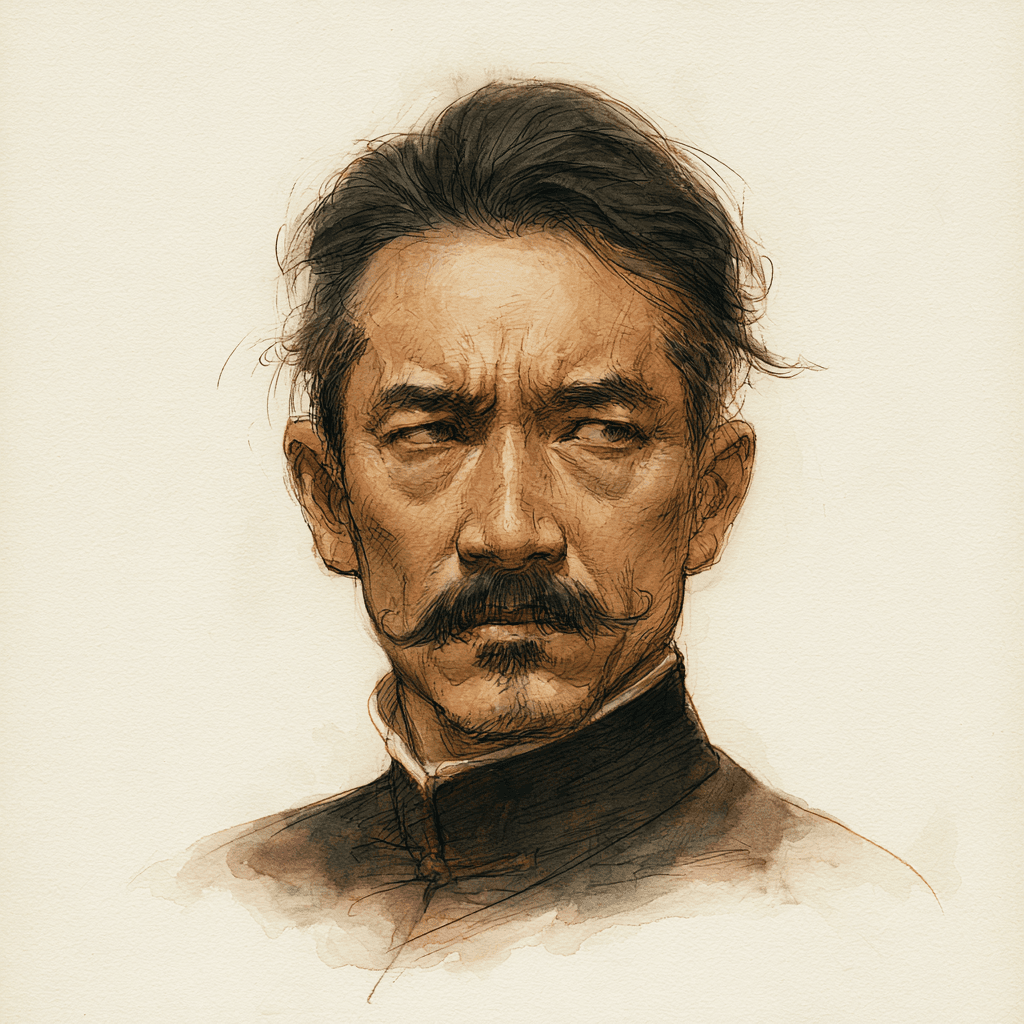
Lin Yu-chun
Poet of the Lo She and Parliamentary Petition Leader
Japanese Rule
1880–1939
Lin Yu-chun (1880–1939), a member of the Lin family of Wufeng and a nephew of Lin Hsien-tang, was a celebrated classical poet and a key figure of the national movement under Japanese rule. Steeped in the classics from childhood and precocious in literary talent, he joined the Lo She, the leading poetry society of central Taiwan, where his vigorous and brooding verse gave voice to thoughts of country and to national integrity, making him a representative of the traditional literati who took up the modern national movement. From 1921 he helped his uncle Lin Hsien-tang found and run the Taiwanese Cultural Association and threw himself into the Petition Movement for the Establishment of a Taiwanese Parliament, travelling to build alliances and writing to rally support, becoming an important spiritual and propaganda pillar of the petition campaign. When the Public Order Police Law Incident broke out in 1923, he was arrested and imprisoned by the colonial authorities for his role in the league supporting a Taiwanese parliament, standing as a defendant alongside Chiang Wei-shui and Tsai Pei-huo; he kept his integrity unbroken in prison and recorded the spirit of the struggle in verse to encourage his comrades. After his release he continued to support the national movement through his writing and took an interest in the rise of Taiwan's new literature, earning a reputation as a pivotal literary figure bridging the early phase of the new-literature movement. He died in 1939, leaving a large body of classical poetry imbued with national feeling and standing as a model of intellectuals resisting colonial rule through literature.
1921 Took part in founding the Cultural Association and the parliamentary petition
1923 Imprisoned in the Public Order Police Law Incident
Poet of the Lo She and Parliamentary Petition Leader
Lin Yu-chun
Era
Japanese Rule
Lifespan
1880–1939
Lin Yu-chun (1880–1939), a member of the Lin family of Wufeng and a nephew of Lin Hsien-tang, was a celebrated classical poet and a key figure of the national movement under Japanese rule. Steeped in the classics from childhood and precocious in literary talent, he joined the Lo She, the leading poetry society of central Taiwan, where his vigorous and brooding verse gave voice to thoughts of country and to national integrity, making him a representative of the traditional literati who took up the modern national movement. From 1921 he helped his uncle Lin Hsien-tang found and run the Taiwanese Cultural Association and threw himself into the Petition Movement for the Establishment of a Taiwanese Parliament, travelling to build alliances and writing to rally support, becoming an important spiritual and propaganda pillar of the petition campaign. When the Public Order Police Law Incident broke out in 1923, he was arrested and imprisoned by the colonial authorities for his role in the league supporting a Taiwanese parliament, standing as a defendant alongside Chiang Wei-shui and Tsai Pei-huo; he kept his integrity unbroken in prison and recorded the spirit of the struggle in verse to encourage his comrades. After his release he continued to support the national movement through his writing and took an interest in the rise of Taiwan's new literature, earning a reputation as a pivotal literary figure bridging the early phase of the new-literature movement. He died in 1939, leaving a large body of classical poetry imbued with national feeling and standing as a model of intellectuals resisting colonial rule through literature.
1921 Took part in founding the Cultural Association and the parliamentary petition
1923 Imprisoned in the Public Order Police Law Incident