

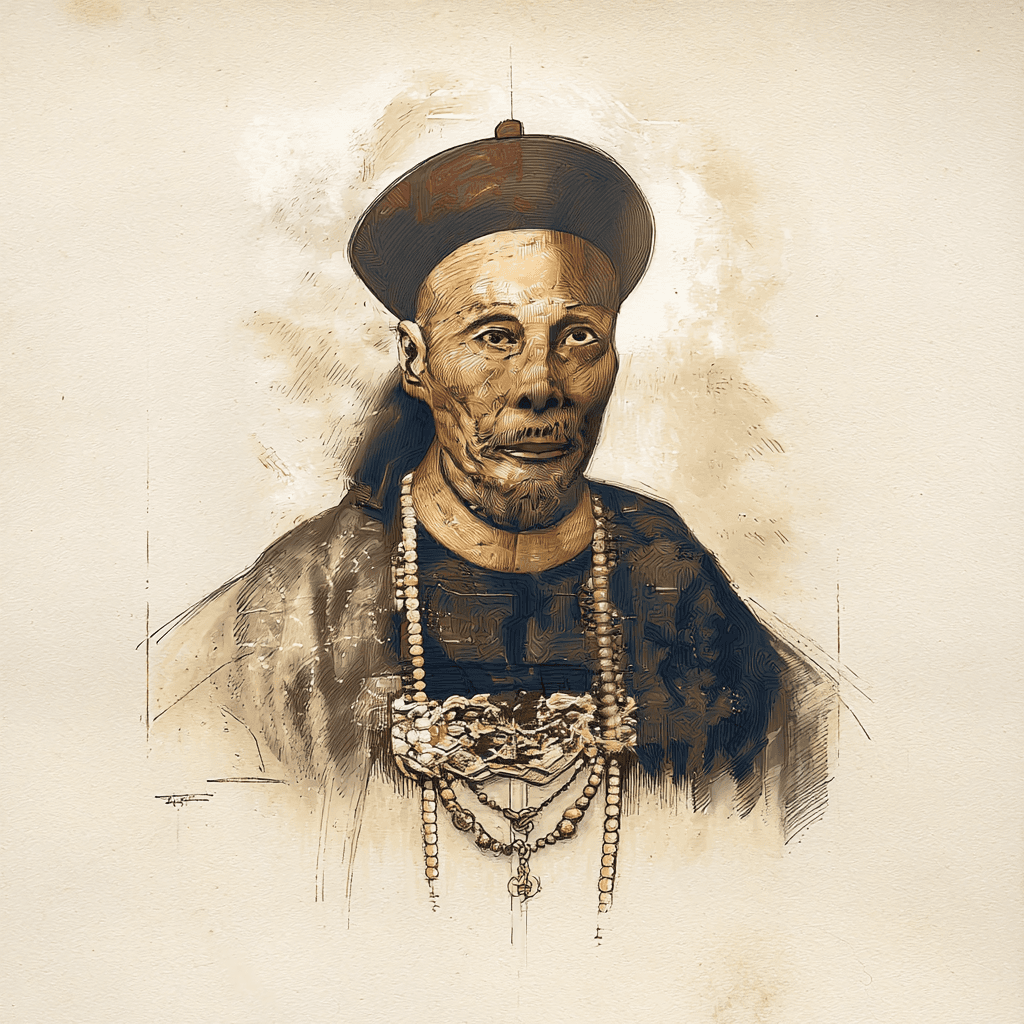
Liu Yongfu
Black Flag General and Leader of the Southern Resistance
First Sino-Japanese War / 1895
1837–1917
Liu Yongfu, born in 1837 in Qinzhou, Guangxi (today part of Guangdong), into an impoverished Han family, trained in martial arts from youth and joined the secret society networks of the late Taiping era. After the Taiping rebellion he led his followers across the border into Tonkin in northern Vietnam, where he organized the Black Flag Army around their distinctive black banners and gained de facto control of the upper Red River region. During the Sino-French War he led the Black Flags against French forces at the request of both the Qing court and the Vietnamese Nguyễn dynasty, winning international notoriety at the 1883 Battle of Paper Bridge near Hanoi, where his troops killed the French commander Henri Rivière. After the war his army was partially absorbed into the Qing military, and he was reassigned to garrison duty along the southwestern frontier. With the outbreak of the First Sino-Japanese War in 1894, the Qing court ordered him to Taiwan, where he commanded the southern defenses from Tainan. Following the cession of Taiwan in 1895 and Tang Jingsong's flight from Taipei, Liu was acclaimed second President of the Republic of Formosa over its southern remnant and continued the resistance with combined Black Flag and Taiwanese volunteer units against the Japanese advance. Southern resistance lasted until October 1895, when, his supplies exhausted and external aid impossible, he disguised himself as an elderly woman and escaped aboard a British merchant ship to Xiamen on the eve of the fall of Tainan, ending organized resistance in the south. After returning to China he resumed service as Commander-in-Chief of land forces in Guangdong and was briefly named head of the Guangdong militia after the 1911 Revolution. He died at his home in Qinzhou in 1917. Liu is remembered across Vietnam, China, and Taiwan as one of the most colorful frontline commanders of the late Qing era, whose campaigns ranged from the anti-French struggle in Tonkin to the closing chapter of Han resistance to Japanese rule in Taiwan.
1895 Led the southern resistance and held Tainan
1895 Escaped to Xiamen on the eve of the fall of Tainan
Black Flag General and Leader of the Southern Resistance
Liu Yongfu
Era
First Sino-Japanese War / 1895
Lifespan
1837–1917
Liu Yongfu, born in 1837 in Qinzhou, Guangxi (today part of Guangdong), into an impoverished Han family, trained in martial arts from youth and joined the secret society networks of the late Taiping era. After the Taiping rebellion he led his followers across the border into Tonkin in northern Vietnam, where he organized the Black Flag Army around their distinctive black banners and gained de facto control of the upper Red River region. During the Sino-French War he led the Black Flags against French forces at the request of both the Qing court and the Vietnamese Nguyễn dynasty, winning international notoriety at the 1883 Battle of Paper Bridge near Hanoi, where his troops killed the French commander Henri Rivière. After the war his army was partially absorbed into the Qing military, and he was reassigned to garrison duty along the southwestern frontier. With the outbreak of the First Sino-Japanese War in 1894, the Qing court ordered him to Taiwan, where he commanded the southern defenses from Tainan. Following the cession of Taiwan in 1895 and Tang Jingsong's flight from Taipei, Liu was acclaimed second President of the Republic of Formosa over its southern remnant and continued the resistance with combined Black Flag and Taiwanese volunteer units against the Japanese advance. Southern resistance lasted until October 1895, when, his supplies exhausted and external aid impossible, he disguised himself as an elderly woman and escaped aboard a British merchant ship to Xiamen on the eve of the fall of Tainan, ending organized resistance in the south. After returning to China he resumed service as Commander-in-Chief of land forces in Guangdong and was briefly named head of the Guangdong militia after the 1911 Revolution. He died at his home in Qinzhou in 1917. Liu is remembered across Vietnam, China, and Taiwan as one of the most colorful frontline commanders of the late Qing era, whose campaigns ranged from the anti-French struggle in Tonkin to the closing chapter of Han resistance to Japanese rule in Taiwan.
1895 Led the southern resistance and held Tainan
1895 Escaped to Xiamen on the eve of the fall of Tainan