

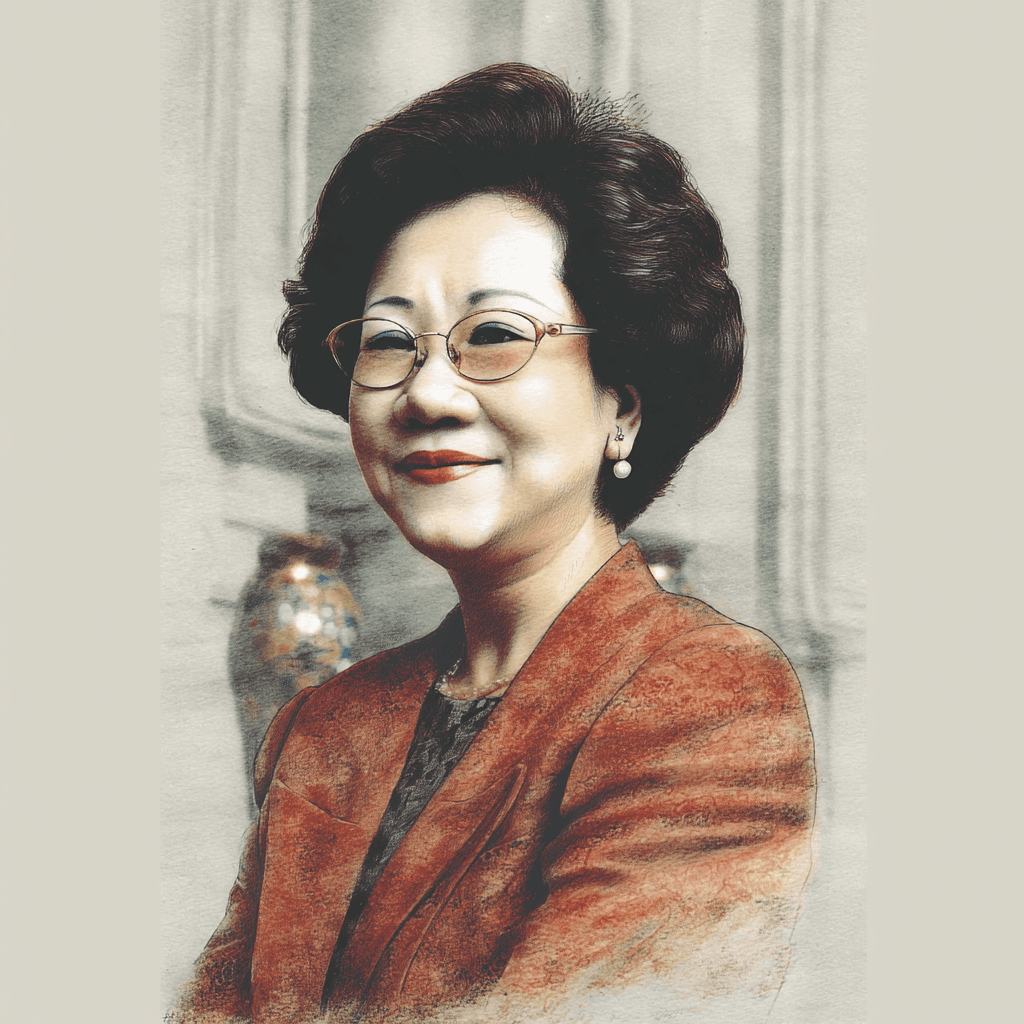
Lu Hsiu-lien
New-Feminism Pioneer & Kaohsiung Incident Prisoner
Democratic Transition
1944–
Lu Hsiu-lien, born in 1944 in Taoyuan, is a leading figure in Taiwan's post-war women's and democracy movements. A high achiever in her youth, she graduated in law from National Taiwan University and later pursued studies in the United States, earning master's degrees in law from the University of Illinois and Harvard University. In the 1970s she was the first to champion "new feminism" in Taiwan, advancing gender equality through her writings and the Pioneer Press, a forerunner of the local women's movement. She then joined the tangwai (non-party) movement, concerned with human rights, democracy, and Taiwan's future. When the Kaohsiung Incident erupted in 1979, she was arrested for taking part and speaking at the demonstration and sentenced to twelve years in a military trial. After serving about five years, she was released on medical parole in 1985. With the lifting of martial law and democratization she returned to politics, winning election as a National Assembly delegate, legislator, and Taoyuan county magistrate, with a distinctive governing style. In 2000, running alongside Chen Shui-bian, she was elected Vice President of the Republic of China — the first woman to hold the office — and was re-elected through 2008. In office she promoted human-rights diplomacy, gender equality, and Taiwanese identity, fostering related international exchange. After leaving office she continued to engage with environmental, peace, and women's issues and repeatedly returned to public affairs. Lu is regarded as a key symbol of Taiwan's women's movement and democratic transition, her path from feminist advocate to the highest office held by a woman embodying the breakthrough of women's political participation in post-war Taiwan.
Imprisoned over the Kaohsiung Incident (1979)
Elected the first female Vice President of the ROC (2000)
New-Feminism Pioneer & Kaohsiung Incident Prisoner
Lu Hsiu-lien
Era
Democratic Transition
Lifespan
1944–
Lu Hsiu-lien, born in 1944 in Taoyuan, is a leading figure in Taiwan's post-war women's and democracy movements. A high achiever in her youth, she graduated in law from National Taiwan University and later pursued studies in the United States, earning master's degrees in law from the University of Illinois and Harvard University. In the 1970s she was the first to champion "new feminism" in Taiwan, advancing gender equality through her writings and the Pioneer Press, a forerunner of the local women's movement. She then joined the tangwai (non-party) movement, concerned with human rights, democracy, and Taiwan's future. When the Kaohsiung Incident erupted in 1979, she was arrested for taking part and speaking at the demonstration and sentenced to twelve years in a military trial. After serving about five years, she was released on medical parole in 1985. With the lifting of martial law and democratization she returned to politics, winning election as a National Assembly delegate, legislator, and Taoyuan county magistrate, with a distinctive governing style. In 2000, running alongside Chen Shui-bian, she was elected Vice President of the Republic of China — the first woman to hold the office — and was re-elected through 2008. In office she promoted human-rights diplomacy, gender equality, and Taiwanese identity, fostering related international exchange. After leaving office she continued to engage with environmental, peace, and women's issues and repeatedly returned to public affairs. Lu is regarded as a key symbol of Taiwan's women's movement and democratic transition, her path from feminist advocate to the highest office held by a woman embodying the breakthrough of women's political participation in post-war Taiwan.
Imprisoned over the Kaohsiung Incident (1979)
Elected the first female Vice President of the ROC (2000)