

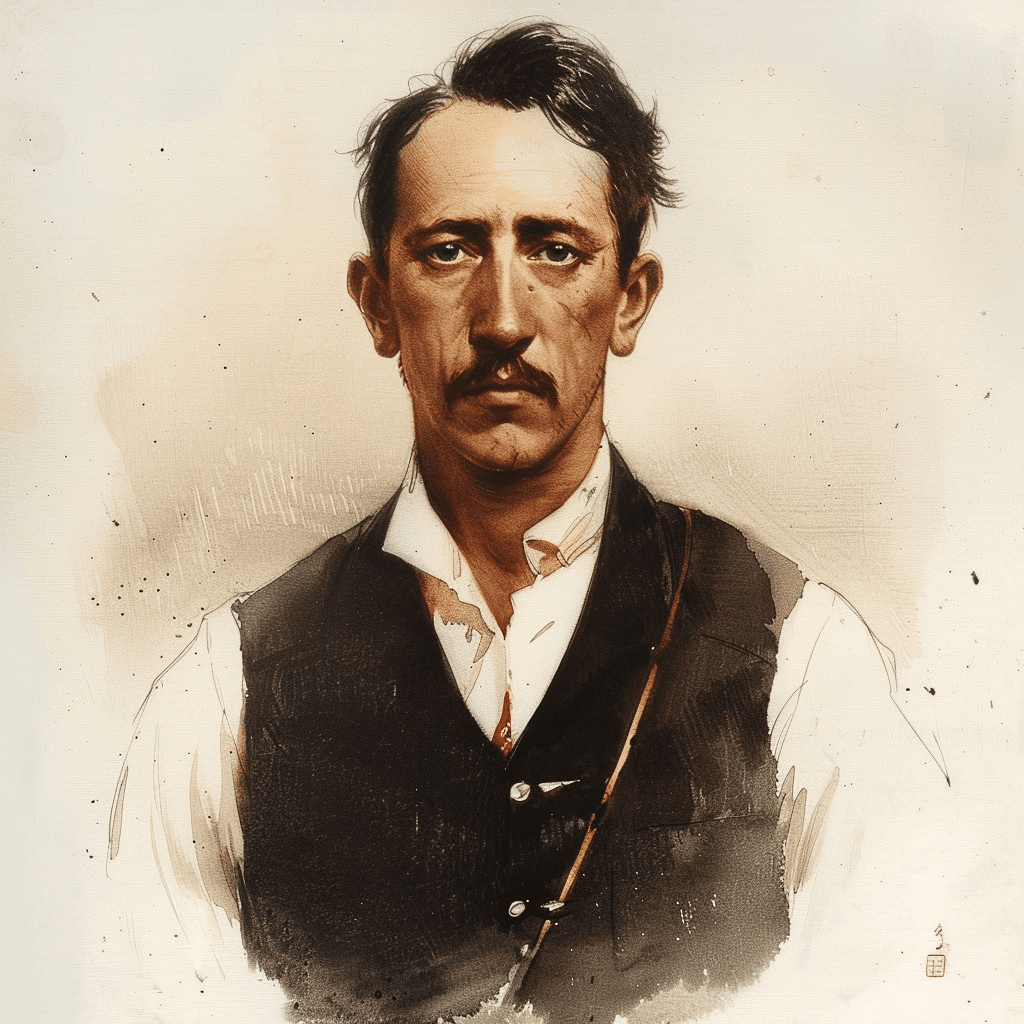
Luo Fuxing
Leader of the Miaoli Uprising
Armed Resistance / 1896–1915
1886–1914
Luo Fuxing, born in 1886 in Zhenping (modern Jiaoling) in Guangdong, was a Hakka revolutionary whose career represented the shift of Taiwan's armed resistance toward modern nationalist revolutionary ideology in the mid-colonial period. In his youth he followed his family to Southeast Asia and Taiwan, was drawn to the revolutionary ideas of Sun Yat-sen, and joined the Tongmenghui in Southeast Asia, where he engaged in fundraising and propaganda work. After the founding of the Republic of China in 1912 he traveled from Guangdong to Taiwan under instructions from the Tongmenghui (later reorganized as the Kuomintang) and, using a coolie association and a sundry-goods shop in the Miaoli area as cover, began recruiting members and organizing an underground revolutionary network. The movement framed itself as anti-colonial and oriented toward returning Taiwan to the mainland, and it planned a coordinated island-wide uprising — the events later known as the Miaoli Incident. He extended his contacts to Keelung, Hsinchu, and Taichung, and his network coordinated loosely with smaller resistance cells around the Guandi Temple in Taitung and the Dongshijiao area, making it the most organized revolutionary network operating inside Taiwan at the time. The plan called for several risings to break out together, drawing on the symbolic prestige of the 1911 Revolution to attract recruits across class and ethnic lines. From mid-1913, after related cells in the east and north were exposed prematurely, the Government-General launched extensive investigations and mass arrests, and Luo Fuxing himself was captured in Tamsui while attempting to escape back to China. In March 1914 he and his fellow defendants were sentenced to death by a special tribunal in Miaoli, and he was executed in Taipei the same month, leaving behind a farewell poem affirming his commitment to resistance. The wider sweep of arrests dismantled the connecting network across central and northern Taiwan in a matter of months. The Miaoli Incident is regarded as a key turning point in which Taiwan's armed resistance shifted from locally rooted strongman warfare toward modern nationalist revolutionary thought. He is widely credited as one of the principal figures through whom the influence of the 1911 Revolution reached the island.
1912 Arrived in Taiwan to organize a revolutionary network
1913 Captured after the Miaoli plot was exposed
1914 Executed by the colonial authorities
Leader of the Miaoli Uprising
Luo Fuxing
Era
Armed Resistance / 1896–1915
Lifespan
1886–1914
Luo Fuxing, born in 1886 in Zhenping (modern Jiaoling) in Guangdong, was a Hakka revolutionary whose career represented the shift of Taiwan's armed resistance toward modern nationalist revolutionary ideology in the mid-colonial period. In his youth he followed his family to Southeast Asia and Taiwan, was drawn to the revolutionary ideas of Sun Yat-sen, and joined the Tongmenghui in Southeast Asia, where he engaged in fundraising and propaganda work. After the founding of the Republic of China in 1912 he traveled from Guangdong to Taiwan under instructions from the Tongmenghui (later reorganized as the Kuomintang) and, using a coolie association and a sundry-goods shop in the Miaoli area as cover, began recruiting members and organizing an underground revolutionary network. The movement framed itself as anti-colonial and oriented toward returning Taiwan to the mainland, and it planned a coordinated island-wide uprising — the events later known as the Miaoli Incident. He extended his contacts to Keelung, Hsinchu, and Taichung, and his network coordinated loosely with smaller resistance cells around the Guandi Temple in Taitung and the Dongshijiao area, making it the most organized revolutionary network operating inside Taiwan at the time. The plan called for several risings to break out together, drawing on the symbolic prestige of the 1911 Revolution to attract recruits across class and ethnic lines. From mid-1913, after related cells in the east and north were exposed prematurely, the Government-General launched extensive investigations and mass arrests, and Luo Fuxing himself was captured in Tamsui while attempting to escape back to China. In March 1914 he and his fellow defendants were sentenced to death by a special tribunal in Miaoli, and he was executed in Taipei the same month, leaving behind a farewell poem affirming his commitment to resistance. The wider sweep of arrests dismantled the connecting network across central and northern Taiwan in a matter of months. The Miaoli Incident is regarded as a key turning point in which Taiwan's armed resistance shifted from locally rooted strongman warfare toward modern nationalist revolutionary thought. He is widely credited as one of the principal figures through whom the influence of the 1911 Revolution reached the island.
1912 Arrived in Taiwan to organize a revolutionary network
1913 Captured after the Miaoli plot was exposed
1914 Executed by the colonial authorities