

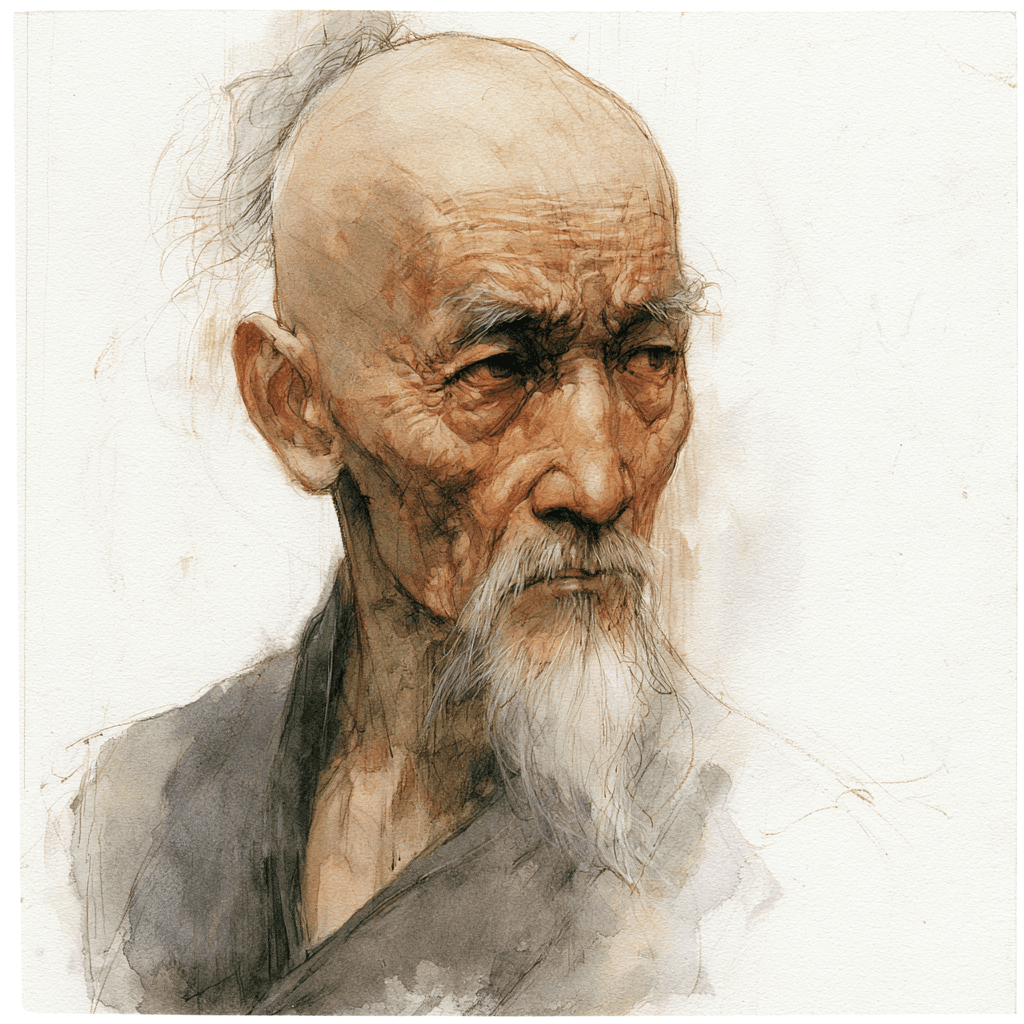
Luo Jun
Central-Northern Coordinator of the Tapani Incident
Armed Resistance / 1896–1915
1854–1915
Luo Jun, born in 1854 in what is today Douliu in Yunlin, was one of the core leaders of the Tapani Incident (the Xilai Temple Incident or Jiaobani Incident) and was chiefly responsible for organizing and mobilizing the central and northern regions of Taiwan. A generation older than Yu Qingfang, he was a widely traveled figure who had moved through Fujian, Guangdong, and the islands of Southeast Asia in the course of religious work and small-scale trade. He had a fuller understanding of the anti-colonial currents then circulating in the wider ethnic-Chinese world than either of his fellow leaders. Returning to Taiwan around 1914, he joined the Xilai Temple resistance organization led by Yu Qingfang and used his religious and commercial networks to recruit members and circulate anti-Japanese messages quietly across Chiayi, Yunlin, Changhua, and Hsinchu. The network he assembled in the central and northern regions was what allowed the uprising to be conceived as an island-wide action, and many of those later arrested in Chiayi, Linqipu, and Erlin were connected to his lines of contact. In early 1915 he traveled repeatedly between Tainan and Chiayi to coordinate the timing of the uprising and to organize logistics and synchronization across the north and center. In May of that year, before the uprising could be set in motion in full, an informant exposed the plot, and he was captured by Japanese investigators in the Chiayi area. He was transferred to Tainan for trial and sentenced to death together with Yu Qingfang in September of the same year, with the sentence carried out at Tainan. His arrest before the rising could be triggered island-wide left the eventual Jiaobani battle without the northern and central support originally expected. The Tapani Incident accordingly unfolded as an isolated southern uprising rather than the coordinated island-wide action it had been planned to be. He is widely regarded as the figure whose early capture critically disrupted the network's strategic design.
1915 Organized resistance networks in central and northern Taiwan
1915 Captured and executed
Central-Northern Coordinator of the Tapani Incident
Luo Jun
Era
Armed Resistance / 1896–1915
Lifespan
1854–1915
Luo Jun, born in 1854 in what is today Douliu in Yunlin, was one of the core leaders of the Tapani Incident (the Xilai Temple Incident or Jiaobani Incident) and was chiefly responsible for organizing and mobilizing the central and northern regions of Taiwan. A generation older than Yu Qingfang, he was a widely traveled figure who had moved through Fujian, Guangdong, and the islands of Southeast Asia in the course of religious work and small-scale trade. He had a fuller understanding of the anti-colonial currents then circulating in the wider ethnic-Chinese world than either of his fellow leaders. Returning to Taiwan around 1914, he joined the Xilai Temple resistance organization led by Yu Qingfang and used his religious and commercial networks to recruit members and circulate anti-Japanese messages quietly across Chiayi, Yunlin, Changhua, and Hsinchu. The network he assembled in the central and northern regions was what allowed the uprising to be conceived as an island-wide action, and many of those later arrested in Chiayi, Linqipu, and Erlin were connected to his lines of contact. In early 1915 he traveled repeatedly between Tainan and Chiayi to coordinate the timing of the uprising and to organize logistics and synchronization across the north and center. In May of that year, before the uprising could be set in motion in full, an informant exposed the plot, and he was captured by Japanese investigators in the Chiayi area. He was transferred to Tainan for trial and sentenced to death together with Yu Qingfang in September of the same year, with the sentence carried out at Tainan. His arrest before the rising could be triggered island-wide left the eventual Jiaobani battle without the northern and central support originally expected. The Tapani Incident accordingly unfolded as an isolated southern uprising rather than the coordinated island-wide action it had been planned to be. He is widely regarded as the figure whose early capture critically disrupted the network's strategic design.
1915 Organized resistance networks in central and northern Taiwan
1915 Captured and executed